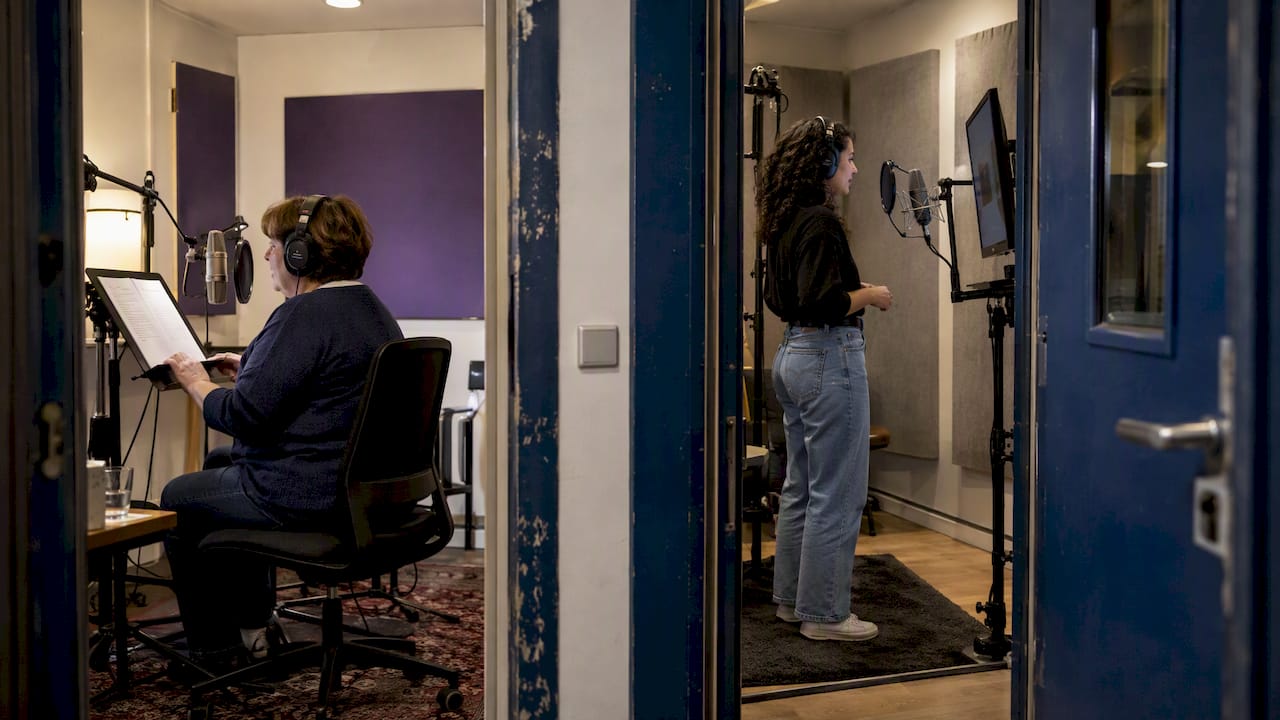
Audiobook narrator vs. Dubbing actor: The difference explained
In short: Audiobook narrators perform entire texts narratively, with a consistent voice over many hours. Dubbing actors, by contrast, embody individual characters lip-synchronously, precisely timed to existing images. One profession requires narrative endurance, the other maximum precision in detail. Those who want to go deeper will find the differences mainly in technique, training and remuneration.
In short:
- For audiobook recordings the voice should carry when reading aloud for at least 30 minutes; dubbing actors train dialogues using videos and check the timing.
- A home studio is sufficient for audiobooks if room acoustics and microphone are right; for dubbing recordings a professional studio is usually necessary due to picture matching and direction.
- There is no fixed training path in either profession; for larger assignments a convincing demo reel and contacts often matter more than a course certificate.
- Audiobook fees are often based on hours, dubbing actors are usually paid per speaking segment; due to price pressure you should clarify usage rights and residual payments contractually.
Table of contents
- Core differences: tasks, audiences and outcome
- Skills and vocal craft
- Production workflow: audiobook vs. dubbing
- Work environment and technology: studio, home studio, remote
- Training, pathways into the profession and continuing education
- Fees, market structure and typical compensation models
- How platforms like OutaStory produce audiobooks
- OutaStory as a practical option for authors
- FAQ
- Sources
Core differences: tasks, audiences and outcome
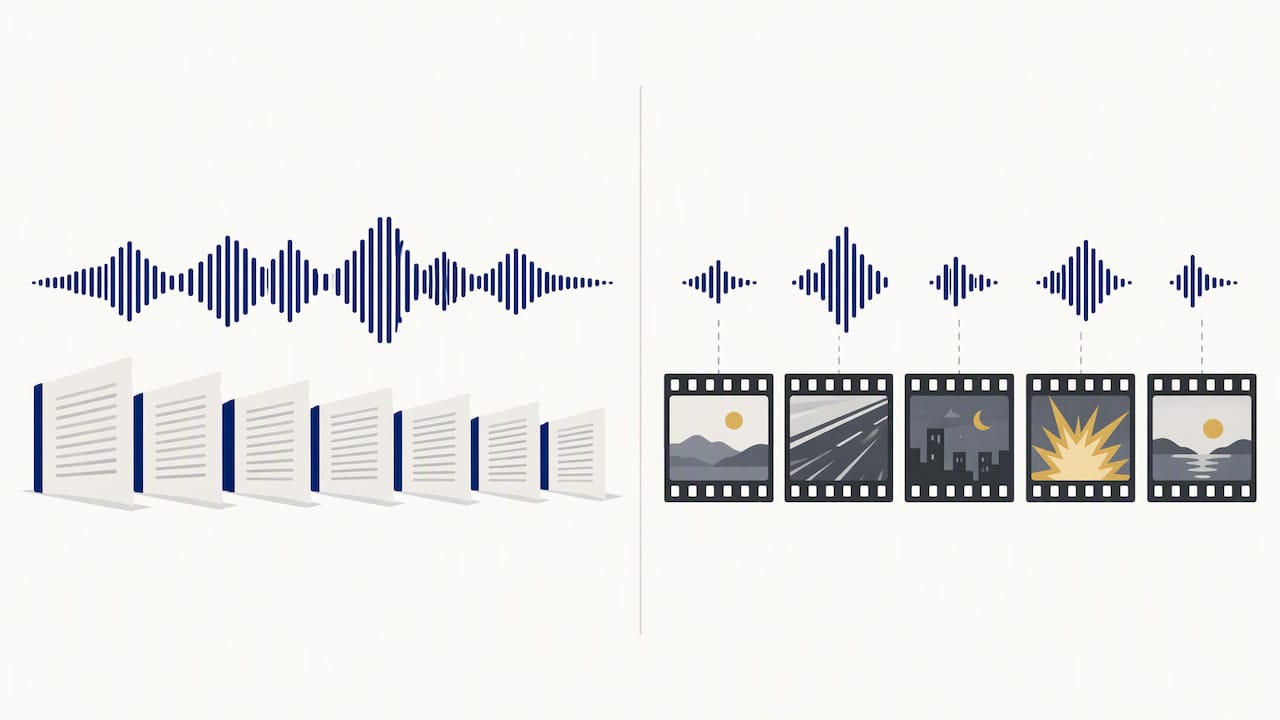
An audiobook is, according to the common definition, typically the reading of an existing text. One voice carries narrator and characters at the same time, often for several continuous hours. Dubbing actors, by contrast, work role-oriented: they take on a single character and must match its mouth movements in the picture exactly. This changes the entire way of working.
Someone reading a fantasy audiobook needs a voice that carries across chapters without tiring. Someone dubbing a series character needs precision to the tenth of a second, plus acting adaptation to a foreign face.
Practical differences at a glance:
- Audiobook: one voice for many roles, narrative consistency over hours
- Dubbing: one voice for one role, exact lip sync
- Audiobook: the text is usually newly voiced, without visual reference
- Dubbing: the recording follows already finished visual material
For visually impaired listeners this distinction plays a special role, because audiobooks and audio dramas often fulfill a distinct function there as access to literature.
Skills and vocal craft
Both professions require trained voices, but the emphases lie elsewhere. Audiobook narrators need endurance, a healthy breathing technique and the ability to maintain tension over long stretches without sounding monotonous. Dubbing actors need above all timing and the ability to quickly immerse themselves in foreign emotions, often within a few seconds per take.
The Speakers' Association emphasizes that speaking is primarily physical work: breathing, posture and vocal hygiene determine endurance, especially in multi-hour audiobook sessions. Pure technique is not enough; endurance and healthy voice management are equally important.
Three training goals that reflect the difference:
- For audiobooks: read texts aloud until voice and breath carry for over 30 minutes
- For dubbing: synchronize dialogues to video and check timing with a stopwatch
- For both: regular vocal hygiene, for example warm-up exercises before every session
Pro tip: If you're unsure which path fits, you should record both formats once and weigh your endurance against your precision.
Production workflow: Audiobook vs. Dubbing
The path to the finished product looks completely different in both areas. For audiobooks, preproduction starts with text editing: characters are marked, emphases prepared, sometimes the text is lightly shortened. For dubbing, a dubbing version with an exact timecode is created first, mapping each lip movement exactly.
In the recording itself the pace differs greatly:
- Audiobook: long sessions, often several chapters in a row, few interruptions
- Dubbing: short takes, frequent retakes, tight director instructions
- Audiobook: direction intervenes less often, usually only for emphasis errors
- Dubbing: the director checks each take for lip synchronization
Postproduction follows this pattern: audiobooks are edited and given spatial sound, sometimes complemented by subtle music. Dubbing tracks are placed exactly on the film track, mixed with sound effects and music that are already present in the original picture.
Work environment and technology: Studio, home studio, remote
The technical requirements differ noticeably. Audiobook productions can increasingly be carried out in a home studio, as long as room acoustics and microphone quality are right. Dubbing work, however, usually takes place in a professional studio, because picture synchronization requires a controlled environment with appropriate technology.
- Home studio: suitable for audiobooks, needs good soundproofing and a solid microphone
- Professional studio: usually necessary for dubbing, because of picture matching and technical equipment
- Remote recording: common for audiobooks, rarer for dubbing due to director coordination
If you want to record your own voice for an audiobook, you can find practical tips in our Guide to recording your narration voice.
Pro tip: Before the first recording, a short test run with headphones is worthwhile to detect room reverb and background noise early.
Training, pathways into the profession and continuing education
There is no fixed training path in either profession. Many come via acting training, others via specialized voice-over courses. Institutions like the Sprecher Akademie or the ARD-ZDF-Medienakademie offer corresponding seminars that prepare practically for recording situations.
- Acting training: helps dubbing actors especially with role work
- Voice-over courses: teach voice technique and microphone work for both areas
- Demo reel: often more important for bookings than a graduation certificate
- Agency contact: often determines access to larger productions
The Sprecher Akademie describes corresponding course content, but also emphasizes that verifiable productions and network contacts are often more decisive than a course certificate.
Fees, market structure and typical compensation models
Payment models differ greatly between the two areas. Audiobook narrators are often paid by the hour or by finished production length, sometimes with a flat fee for usage rights. Dubbing actors more frequently receive take fees, depending on the number of recorded speaking sequences.
The market for dubbing has been under price pressure for years, as an industry report by ver.di shows: fees have fallen significantly historically, with noticeable regional differences in the paid rates.
What to pay attention to when evaluating offers:
- Clearly define usage rights contractually, especially for multiple exploitation
- Check residual payment clauses in case a production becomes successful later
- Clarify billing method in advance: flat fee, hourly rate or take fee
How platforms like OutaStory produce audiobooks
For authors who want to offer their short stories as audiobooks, there are services that cover the entire process, from choosing the narrator to publication. There is often a choice between professionally produced voices and the author's own narration.
- Narrator choice: authors choose between professional voicing or their own voice
- Production: the story is prepared as an audiobook and published
- Monetization: authors participate in the revenues generated by their stories
We describe in detail the exact path from narrator choice to finished audiobook in our Guide to audiobook production.
OutaStory as a practical option for authors
If you write a short story and want it to be heard as an audiobook, you don't have to build your own studio or hire a dubbing actor for lip-synchronous role work, because with us the text is enough. Short stories can be published in a short time, often with the option to use a professionally produced voice or your own narration voice.
Stories can also be published chapter by chapter as serials, which is especially suitable for serial formats. Authors can directly participate in the revenues of their stories through revenue sharing.
- Publication in a few minutes, without technical knowledge
- Choice between a professional voice and your own author voice
- Revenue sharing of the earnings from the published stories
- Premium features for listeners, such as unlimited listening (details can be found on the website)
Those who want to know more about how bookings for narrators work with us can find the details on our page for speakers. Those who want to get started directly sign up via our membership page and read or listen to the first story for free, for example The Curse of the Other Side.
FAQ
Is an audio drama the same as an audiobook?
No, an audio drama differs from an audiobook by distributed voice roles, sound effects and music in dramaturgical arrangement. An audiobook, by contrast, is usually the reading of an existing text by one or a few voices.
How much does an audiobook narrator earn?
Remuneration varies greatly depending on the client, production scope and billing model, such as hourly rate or flat fee for usage rights. A single industry-wide figure cannot be stated reliably because the models are too different.
What does a dubbing actor need to be able to do?
A dubbing actor primarily needs precise timing to hit lip movements exactly, as well as acting flexibility for changing roles. The voice actors' association additionally emphasizes the importance of vocal hygiene and physical stamina in longer productions.
Can I publish my own audiobook with my voice?
Yes, with us authors can publish their short story either with their own voice or with a professionally produced voice as an audiobook. We describe details in our Guide to audiobook production.
What should I pay attention to in a dubbing actor contract?
Important are clear provisions on usage rights, residual payment clauses and the agreed billing method, such as take fees or flat fees. The ver.di industry report also points to the ongoing price pressure in the dubbing market, which should be kept in mind during negotiations.
Sources
Recommendations
- Audiobook vs. Audio drama: The difference explained in one sentence
- How an audiobook is created: From selecting the narrator to uploading
Read and write on OutaStory
Thousands of short stories to read for free — or publish your own and find an audience.