
Romantasy-Tropes: Die wichtigsten Muster für Leser und Autoren
Romantasy-Tropes sind wiederkehrende Handlungsbausteine, die einen Liebesbogen und einen Fantasykonflikt so miteinander verweben, dass keines von beiden ohne das andere funktioniert. Sie geben Lesenden emotionale Orientierung und Autoren eine dramaturgische Grundstruktur. Das Genre hat sich seit den 2000er Jahren als eigenständiges Subgenre etabliert und ist kommerziell stark gewachsen: Branchenschätzungen beziffern den Umsatz mit Romantasy-relevanten Titeln auf rund 610 Millionen US-Dollar im Jahr 2024.
Die am häufigsten in Rankings genannten Haupttropes sind: Enemies to Lovers (an erster Stelle), gefolgt von Fated Mates und Forced Proximity; daneben sind Slow Burn und Found Family besonders verbreitet. Diese Reihenfolge spiegelt aktuelle Analysen und Beobachtungen im Genre wider.
Wichtige Erkenntnisse
Romantasy-Tropes funktionieren, weil sie emotionale Struktur und Fantasykonflikt so verbinden, dass jeder Baustein den anderen verstärkt.
| Thema | Details |
|---|---|
| Trope-Grundregel | Jeder Trope muss durch vorherige Szenen verdient sein, nicht durch Behauptung. |
| Häufigste Tropes | Enemies to Lovers steht in Rankings klar an erster Stelle, gefolgt von Fated Mates und Forced Proximity; daneben sind auch Slow Burn und Found Family unter den Top-Tropes vertreten. |
| Warnsignal | Fehlt eine glaubhafte Einsichtsszene nach problematischen Handlungen, bleibt der Trope toxisch. |
| Kombinations-Prinzip | Wähle einen primären Trope nach emotionalem Effekt und ergänze ihn mit ein bis zwei unterstützenden Tropes. |
| Outastory | Auf Outastory lassen sich Romantasy-Szenen kapitelweise veröffentlichen, als Hörbuch abspielen und mit echtem Leserfeedback überarbeiten. |
Inhaltsverzeichnis
- Welche Romantasy-Tropes gibt es und wie funktionieren sie?
- Warum lieben Lesende Tropes so sehr?
- Wann werden Tropes zum Problem?
- Wie setzen Autoren Tropes glaubwürdig und fair ein?
- Welche Romantasy-Bücher sind für den deutschen Markt empfehlenswert?
- Wie testest du, ob ein Trope in deiner Szene funktioniert?
- Woher kommen Romantasy-Tropes historisch?
- Wie wirken Tropes psychologisch auf Lesende?
- Welche Variationen und Unterkategorien gibt es innerhalb der Haupttropes?
- Was kritisiert die Romantasy-Community an ihrem eigenen Genre?
- Warum Tropes mehr sind als Klischees
- Romantasy-Szenen schreiben, testen und teilen auf Outastory
- Quellen
Welche Romantasy-Tropes gibt es und wie funktionieren sie?
Die folgende Übersicht zeigt die wichtigsten Tropes mit ihrer Kerndefinition, ihrer Wirkung im Genre und typischen Varianten. Quellen für die Kategorisierung sind der Genre’d Podcast Tropes Guide sowie AproposBooks.
| Trope | Kurzdefinition | Warum es in Romantasy funktioniert | Typische Varianten |
|---|---|---|---|
| Enemies to Lovers | Zwei Figuren bekämpfen sich, bevor sie sich lieben | Fantasykonflikte erhöhen die Fallhöhe; Magie oder Krieg macht Feindschaft existenziell | Rivals to Lovers, Enemies to Allies to Lovers |
| Fated Mates / Seelenband | Schicksal oder magische Bindung verbindet zwei Figuren | Weltenbau legitimiert die Verbindung; Widerstand dagegen erzeugt Spannung | Soul Bond, Mating Marks, Prophezeiung |
| Forced Proximity | Figuren werden durch Umstände zusammengezwungen | Fantasyszenarien (Gefangenschaft, Quest, Schutzauftrag) machen die Nähe glaubwürdig | One Bed, Bodyguard-Szenario, gemeinsame Gefangenschaft |
| Slow Burn | Langsam aufgebaute Zuneigung mit verzögertem Geständnis | Magische Hindernisse und Weltenkonflikte strecken die Spannung glaubhaft | Pining, Unrequited Love, Miscommunication |
| Found Family | Gruppe Außenseiter wird zur echten Gemeinschaft | Fantasyquests schweißen zusammen; Loyalität wird durch Gefahr geprüft | Ragtag Crew, Chosen Family, Mentor-Gruppe |
| Dark Romantasy / Morally Grey LI | Love Interest mit moralisch fragwürdigen Handlungen | Dunkle Magie und Machtstrukturen geben dem Graubereich narrative Logik | Villain Love Interest, Antihero, Morally Complex Duo |
| Mentor/Student & Machtgefälle | Lehrende und Lernende entwickeln romantische Gefühle | Magische Ausbildungssysteme machen das Gefälle strukturell sichtbar | Trainer/Schülerin, Meister/Lehrling |
| Quest/Komplizen zu Lovers | Gemeinsame Mission führt zu Liebe | Geteilte Gefahr und Vertrauen entstehen organisch durch Abenteuer | Companion Romance, Road-Trip-Romanze |
| Hidden Identity | Eine Figur verbirgt ihre wahre Natur oder Herkunft | Magische Verkleidungen und Flüche machen Enthüllung dramatisch | Disguised Royalty, Shapeshifter, Undercover-Mission |
| Forbidden Magic / Verbotene Liebe | Magie oder Gesetz verbietet die Verbindung | Weltenbau-Regeln geben dem Verbot Gewicht und Konsequenz | Verbotene Magie, verfeindete Häuser, Rassentrennung im Fantasyreich |
Zusätzliche Micro-Tropes, die häufig als Ergänzung auftauchen:
- One Bed: Klassischer Forced-Proximity-Beschleuniger
- Grumpy/Sunshine: Gegensätzliche Temperamente als Anziehungspol
- Why Choose / Polyamorie: Mehrere Love Interests ohne erzwungene Entscheidung
- Court Intrigue: Politische Machtkämpfe als romantischer Hintergrund
- Magical Bond als Kommunikationskanal: Telepathie oder Seelenverbindung als Intimität-Ersatz
Warum lieben Lesende Tropes so sehr?
Tropes bieten emotionale Struktur. Wer ein Buch mit dem Trope „Enemies to Lovers“ aufschlägt, weiß ungefähr, welche Kurve die Geschichte nehmen wird. Das ist kein Mangel, sondern ein Versprechen.
Psychologisch gesehen erfüllen Tropes mehrere Bedürfnisse gleichzeitig. Vorhersehbarkeit senkt die kognitive Last und erlaubt es, sich vollständig auf die emotionale Reise einzulassen. Eskapismus funktioniert besser, wenn die Grundstruktur vertraut ist. Und der emotionale Payoff, also der Moment, in dem zwei Figuren endlich zusammenkommen, wirkt umso stärker, je länger und glaubwürdiger die Spannung aufgebaut wurde.
Bibliothekarinnen und Experten betonen, dass Romantasy-Tropes legitimen Eskapismus bieten und Lesende durch vertraute Strukturen emotional entlasten. Gleichzeitig mahnen Fachleute zur Lesekompetenz: Tropes werden kritisch, wenn sie Vorurteile oder toxische Dynamiken unreflektiert reproduzieren. Das Ziel ist Aufklärung, nicht Verbot.
MedienFokusBW
Vier psychologische Gründe, warum Tropes so gut funktionieren:
- Sicherheit durch Struktur: Bekannte Muster reduzieren Unsicherheit und machen das Lesen entspannter.
- Emotionale Katharsis: Aufgestaute Spannung entlädt sich im Payoff-Moment besonders intensiv.
- Identifikation: Figuren in extremen Situationen (Magie, Krieg, Schicksal) spiegeln reale Gefühle wie Vertrauen, Verrat und Sehnsucht.
- Gemeinschaft: Tropes schaffen eine gemeinsame Sprache unter Lesenden, die Empfehlungen und Diskussionen erleichtern.
Wann werden Tropes zum Problem?
Tropes werden problematisch, wenn Machtungleichgewichte, Gewalt oder Ausgrenzung nicht kritisch reflektiert werden. Das gilt besonders im Dark-Romantasy-Bereich, wo die Grenze zwischen spannungsreichem Graubereich und Romantisierung von Missbrauch schnell verschwimmt.
Typische Warnsignale:
- Gewalt oder Kontrolle wird als Liebesbeweis gerahmt, ohne narrative Konsequenzen.
- Der Love Interest zeigt keine glaubhafte Einsicht oder Reue nach problematischen Handlungen.
- Minderheiten oder marginalisierte Figuren dienen nur als Kulisse oder Kontrast für die Hauptromanze.
- Die Protagonistin hat keine eigene Handlungsmacht; ihre Entscheidungen werden von der Liebesgeschichte überschrieben.
- Toxische Eifersucht oder Besitzdenken wird als romantisch dargestellt, ohne Gegenperspektive.
Autoren sollten beim Überarbeiten konkret prüfen: Gibt es eine sichtbare Einsichtsszene? Wird Gewalt verharmlost oder hat sie Konsequenzen? Wer trägt die narrative Agency in der Beziehung?
Wie setzen Autoren Tropes glaubwürdig und fair ein?
Die Grundregel lautet: Make it earned. Das bedeutet, dass jede Entwicklung in der Beziehung durch vorherige Szenen verdient sein muss, nicht durch Behauptung.
Konkrete Techniken:
- Gründe für Feindschaft klar machen: Der Konflikt in „Enemies to Lovers“ braucht eine nachvollziehbare Basis, sonst wirkt die Wandlung unglaubwürdig.
- Vertrauen schrittweise aufbauen: Zeige kleine Momente, in denen Figuren füreinander einstehen, bevor die große Liebesszene kommt.
- Machtgefälle narrativ ausgleichen: Wenn ein Mentor-Schüler-Verhältnis romantisch wird, muss die schwächere Figur eigene Entscheidungsmacht gewinnen.
- Agency sichern: Beide Figuren treffen aktive Entscheidungen für die Beziehung, keine wird nur mitgezogen.
- Reue-Test anwenden: Jede problematische Handlung einer Figur braucht eine sichtbare, glaubhafte Einsichtsszene, bevor romantische Konsequenzen folgen dürfen.
Profi-Tipp: Verknüpfe magische Regeln direkt mit romantischen Konsequenzen. Eine Eidesbindung, die Berührung verhindert, oder ein Fluch, der Ehrlichkeit erzwingt, macht die Romanze zum Teil des Worldbuildings statt zum bloßen Plot-Dekor. Das erhöht die emotionale Glaubwürdigkeit ohne zusätzliche Exposition.
Wer einen Trope subvertieren will, beginnt am besten mit der Erwartung: Was erwartet die Leserin an diesem Punkt? Dann dreht man genau diese Erwartung um, aber mit einer Begründung, die im Weltenbau verankert ist.
Welche Romantasy-Bücher sind für den deutschen Markt empfehlenswert?
Die folgende Liste verbindet Tropes mit konkreten Titeln und Autoren, die im deutschsprachigen Markt verfügbar sind oder auf Deutsch erschienen sind. Empfehlungsstruktur nach Penguin Discover und Audible Blog.
| Titel / Autor | Trope | Warum lesenswert |
|---|---|---|
| Sarah J. Maas: Throne of Glass (dt. Throne of Glass) | Enemies to Lovers, Found Family | Maas etabliert mehrere Tropes gleichzeitig; starke Protagonistin, komplexe Liebesgeschichte, auf Deutsch bei Blanvalet erhältlich |
| Sarah J. Maas: A Court of Thorns and Roses (dt. Ein Hof aus Dornen und Rosen) | Fated Mates, Forbidden Magic | Klares Beispiel für magische Bindung als Spannungsmotor; Blanvalet-Ausgabe weit verbreitet |
| Erin Morgenstern: The Night Circus (dt. Der Nachtzirkus) | Forbidden Magic, Slow Burn | Atmosphärisch dichte Romanze mit magischem Wettbewerb als Hindernis; S. Fischer Verlag |
| Kai Meyer: Die Alchimistin | Dark Romantasy, Court Intrigue | Deutschsprachiger Autor mit historisch-fantastischem Setting und moralisch vielschichtigem Love Interest |
| Bianca Iosivoni: Herzlos | Enemies to Lovers, Slow Burn | Deutschsprachige Autorin, deren Romantasy-Reihe direkt für den deutschen Markt geschrieben wurde |
| Stefanie Hasse: Silbersturm | Fated Mates, Quest/Komplizen zu Lovers | Deutschsprachige Autorin mit starkem Worldbuilding und klarer Trope-Umsetzung |
| Isabel Abedi: Lucian | Hidden Identity, Forbidden Magic | Bekannte deutsche Autorin; Jugendfantasy mit romantischen Elementen und magischer Verborgenheit |
Schnelle Leseempfehlungen nach Trope-Präferenz:
- Wenn du Enemies to Lovers magst: Bianca Iosivoni oder Sarah J. Maas
- Wenn du Slow Burn bevorzugst: Erin Morgenstern oder Stefanie Hasse
- Wenn du Dark Romantasy suchst: Kai Meyer oder Sarah J. Maas (ACOTAR)
- Wenn du deutschsprachige Autoren bevorzugst: Isabel Abedi, Bianca Iosivoni, Stefanie Hasse, Kai Meyer
Wie testest du, ob ein Trope in deiner Szene funktioniert?
Drei schnelle Tests zeigen, ob ein Trope trägt: der Lesersignal-Check, der Safety-Check und der Earned-Check. Wer eine Szene auf Outastory veröffentlicht, kann alle drei innerhalb einer Woche mit echtem Leserfeedback abgleichen.
- Szene veröffentlichen: Schreibe eine Szene mit 250 bis 800 Wörtern, die den Trope klar zeigt. Kürze funktioniert hier als Vorteil: Lesende geben schneller Feedback auf eine kompakte Szene als auf ein ganzes Kapitel.
- Lesertest-Prompt hinzufügen: Stelle am Ende der Szene zwei bis drei gezielte Fragen, zum Beispiel: „Wo hat sich das Machtgefälle problematisch angefühlt?“ oder „War der Wandel der Figur glaubwürdig?“
- Feedback sammeln: Warte sieben Tage und sammle Reaktionen. Kommentare, die denselben Moment mehrfach nennen, sind das verlässlichste Signal.
- Revisionen priorisieren: Arbeite in dieser Reihenfolge: zuerst Safety (wird etwas Schädliches unreflektiert dargestellt?), dann Believability (wirkt der Trope verdient?), zuletzt Pacing (stimmt das Tempo?).
Profi-Tipp: Formuliere Beta-Aufrufe auf Outastory konkret und trope-spezifisch. Statt „Was denkst du?“ frage: „Hat die Einsichtsszene von Figur X für dich funktioniert?“ Spezifische Fragen erzeugen spezifisches Feedback, das du direkt in die Revision übersetzen kannst.
Sensitivere Inhalte, etwa im Dark-Romantasy-Bereich, solltest du mit einem klaren Content-Hinweis versehen. Outastory ermöglicht es, Inhalte zu kennzeichnen und gezielt an eine Lesergruppe zu richten, die solche Themen bewusst sucht.
Woher kommen Romantasy-Tropes historisch?
Romantasy als Subgenre hat keine einzelne Geburtsstunde, aber erkennbare Wurzeln. Die Verbindung von Liebesgeschichte und Fantasykonflikt reicht zurück bis zu den Ritterromanen des Mittelalters, in denen Minne und Abenteuer strukturell untrennbar waren. Artus-Sagen, Tristan und Isolde, Parzival: All das sind frühe Vorläufer, in denen magische Welten romantische Schicksale bedingen.
Im 20. Jahrhundert hat die Gothic Romance, besonders in der englischsprachigen Tradition, Elemente wie das dunkle Schloss, den geheimnisvollen Fremden und die bedrohte Heldin popularisiert. Autorinnen wie Daphne du Maurier haben diese Muster in den Mainstream gebracht. Parallel dazu hat die High Fantasy nach Tolkien eine Bühne geschaffen, auf der Liebesgeschichten als Nebenhandlung funktionierten, aber selten im Mittelpunkt standen.
Der eigentliche Durchbruch des modernen Romantasy-Subgenres kam mit der Paranormal Romance der 2000er Jahre. Twilight von Stephenie Meyer hat gezeigt, dass ein Fantasykonflikt als primärer Liebesmotor funktioniert. Sarah J. Maas hat dieses Prinzip ab 2012 mit Throne of Glass weiterentwickelt und Tropes wie Enemies to Lovers und Fated Mates in einem High-Fantasy-Setting verankert. Seitdem ist das Genre kommerziell und stilistisch gewachsen, mit einer wachsenden Zahl deutschsprachiger Autorinnen und Autoren wie Bianca Iosivoni und Kai Meyer.
Wie wirken Tropes psychologisch auf Lesende?
Tropes aktivieren Erwartungsmuster, die tief in der Erzähltradition verankert sind. Wer „Enemies to Lovers“ erkennt, aktiviert ein mentales Skript: Konflikt, Reibung, Wendepunkt, Auflösung. Dieses Skript senkt die kognitive Verarbeitungslast und lenkt die Aufmerksamkeit auf das Emotionale statt auf das Strukturelle.
Besonders wirksam ist der Kontrast zwischen Spannung und Auflösung. Je länger und glaubwürdiger ein Slow Burn aufgebaut wird, desto intensiver der Payoff. Das ist kein Zufall, sondern eine Funktion des Belohnungssystems: Aufgeschobene Befriedigung erhöht die emotionale Reaktion auf den Auflösungsmoment. Fantasyelemente verstärken diesen Effekt, weil sie externe Hindernisse schaffen, die unabhängig vom Willen der Figuren existieren. Ein Fluch, ein Seelenband, ein magisches Verbot: All das macht die Verzögerung unvermeidlich und damit glaubwürdig.
Dazu kommt die soziale Dimension. Tropes schaffen eine gemeinsame Sprache unter Lesenden. Wer sagt „das ist ein klassisches Enemies-to-Lovers mit Forced Proximity“, kommuniziert sofort eine emotionale Erwartung an andere Fans. Diese Gemeinschaftsfunktion erklärt, warum Trope-Diskussionen auf Plattformen wie BookTok oder in Lesegruppen so lebendig sind.
Welche Variationen und Unterkategorien gibt es innerhalb der Haupttropes?
Jeder Haupttrope hat mehrere Unterkategorien, die sich durch Setting, Intensität oder Perspektive unterscheiden. „Enemies to Lovers“ etwa teilt sich auf in Rivals to Lovers (Wettbewerb statt echter Feindschaft), Enemies to Allies to Lovers (mit einer klaren Zwischenstufe) und den selteneren Enemies Who Stay Enemies Until the End (Subversion). Fated Mates variiert zwischen klassischer Schicksalsbindung, magischen Markierungen und prophezeiten Verbindungen, die eine Figur aktiv ablehnt.
Forced Proximity ist besonders reich an Varianten: One Bed, gemeinsame Gefangenschaft, Bodyguard-Szenario, Reisegefährten ohne Ausweg. Jede Variante erzeugt eine andere emotionale Dynamik, obwohl die Grundstruktur dieselbe bleibt. Slow Burn wiederum lässt sich nach dem Typ der Verzögerung unterscheiden: externe Hindernisse (Krieg, Magie, Pflicht) versus interne (Trauma, Misstrauen, Selbstschutz). Interne Slow Burns gelten als schwieriger zu schreiben, weil die Glaubwürdigkeit der Figur stärker auf dem Spiel steht.
Trend-Analysen zeigen, dass Found Family und Slow Burn 2024 bis 2025 besonders häufig auftauchen, oft kombiniert mit einem magischen Love Interest. Kombinationen sind dabei die Regel, nicht die Ausnahme: Ein primärer Trope nach gewünschtem emotionalen Effekt, ergänzt durch ein bis zwei unterstützende Tropes, ist die gängige Praxis erfolgreicher Romantasy-Titel.
Was kritisiert die Romantasy-Community an ihrem eigenen Genre?
Die Romantasy-Community ist sich ihrer Klischees bewusst und diskutiert sie offen. Häufige Kritikpunkte betreffen die Wiederholung derselben Trope-Kombinationen ohne Variation, die Dominanz weißer, heterosexueller Protagonistinnen in Fantasywelten, die eigentlich Raum für Diversität hätten, und die unkritische Übernahme toxischer Beziehungsdynamiken aus älteren Romanzen.
Besonders die Dark-Romantasy-Welle hat eine Gegenbewegung ausgelöst. Kritiker, darunter Bibliothekarinnen und Medienpädagogen, weisen darauf hin, dass Bücher, die Kontrolle und Gewalt als Liebesbeweis rahmen, besonders bei jungen Lesenden ein verzerrtes Bild von Beziehungen erzeugen können. Die Antwort der Community ist selten ein Verbot, sondern häufiger die Forderung nach Lesekompetenz, Content-Warnungen und einer breiteren Auswahl an Titeln, die dieselben Tropes ohne toxische Elemente umsetzen.
Dazu kommt die Kritik an der Trope-Erschöpfung: Wenn jeder zweite Romantasy-Roman mit „Enemies to Lovers“ und „Fated Mates“ wirbt, verliert das Versprechen an Wert. Autoren, die Tropes subvertieren oder ungewöhnliche Kombinationen wählen, werden in der Community oft stärker diskutiert als solche, die bekannte Muster bedienen. Das ist ein Signal, das Schreibende ernst nehmen sollten.
Warum Tropes mehr sind als Klischees
Wer Tropes als bloße Klischees abtut, verpasst, was sie wirklich leisten. Sie sind dramaturgische Werkzeuge mit einer langen Erzähltradition. Ob Enemies to Lovers oder Fated Mates: Der Trope ist nie das Problem. Die Frage ist immer, ob er verdient, reflektiert und mit echtem Charakterwachstum umgesetzt wird.
Was mich an Romantasy fasziniert, ist die Ehrlichkeit des Genres. Es verspricht Emotion und liefert sie, wenn Autoren ihren Figuren genug Raum geben, um zu wachsen. Outastory ist für mich genau der richtige Ort, um das auszuprobieren: eine Szene veröffentlichen, echtes Feedback bekommen, überarbeiten. Kein langer Weg bis zur Veröffentlichung, kein Risiko. Nur die Geschichte und die Reaktion der Lesenden.
Romantasy-Szenen schreiben, testen und teilen auf Outastory
Wer eine Romantasy-Szene schreibt und wissen will, ob der Trope trägt, braucht echte Lesende. Genau das bietet Outastory: eine Plattform, auf der Kurzgeschichten und Kapitel in wenigen Minuten veröffentlicht werden können, kostenlos lesbar und als Hörbuch hörbar.
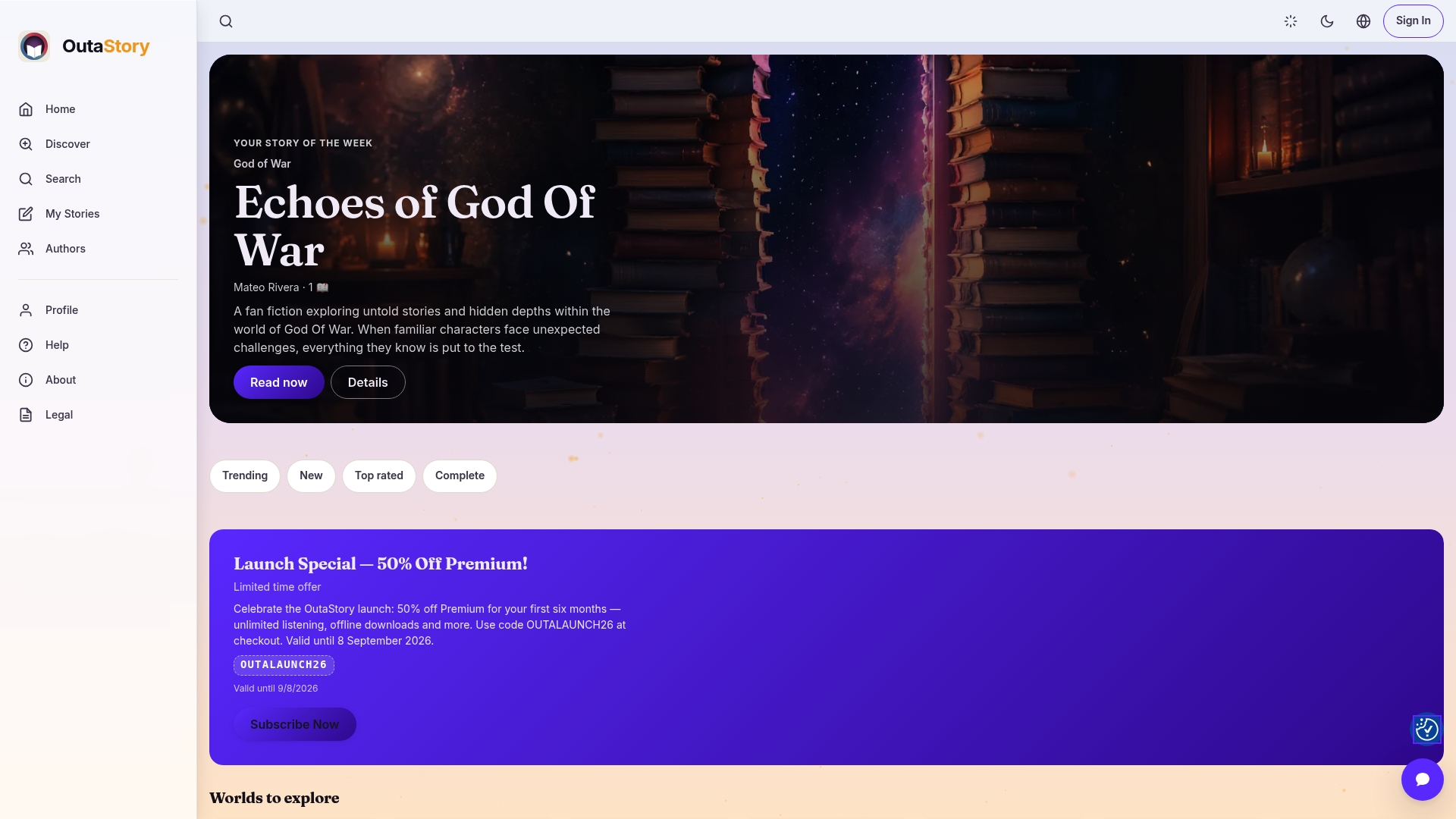
Für Romantasy-Autoren sind besonders diese Funktionen relevant:
- Kapitel-Fortsetzung: Veröffentliche Szenen kapitelweise und sammle Feedback nach jedem Abschnitt.
- Audio-Produktion: Jede Geschichte lässt sich mit professionellen Stimmen oder der eigenen Stimme als Hörbuch abspielen.
- Umsatzbeteiligung: Wer regelmäßig veröffentlicht, kann an den Einnahmen seiner Geschichten teilhaben.
Starte jetzt mit einer ersten Szene auf Outastory und sieh, wie Lesende auf deinen Trope reagieren.
Quellen
- Romantasy: Alles, was du über das Genre wissen musst | Tor Online
- Romantasy Guide | Penguin Discover
- Romantasy Tropes Guide: Slow Burn, Enemies to Lovers, Fated Mates & More | Genre’d Podcast
- Romantasy – harmlos oder Verharmlosung? | MedienFokusBW
- Romantasy Tropen 2025 | Audible Blog
- Romantasy Tropes Ranked: Fated Mates and More | AproposBooks
Empfehlung
Artikel erstellt mit BabyLoveGrowth
Lesen und schreiben auf OutaStory
Kurzgeschichten kostenlos lesen – oder eigene Geschichten veröffentlichen und Leser finden.