
Summer vacation stories for children: The best selection by age
For preschool and elementary school children, summer vacation stories work best when they are short, vivid and age-appropriate, i.e. somewhere between two and ten minutes of reading time. Reading time becomes most effective when you combine a text with a printable activity and, if necessary, include an audio version. For exactly this combination of text and a professionally produced audiobook, it's worth taking a look at OutaStory.
In short:
- For preschoolers, short, calming stories of two to five minutes that include recurring sentences or rhymes are suitable.
- Children aged five to six benefit from stories with an adventurous character that last five to ten minutes and are easy to fit into daily routines.
- For children aged seven and up, longer short stories or multi-part adventures are suitable, which can also be spread over several reading sessions.
- Print templates should fit on one DIN-A4 page, offer large type and space for pictures or activities to save preparation time.
- Platforms like OutaStory offer professional audio and reading texts that can be used offline and are ideal for on the go or relaxed evenings.
Table of contents
- Short list: Summer vacation stories for every age group
- Free printable templates for summer
- Reading tips: How to bring the summer story to life
- OutaStory as a practical source for reading texts and audio versions
- Other collections and reading tips on the web
- OutaStory for relaxed holiday evenings and daycare sessions
- Sources
- FAQ
Short list: Summer vacation stories for every age group
Not every story fits every child. A three-year-old needs something different than a nine-year-old, and many reading collections fail for exactly that reason: they throw everything into one pot. A division by age, such as offered by Oh My Tales for three- to four-year-olds, makes selection noticeably easier because you can immediately estimate reading time and content.
For ages 3 to 4 children need calm, not excitement. Stories should be two to five minutes long and include recurring lines or rhymes.
- A short rhymed story about a day at the beach, collecting shells and building sandcastles. Ideal right before naptime.
- An illustrated story about an ice cream that melts before it can be eaten. Works well as a prompt for conversation afterwards.
- A very short story about an animal that goes into the water for the first time. Fits into any gap between two activities.
For ages 5 to 6 a small adventure can already be added, as long as the outcome is positive. Five to ten minutes is the right frame here, for example in a short story about a summer by the sea that is ideal for reading aloud.
- A story about two children who organize a treasure hunt at summer camp. Good for the morning circle because it creates excitement for the day.
- A tale about a train journey to the vacation with small mishaps along the way. Fits perfectly into real bus rides or waiting times.
- A story about a child who discovers a hedgehog in the grandparents' garden. Suitable for quiet afternoons outside.
For ages 7 to 9 children can handle more plot and initial short chapters. Ten minutes and more are normal here, also split into several reading sessions.
- A multi-part holiday adventure story with a small puzzle that is solved over two or three chapters. Very good for reading groups in the afternoon.
- A tale about friendship at camp with a small conflict and reconciliation at the end. Encourages retelling.
- A story about a bike tour through unknown terrain. Suits calm, longer evening reading situations.
Free printable templates for summer
Ready-to-print texts save preparation time, especially when you need something quickly for the circle in the morning. A good example is the summer story "Die kleine Zitrone" to print, which comes directly with activity suggestions instead of just plain text.
You can recognize a good printable template by a few simple features:
- The text fits on one DIN-A4 page, a maximum of two.
- The font is large enough for children who want to read along themselves.
- There is space or suggestions for a picture to color in.
- A short activity follows, for example a "summer-ideas bag" with small outdoor tasks. Such accompanying activities ensure that the experience extends beyond the actual reading time, as practice with stories for children shows.
For daycare or a group, a short five-minute check before printing is enough: Reading time appropriate for the group? Font large enough? A question at the end prepared to invite conversation? If all three points are met, the template is ready to use.
Reading tips: How to bring the summer story to life
The first sentence often decides whether children listen or drift off. A sentence like "The sand was so hot that Mia had to hop on one leg" works better than a long introduction. Reading aloud is one of the most effective daily rituals for children, as SchlummerMärchen also shows in their overview of reading rituals, precisely because it creates closeness and predictability.
Three techniques make the biggest difference:
- Vary speed. Slow down at exciting moments, read more briskly in calm passages.
- Use pauses deliberately. After a question in the text, wait briefly before continuing. Children often fill the gap themselves.
- Use repetitions. A recurring sentence or call invites children to speak along, especially the very young.
Interaction doesn't require much preparation. Ask in between: "What would you do now?" Distribute small roles in the seating circle, for example one child makes the sound of the sea, another the seagull. Afterwards a short activity fits well, a mini-theater with the main characters, a homemade summer bag with small tasks, or a simple song that matches the story.
Pro tip: Read the same short sentence once very quietly and once clearly louder. The contrast will rouse even sleepy afternoon groups without any new props.

OutaStory as a practical source for reading texts and audio versions
There are platforms where short stories can be read or listened to for free, with professionally produced voices or the author's own voice. For parents and educators, this means: you don't have to choose between text and audiobook, but have both in one place, in German and in English.
In everyday holiday life, this can be used practically:
- Playlists with several summer stories can be put together in advance for the whole holiday week.
- An offline function can help when you're out with children and don't have a stable connection, for example on a train or in the woods.
- Longer holidays can be bridged with continuation stories that appear in chapters, instead of having to find a new story every day.
For educators, age-appropriate playlists are particularly suitable for the morning circle, while a quiet audio passage in the afternoon can work as a small relaxation ritual.
Other collections and reading tips on the web
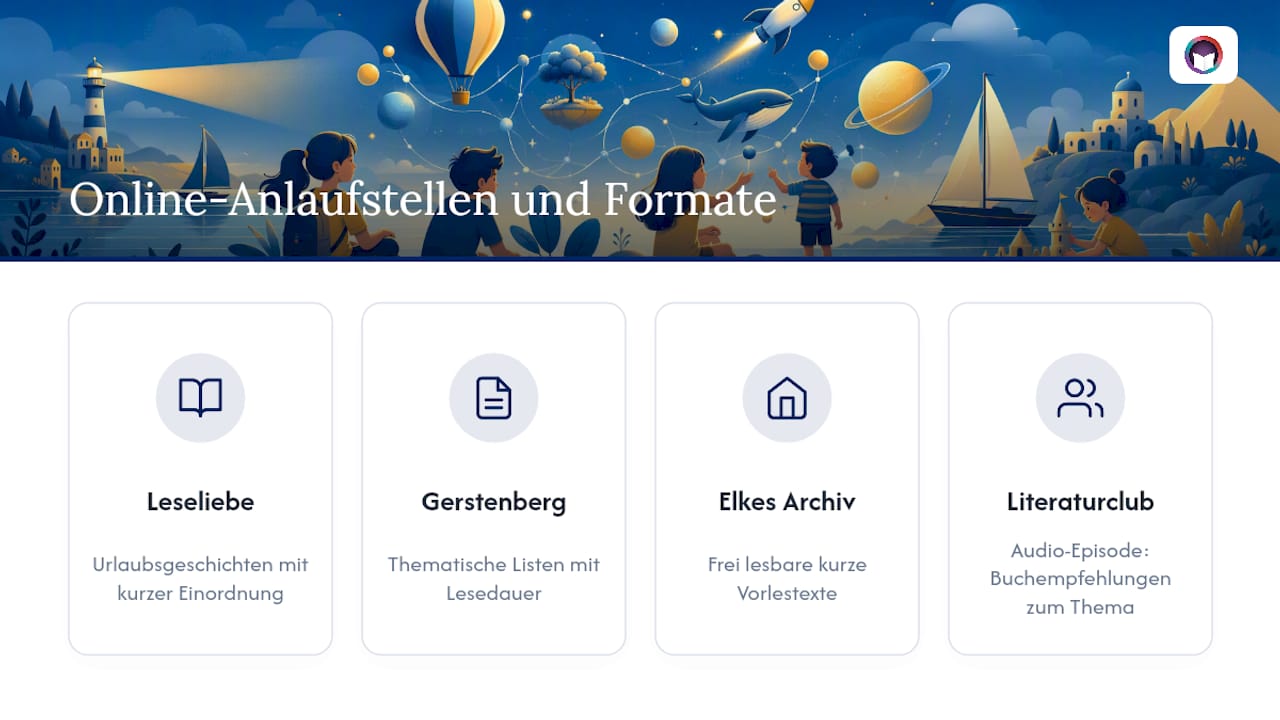
If you want to browse beyond your own selection, you can find some well-sorted online starting points. The site Leseliebe collects vacation stories with short annotations, while the Gerstenberg Verlag provides thematic lists with reading time indications that are good for supplementing your own reading evenings.
For freely readable texts without a purchase requirement, it's worth taking a look at the vacation stories archive from Elkes Kindergeschichten, which contains many short reading texts. Those who prefer to listen rather than read will find curated children's book recommendations on the topic of summer holidays as an audio episode in formats like the Literaturclub Kinder.
OutaStory for relaxed holiday evenings and daycare sessions
A printed story works well for the morning circle, but in the evening or on the drive to vacation you often need something else: a voice that reads aloud while your hands are free. That's exactly what OutaStory is designed for.
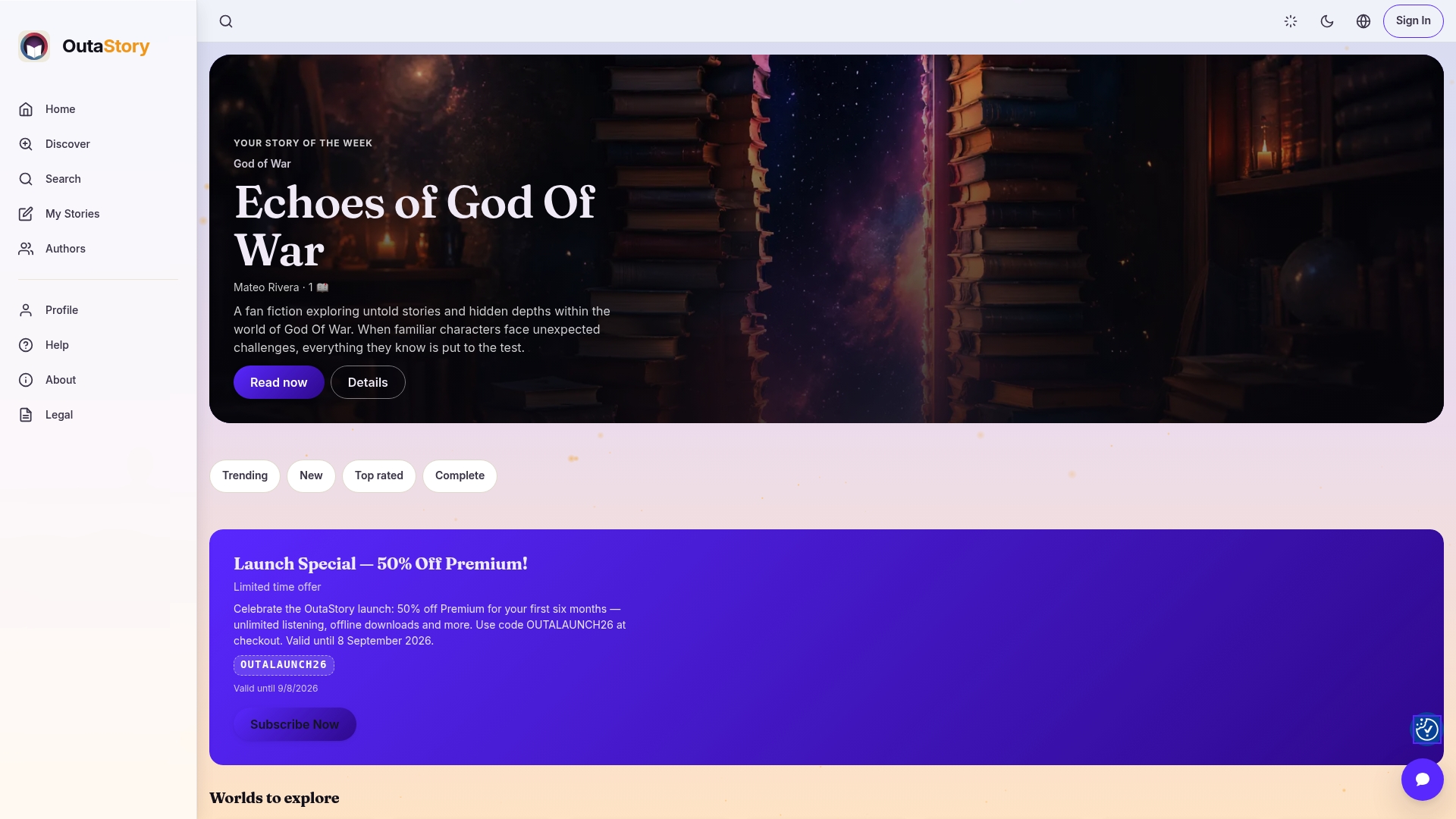
On the platform you can read or listen to short stories for free, with professionally produced voices or the voice of the respective author. Those who listen regularly, want to listen offline or need unlimited access will find that in the Premium offering. For families who are on the go a lot during the holidays, the offline function is particularly practical—no network needed, no ad breaks in the middle of the most exciting part.
It's also worth a look for authors: those who write summer vacation stories themselves can publish them in a few minutes and participate in the revenues via the revenue share, with a platform fee of 8%. Have a look at the current selection of vacation and summer stories directly on OutaStory and put together your first holiday playlist.
Sources
- A short story: A Summer by the Sea
- Summer story to print: The Little Lemon
- Stories about the summer holidays for children aged 3/4 years | Oh My Tales
FAQ
Which story is about holidays?
There are many stories about holidays, from short beach adventures to longer tales about holiday camps. A readily accessible option is the short story „Ein Sommer am Meer“, which is ideal for reading aloud and also makes sense as an audio version on platforms like OutaStory.
What creative ideas are there for the summer holidays?
A mix of reading aloud, little crafts and listening works best. A „summer-ideas bag“ with small tasks related to the story, a mini-theater with assigned roles, or a shared song after the story keeps children actively involved instead of just listening.
Which summer stories are suitable for children?
It strongly depends on age: three- to four-year-olds need very short, calming texts of two to five minutes, while seven- to nine-year-olds can handle longer short-chapter stories with a small adventure. Age-separated collections like those from Oh My Tales help with quick selection.
Which children's books are suitable for the summer holidays?
Books with short, self-contained chapters work most reliably during the holiday routine because they can be flexibly fitted into waiting times or car rides. Those who prefer listening instead of reading will find comparable short stories on OutaStory as professionally produced audiobooks, complemented by sequels for longer holiday periods.
Recommendations
- The best bedtime stories for children from 0 to 8+
- The best bedtime stories for children from 0 to 8+
- Stories for reading aloud: Free and age-appropriate for children
Read and write on OutaStory
Thousands of short stories to read for free — or publish your own and find an audience.