
Choosing the right genre for short stories: here’s how
You choose the right genre for a short story based on its impact. First, decide what you want your readers and listeners to feel at the end (goosebumps, wonder, a racing heart, a smile). Then choose the genre that delivers exactly that promise. A short story only has room for one conflict and one twist. That is why the best choice is the genre that makes its impact quickly and works just as well read aloud as silently. On OutaStory, every story can also be played as an audiobook. That is why we always think about genre in two ways: How does it read, and how does it sound?
In brief
- Impact before label: First establish the desired impact, then choose the genre that promises it.
- One conflict, one twist: Choose a genre whose core fits into a single high-stakes situation, such as crime fiction, horror, fantasy, or science fiction.
- Hybrids are allowed: Romantasy or science fantasy work when one genre clearly leads and you label it honestly.
- Consider the reading situation: Being on the go, falling asleep, or reading aloud to children calls for different genres and tones.
- Try things out instead of overthinking: On OutaStory, you can publish in just a few minutes and release an idea as a serialized story, chapter by chapter.
Table of contents
- Genre, form, theme: what you are actually choosing
- Which genres work particularly well in short fiction
- Six steps to the right genre
- Which genre attracts the most readers?
- Choosing a genre as a reader, listener, or parent
- Reading, listening, and publishing on OutaStory
- Frequently asked questions about choosing a genre
- Sources
Genre, form, theme: what you are actually choosing
Three terms are easily confused when writing, and distinguishing between them makes decisions easier.
The short story itself is the form: a short prose text that usually begins without a lengthy introduction, focuses on a slice of reality, and often has an open ending. The guide »The Art of Brevity« sums up the rule: as short as possible, only as long as necessary, with a reading time of no more than one hour at a normal pace. Detailed descriptions and lengthy characterizations are usually omitted.
The genre is the promise to the reader. Crime fiction promises the question »Who did it?«, horror promises fear, and romantasy promises love in a magical world. Media studies makes a clear distinction here: Michael Niehaus’ study »What Is a Genre?« quotes Knut Hickethier’s distinction, according to which form is a mode of storytelling, whereas genre is a historically developed group of works with its own purpose and its own audience expectations.
The theme is what the story is about: loss, friendship, guilt, homecoming. A theme fits into almost any genre. »Homecoming« can be a quiet slice-of-life story, a ghost story, or a science fiction tale about a spaceship returning after three hundred years.
For your decision, this means: the form is established, and you probably already have the theme. What you need to choose is the promise you make to your audience.
Which genres work particularly well in short fiction
In principle, every major genre is also suitable for short texts. The DSFo.de guide to genre lists fantasy, science fiction, crime fiction and mystery, thrillers, horror, romance, historical fiction, psychological stories, and children’s and young adult literature, among others. It also emphasizes that each major genre can be divided into subgenres. What matters is how quickly a genre makes its impact. This overview helps you weigh your options:
| Genre | Promise to the reader | What fits into short fiction | Typical pitfall |
|---|---|---|---|
| Fantasy | Wonder, another world | One magical detail in a familiar situation | Too much worldbuilding, too little plot |
| Romantasy | Love and magic together | One encounter, one turning point in the relationship | Two plotlines that both fall short |
| Science fiction | An idea that thinks beyond the familiar | A single what-if question, explored consistently | Explaining technology instead of telling a story |
| Crime fiction | A puzzle and its solution | A case with few suspects and a clear payoff | Too many clues for too little space |
| Thriller | Suspense, time pressure | One threat, one countdown, one decision | Suspense without resolution |
| Horror | Fear, goosebumps | An eerie moment that escalates | Shock instead of atmosphere |
| Children’s story | A sense of security, a small adventure | One animal, one problem, a happy ending | Overly complex language or too many scares |
Genres driven by a single strong idea are particularly rewarding. Science fiction and fantasy are ideal for this: a short story can introduce exactly one unfamiliar rule and show its consequences without having to explain an entire world. We show just how many varieties fantasy alone offers in our overview of fantasy subgenres. If you prefer bringing magic into the present day, urban fantasy short stories offer a genre that needs little explanation: everyone knows the city, and magic is the only departure from the familiar.
Crime fiction, thrillers, and horror, in turn, thrive on suspense and turning points, precisely what the short story already offers as a form. The surprising twist at the end is not a stylistic device here, but the genre itself.
Six steps to the right genre
If you have an idea but do not yet know which direction it should take, these steps will guide you toward a decision.

1. Define the impact
Write down a sentence: »At the end, my reader should …« If you write »feel scared«, you will end up with horror or mystery. If you write »smile«, you will choose a light fantasy or slice-of-life story. If you write »puzzle over it and then be amazed«, you will choose crime fiction. This one sentence is your compass for every later decision, from the title to the final line.
Where things go wrong: Many writers start with the setting (»something with dragons«) and only realize on page five that the story is not aiming for any particular impact.
2. Check whether the conflict fits a short story
A short story supports one plotline. Ask yourself: Can my conflict reach its climax in one scene or a few scenes? A murder with five suspects is material for a novel. A murder in which the narrator slowly realizes that she herself is the killer fits into ten pages.
Where things go wrong: A genre that requires extensive setup, such as epic high fantasy with kingdoms and prophecies, quickly becomes a synopsis in short form. It is better to choose a subgenre that works with a small slice of the world.
If your idea turns out to be bigger: on OutaStory, you can publish it as a serialized story and release it chapter by chapter. This keeps each chapter short while still allowing the story to grow.
3. Describe your readers and the reading situation
Who are you writing for, and when will they read or listen? The survey »The Book as Read« for Germany, Austria, and Switzerland shows how strongly genre preferences depend on the audience: 29 % of 18- to 29-year-olds read fantasy often, compared with only 6 % of those over 70. Women read crime fiction and thrillers more frequently (44 %) than men (32 %), while the reverse is true for science fiction (18 % versus 8 %).
The situation matters too. A story for a commuter train can begin with a bang and be finished after twenty minutes. A story for falling asleep needs a calm rhythm and a reassuring ending. Gentle fantasy, fairy-tale elements, or quiet slice-of-life stories are better suited to this than horror.
4. Use genre hybrids deliberately
Genres can be combined. The DSFo.de guide lists hybrids such as »historical fantasy« or the »medical historical thriller« and notes that the boundaries between genres and subgenres are fluid. Romantasy is itself one such hybrid, as is science fantasy, which combines technology and magic. You can find examples and inspiration in our article on science fantasy short stories.
The rule of thumb for short fiction: one genre leads, the other adds flavor. A witch story with crime fiction elements remains a fantasy story in which a puzzle happens to be solved. Our recommendations for witch fantasy short stories show just how varied this particular field is.
Where things go wrong: Two equally dominant genres in a short text mean two half-fulfilled promises. In the end, nobody is satisfied.
5. Read the story aloud
Genre is also about sound. Horror thrives on pauses and short sentences, crime fiction on precise dialogue, and a bedtime story on repetition and a gentle rhythm. Read your draft aloud once. If you stumble, the tone does not yet fit the genre.
For OutaStory, this step is more than an exercise: every story on our platform can be played as an audiobook, with professionally produced voices or your own voice. This means your short story reaches not only readers, but also people who listen on the go or in bed at night.
6. Label the genre honestly and publish
The label is a promise to your audience. The Frankfurter Buchmesse guide for authors explicitly requires the genre to be stated in the synopsis. It also warns against selling a cozy mystery as a nerve-shredding psychological thriller. What applies to publishers applies equally to readers on a platform: someone who expects goosebumps and gets a feel-good story will be disappointed, even if the story is good.
On OutaStory, you can publish your short story in just a few minutes and reach readers in German and English. Whether it is fantasy, romantasy, science fiction, crime fiction, a thriller, horror, or a story for our children’s section: your audience finds you through the genre you choose.
Which genre attracts the most readers?
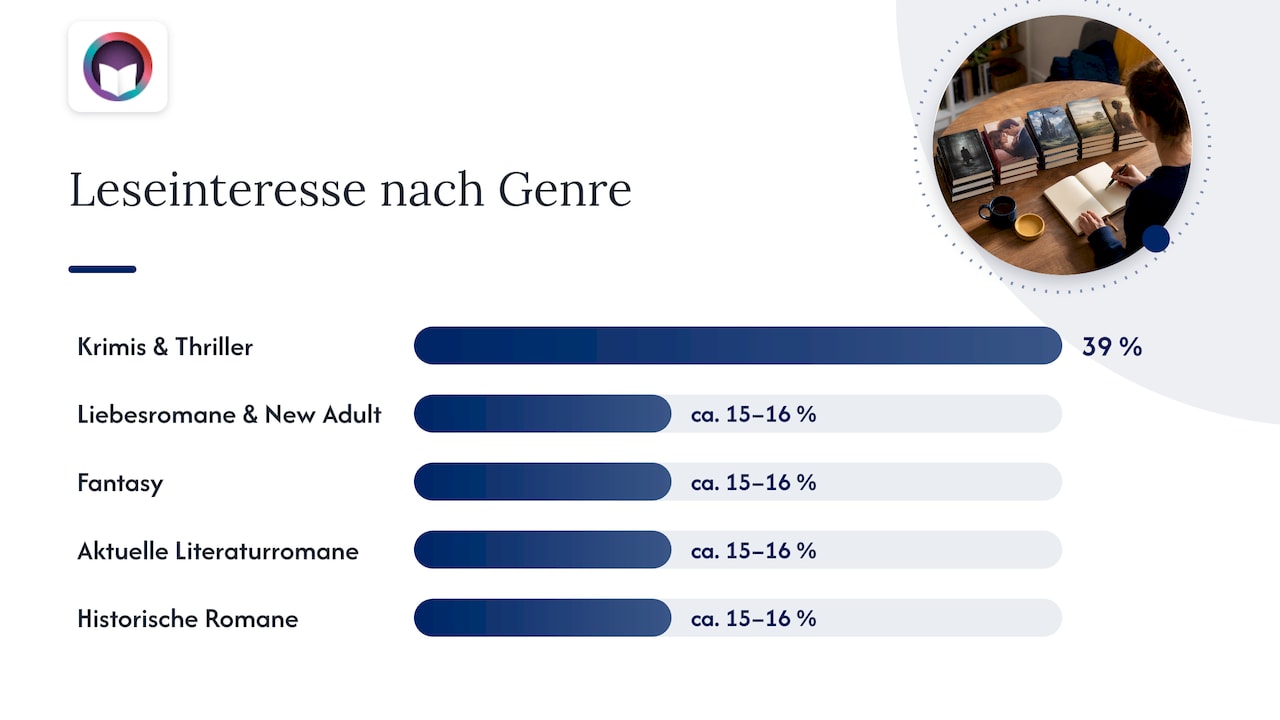
If you want to earn money from writing, you are right to ask about demand. The figures from »The Book as Read« are clear: 39 % of respondents read crime fiction and thrillers often or very often. Romance and New Adult novels, fantasy, contemporary literary novels, and historical novels follow, each at around 15 to 16 %.
What does this mean? Crime fiction and thrillers have the largest audience, but also the most competition for attention. Fantasy is read frequently by younger people in particular, and fans specifically seek out their preferred subgenre. When choosing, therefore:
- Think in subgenres. »Fantasy« is a broad field; »urban fantasy with witches« is a niche in which your story can stand out.
- Stick with one genre until you have an audience. If you publish regularly in the same field, you become a go-to author for those readers.
- Use serialized stories. A story released chapter by chapter gives readers a reason to come back.
On OutaStory, you receive a share of the revenue your stories generate through revenue sharing. As an author, you pay nothing to use the platform; the platform commission is 8 %. A well-chosen genre that finds its audience is therefore directly linked to what your writing earns.
Choosing a genre as a reader, listener, or parent
Writers are not the only ones facing the genre question. If you want to read or listen to short stories for free, it is best to choose according to your mood and situation.
On the go: Crime fiction and thrillers are perfect for commutes because they build suspense quickly and are resolved within a single journey. Our thriller »Dark Dealings« offers a starting point.
For falling asleep: Calm fantasy, fairy-tale stories, and quiet slice-of-life stories. Horror and thrillers raise your pulse—that is their purpose, but not what you want before sleep. In the evening especially, it is worth listening to stories instead of reading: eyes closed, lights off, the voice tells the tale.
For fantasy and sci-fi fans: It is worth looking at the subgenre here. If you like magic in everyday life, urban fantasy is for you. If you want to combine spaceships and spells, science fantasy is the right choice.
For children: Our dedicated children’s section offers bedtime stories, animal adventures, and first rhymes. For evenings, Stiftung Lesen recommends a regular read-aloud routine following the pattern »bath, book, bed«, in which the bedtime story brings the day to a shared close. For genre selection, this means: short stories, a manageable adventure, an animal or character the child can identify with, and a happy, soothing ending. Scary stories are better saved for the afternoon, and even then, only as much as your child can comfortably handle.
Reading, listening, and publishing on OutaStory
Whether you are looking for the right genre to read or have just found yours to write: on OutaStory, you can read short stories for free. The selection ranges from fantasy, romantasy, and science fiction through crime fiction, thrillers, and horror to bedtime stories for children. You can also play every story as an audiobook, with professionally produced voices or the author’s own voice.
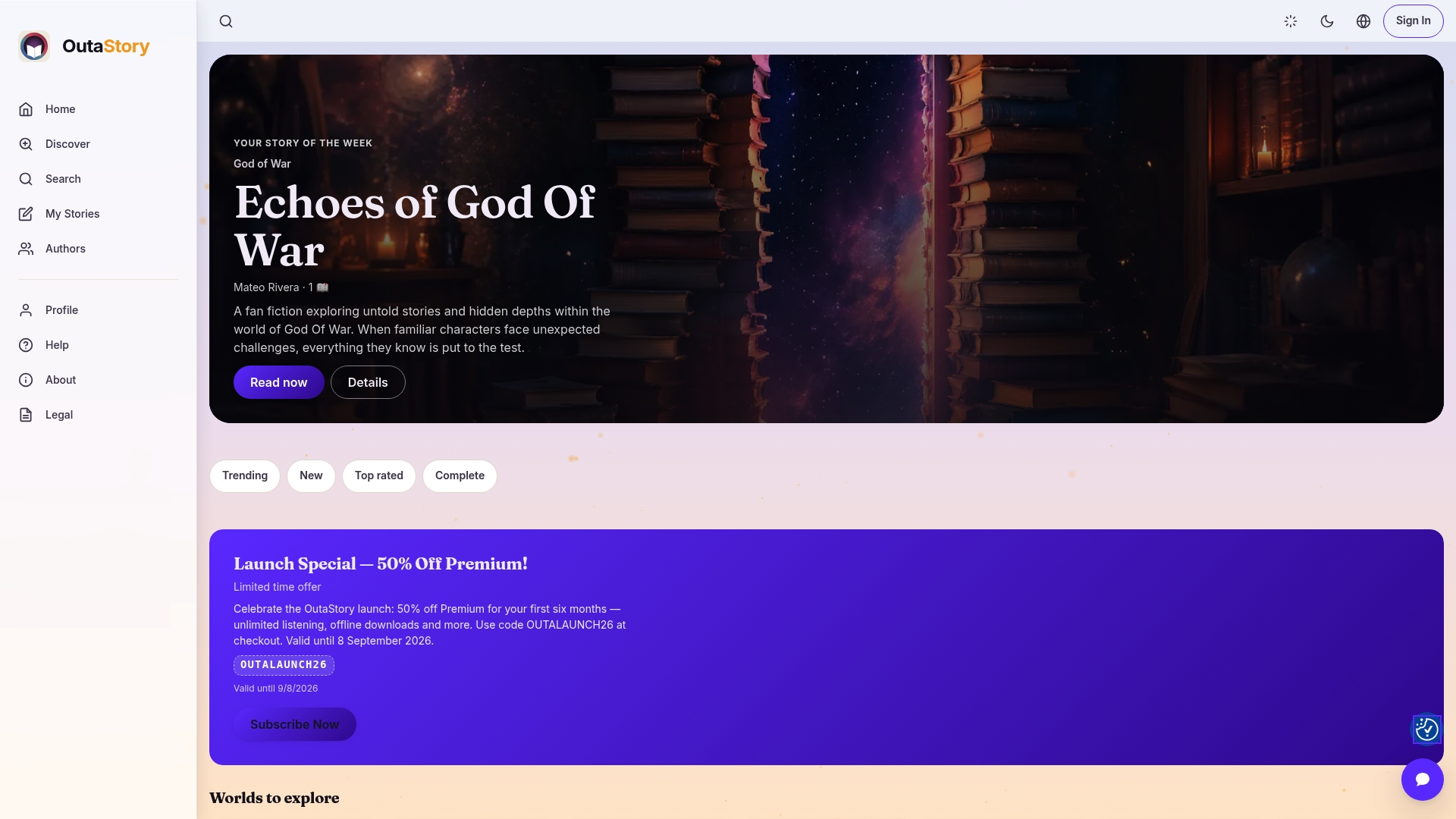
If you want to listen more, our Premium subscription offers enhanced features such as unlimited listening, ad-free use, and offline access. And if you write yourself, you can publish in just a few minutes, chapter by chapter if you wish, and receive a share of the revenue through revenue sharing. A good starting point for browsing is »The Spoon That Knows the Way Home«.
Your world, your stories: write, read, listen.
Frequently asked questions about choosing a genre
Can a short story have multiple genres?
Yes. Hybrids such as romantasy, science fantasy, or historical fantasy are common, and the boundaries between genres are fluid. In short fiction, it works best when one genre clearly leads and the other merely complements it. When publishing, name the leading genre so readers know what to expect.
Which genre is suitable for beginners?
The easiest genre is the one you most enjoy reading yourself, because you already know its rules. Many people begin with a short fantasy or crime story because both start with a clear idea or a puzzle. The important thing is to keep the conflict small enough to fit into one scene.
How long should a short story be?
As short as possible and only as long as necessary. A reading time of no more than one hour at a normal pace serves as a guideline. If your idea grows bigger, you can publish it on OutaStory as a serialized story in chapters.
Which genres are suitable for children’s bedtime stories?
Animal stories, gentle fantasy, fairy-tale elements, and first rhymes are the best fit. A calm tone, a manageable plot, and a soothing ending are essential. In our children’s section, you will find bedtime stories, animal adventures, and first rhymes to read and listen to.
Sources
- The Art of Brevity (sample)
- Michael Niehaus: What Is a Genre? An Investigation in 463 Remarks
- Genre: The DSFo.de Guide
- The Book as Read: Germany, Austria, and Switzerland (Working Paper, University of Basel)
- Frankfurter Buchmesse: Guide for Authors
- Stiftung Lesen: Ending the Day Together with a Bedtime Story
Recommendations
- Short Christmas stories: instantly suited to the age and occasion
- Read and listen to romantic short stories for free
Read and write on OutaStory
Thousands of short stories to read for free — or publish your own and find an audience.