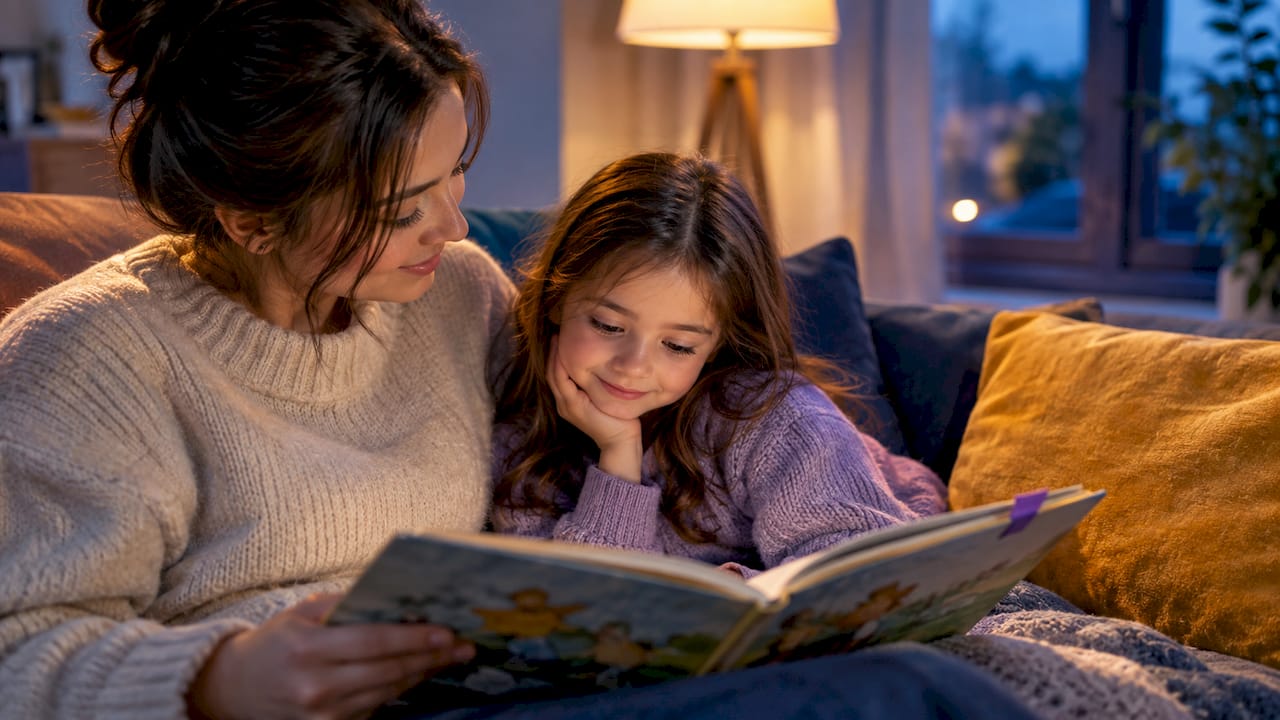
Ten short stories for 10 minutes of read-aloud time with tips
You can find short stories for 10 minutes of read-aloud time most quickly in editorially curated collections with clear duration indications, as well as in public-domain classics like Wolfgang Borchert’s texts and on platforms like Outastory, which also offer stories as audio versions. As a rule of thumb: 1,000 to 1,300 words correspond to about ten minutes of read-aloud time at a calm pace. The following selection provides specific titles, age recommendations and reading tips so you don't have to search long tonight.
In short:
- Stories should be about 1,000 to 1,300 words to fit into ten minutes at a calm read-aloud pace.
- For younger children under six, simple structures with familiar characters and few side plots work best.
- For older children you can also use exciting, spooky or more complex texts if they are resolved safely.
- With simple practical methods you can estimate the reading time precisely using word count, a practice read and buffer planning.
- Free platforms like Outastory already offer fully narrated short stories ideal for relaxed read-aloud times.
Table of contents
- Ten short stories of around 10 minutes read-aloud time
- How do you calculate the reading time of a story?
- Reading tips that make ten minutes go further
- Where to find free 10-minute stories
- OutaStory as a practical hub for short stories
- How to write a 10-minute short story yourself
- Why short read-aloud stories are psychologically good for children
- How to adapt stories to age and interests
- Try OutaStory: read or listen for free
- Sources
- FAQ
Ten short stories of about 10 minutes read-aloud time
The following list combines classic and modern texts. Each story fits approximately into the ten-minute window, though the actual duration may vary slightly depending on your pace and the number of questions in between.
1. Die Kirschen (Wolfgang Borchert) Recommended from about 10 years old, reading time roughly 8 to 10 minutes. A boy lies sick in bed and negotiates with his mother over a bowl of cherries. Borchert's short story is considered a compact example of postwar literature and is often read in class. Tone: thoughtful, slightly melancholic.
2. Das Brot (Wolfgang Borchert) From about 12 years old, about 7 minutes reading time, roughly suitable for a short read-aloud ritual. An older couple meet at night in the kitchen; each knows why the other is there, yet neither says it aloud. "Das Brot" was written in 1946 and is among the most quoted German short stories ever. Tone: quiet, morally charged.
3. Der Fuchs und die Trauben From 4 years old, about 3 to 4 minutes, but can be combined with two similar fables into a ten-minute block. A fox cannot reach the grapes and claims they are sour anyway. Tone: humorous with a moral.
4. Der tapfere kleine Igel From 5 years old, approximately 9 minutes. A little hedgehog overcomes his fear of the dark forest to help an injured bird. A modern bedtime story, freely available in several collections. Tone: calming, encouraging.
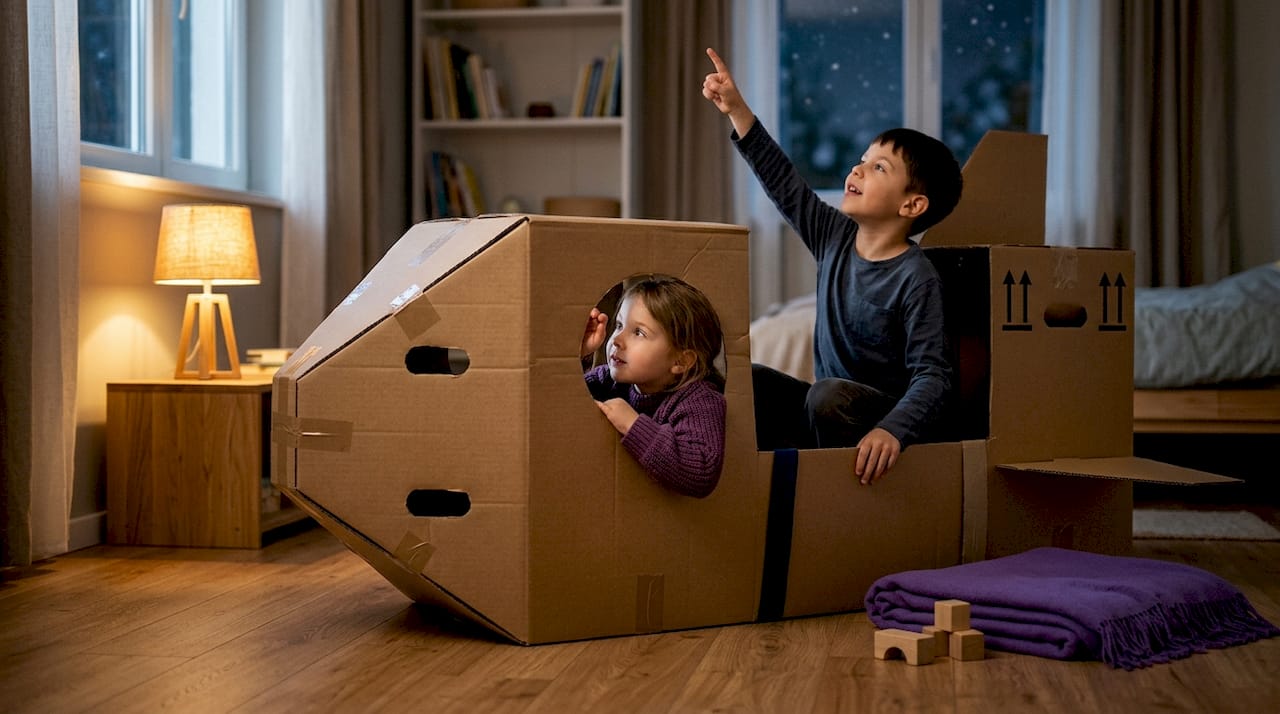
5. Die Reise zum Mond From 6 years old, about 10 minutes. A pair of siblings build a spaceship out of cardboard and experience a whole night of adventures in play before both fall asleep peacefully. Tone: adventure with a calm denouement, ideal as a bedtime story.
6. Der Hase und der Igel From 5 years old, around 6 minutes. The well-known fable about overconfidence and cleverness pairs well with a second short story. Tone: humorous, clear in its moral.
7. Die Schneekönigin (gekürzte Fassung) From 8 years old, about 10 minutes in an abridged retelling. Hans Christian Andersen's fairy tale works well in shortened form for read-aloud evenings because the core plot holds up without all side strands. Tone: fairy-tale, slightly dramatic.
8. Ein Tag im Leben eines Regentropfens From 4 years old, about 7 minutes. A child-friendly tale about the water cycle, packaged as a small adventure of a raindrop from the cloud to the river. Tone: gently educational, good for early listeners.
9. Der Löwe, der nicht brüllen wollte From 5 years old, about 9 minutes. Tone: calm, with a clear message for younger children.
10. Die Sterntaler (Brüder Grimm) From 6 years old, about 5 to 6 minutes, easily combined with a second short tale. A public-domain fairy tale about a girl who gives everything away and is richly rewarded. Tone: warm, classic, ideal for falling asleep.
If you're looking for something shorter, you'll find more texts with indicated reading times that are also suitable for adults in Short stories to ponder.
How do you calculate the reading time of a story?
The simplest method is by word count. As a guideline, about 1,000 to 1,300 words for ten minutes of read-aloud time apply, assuming you read at a calm, child-appropriate pace and not like a newsreader.
An example calculation makes it tangible: At about 130 words per minute in read-aloud pace, 1,200 words equal pretty much nine to ten minutes of pure reading time. Add pauses, children's questions or voice changes between characters, and the time increases noticeably. Especially dialogue-heavy texts often take longer because you switch voices and take breaths more often.
The following approach helps in practice:
- Read the text aloud once as a trial, preferably without listeners, and time it.
- Mark sections where you want to pause, for example before climaxes.
- Roughly count the words per page and extrapolate to the entire text.
- Plan a one- to two-minute buffer for dialogue-heavy passages.
Pro tip: Always read a new story aloud to yourself once before presenting it in the evening. This way you immediately notice whether the estimated ten minutes are realistic or if you need to shorten it.
Reading tips that make ten minutes go further
The first sentence decides whether children will stay engaged. Keep it short and concrete, for example “In einer Nacht ohne Mond machte sich der kleine Fuchs auf den Weg.” The last sentence should conversely clearly signal that the story is over so no child waits for a sequel that won't come.
A few techniques make the difference between a story that sounds read and one that truly comes alive:
- Lower your voice for calm scenes, raise it briefly at moments of tension.
- Give each recurring character a slightly different pitch; that helps younger children orient themselves.
- Include a short question at one or two points, such as “What would you do now?”, to engage attention without blowing the time budget.
- Adjust the pace to the age: younger children need more pauses to process.
Pro tip: Have a ready response to handle interruptions politely but firmly, for example “Good question, we'll find out in a moment” — this keeps the story within the time frame. If a text is too long for one evening, deliberately split it into chapters and continue the next night.
Where to find free 10-minute stories
Editorial collections are the most reliable starting point because they usually provide a summary, an estimated duration and an age recommendation. That saves you from having to recalculate the word count yourself.
Public-domain classics, such as fairy tales by the Brothers Grimm or fables, are freely accessible via library services and digital archives and can be combined as needed if a single text is too short. It's worth doing a quick check beforehand when selecting:
- Is there an age recommendation, or do you have to assess it yourself?
- Is a duration stated, and does it seem realistic for your own pace?
- Is there a reading sample with which you can check tone and vocabulary in advance?
If you'd rather relax in the evening than read aloud yourself, professionally narrated audio versions provide a calm alternative, especially for bedtime rituals.
OutaStory as a practical hub for short stories
The OutaStory platform offers short stories and audiobooks to read and listen to for free, including a children's section with suitable stories. Many stories can also be played as audiobooks, either with professional voices or with the author's own voice.
Authors can publish their own short stories, even chapterwise as serials, and share in the revenue generated. Details about membership can be found on the Membership page, and information for authors is on the page for narrators and authors.
How to write a 10-minute short story yourself
Start with the word count in mind, not with the plot. If 1,000 to 1,300 words are your limit, you need a story with exactly one conflict, not three. A child who is afraid of the dark and finds a way to cope is perfectly sufficient as the narrative scaffold.
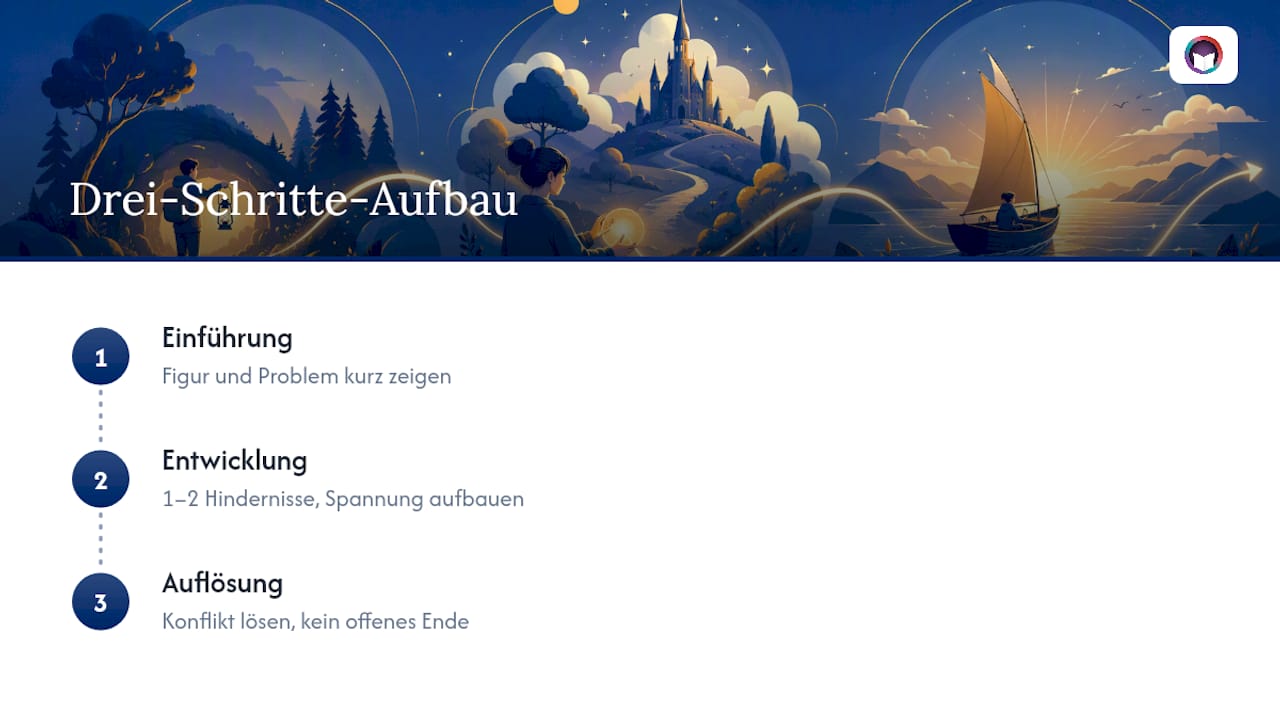
Build the structure in three clear steps: a short introduction of the character and the problem, then a development with one or two small obstacles, and an ending that resolves the problem. Avoid side characters that have no function for the plot; every additional character costs words and attention.
Write dialogue sparingly but purposefully. A good exchange between two characters often reveals more about them than three descriptive sentences, but it costs more time when read aloud because of the voice changes. Plan for that if you are already keeping the ten-minute limit in mind while writing.
Read the finished text aloud to yourself before presenting it to someone. This reveals awkward sentences that look fine on paper but trip you up when spoken. If you want to publish your own stories, you can do so online in just minutes, including narration as an audiobook.
Why short read-aloud stories are psychologically good for children
A fixed ten-minute story in the evening gives children something often missing in everyday life: a reliable, manageable routine. Unlike a longer chapter book that remains open over days, the short story provides a clear ending before falling asleep. That creates a sense of closure, which especially younger children need to settle down.
Short stories with a clear moral, such as fables, also help children anchor abstract values like honesty or courage to a concrete character. A fox that disparages grapes because it cannot reach them is easier for a six-year-old to understand than an abstract lecture about envy.
Reading together itself has its own effect, regardless of the story's content. Shared attention, a calm voice, physical closeness while cuddling in bed — all of that signals safety. Short stories fit better into real evening routines than long read-aloud sessions, which often fail due to tiredness or time pressure before they reach an end. Ten minutes is achievable for almost any family, every evening, even on hectic days.
How to adapt stories to age and interests
For children under five, simple, repetitive structures work best, such as the same sentences returning at certain points. Complex subplots overwhelm at this age; a single clear storyline with familiar animal characters is completely sufficient.
Between six and nine years old, children can handle more tension and may tolerate a short spooky or exciting twist, as long as the story is resolved safely at the end. Here it's worth following the child's interests: dinosaurs, space, pirates or animals are reliable favorites that can easily be fitted into a ten-minute structure.
From about ten years onward, more demanding texts like Borchert's short stories can work, provided you briefly discuss afterwards what it was actually about. Such texts are less suitable for falling asleep and better for a quiet afternoon or as a starting point for conversation.
More important than the exact age is the child's current state. An excited child needs a calming, familiar story rather than a new, thrilling one, regardless of the age on paper.
Try OutaStory: read or listen for free
If you don't want to search long for the right text tonight, try Outastory directly. The platform can be used for free for both reading and listening, and in addition to the children's section it covers genres like fantasy, crime or adventure if you're looking for something for yourself.

Unlike pure text collections, Outastory gives you each story as a fully narrated audiobook, with professional voices or with the original voice of the author. This is especially practical for evenings when you are too tired to read aloud yourself but still want to keep the ritual. Those who want unlimited listening and offline access will find the relevant details about the premium offer on the Membership page.
Do you enjoy writing stories yourself? On Outastory authors publish their texts in minutes, also chapterwise as serials, and receive a share of the revenue. More is explained on the page for authors and narrators. The easiest next step: open the children's section and pick a suitable story for tonight.
Sources
FAQ
Which free 10-minute stories for adults are available?
Short stories by Wolfgang Borchert such as „Die Kirschen“ or „Das Brot“ are publicly accessible and take about 7 to 10 minutes to read aloud. Platforms like Outastory also offer short stories for adults in multiple genres free to read and listen to.
Which simple short stories are there?
Fables like „Der Fuchs und die Trauben“ or „Der Hase und der Igel“ are considered particularly simple short stories because they have a clear plot and an unmistakable moral. They are suitable already for children from four or five years old and can be combined well into a ten-minute block.
Which five-minute bedtime stories are there?
Shorter fables and fairy tales like „Die Sterntaler“ run about 5 to 6 minutes in this range, as do many modern bedtime stories from editorial collections with indicated durations. For a full ten-minute ritual, two such short texts can easily be read one after the other.
Which short stories are most popular?
Among children, moral animal fables and soothing adventure stories with a happy ending are traditionally most popular because they provide security and a clear conclusion. Among older readers and adults, Borchert’s compact postwar texts remain among the most read German short stories overall.
How long should a story be for 10 minutes of reading aloud?
As a guideline, about 1,000 to 1,300 words at a calm, child-appropriate reading pace correspond to roughly ten minutes. Dialogue-rich texts often require a bit more time because you switch between voices and pause more frequently.
Recommendations
- Short audiobooks: 10 recommendations under five hours
- 5-minute stories: ready-made read-aloud ideas for parents
- The best bedtime stories for children from 0 to 8+
Read and write on OutaStory
Thousands of short stories to read for free — or publish your own and find an audience.