
5-Minuten-Geschichten: Sofort vorlesbare Ideen für Eltern
5-Minuten-Geschichten sind kurze, in sich abgeschlossene Erzählungen, die sich ruhig und ohne Hetze in etwa fünf Minuten vorlesen lassen. Sie haben einen einzelnen Konflikt, wenig Nebenhandlung und ein beruhigendes Ende. Genau das macht sie zur besten Wahl, wenn die Zeit vor dem Einschlafen knapp ist oder ein Kind einfach noch eine Geschichte will, bevor das Licht ausgeht.
Drei Wege bringen Sie sofort ans Ziel:
- Freie Sammlungen im Netz: kategorisiert nach Alter und Genre, meist ohne Anmeldung nutzbar
- Sammelbände und Bücher mit ausgewiesener Vorlesedauer, ideal für feste Abendrituale
- Audio und Plattformen wie Outastory: Geschichten zum Lesen oder Anhören, inklusive eines eigenen Kinderbereichs mit Gute-Nacht-Geschichten und Tierabenteuern
Verlage geben bei 5-Minuten-Märchen die Vorlesedauer oft direkt an, weil Eltern beim schnellen Auswählen genau diese Orientierung brauchen. Als grober Richtwert gilt: Geschichten für Kleinkinder unter drei Jahren bleiben kürzer, während Vorschulkinder und Erstleser etwas komplexere Fünf-Minuten-Texte gut verfolgen können.
Wichtige Erkenntnisse
Fünf-Minuten-Geschichten wirken vor allem dann am besten, wenn sie regelmäßig, kurz und mit festem Ritual vorgelesen werden, egal ob als Text oder Audio.
| Thema | Details |
|---|---|
| Wortzahl als Richtwert | Ein durchschnittliches Vorlesetempo umfasst mehrere hundert Wörter in fünf Minuten. |
| Genre nach Anlass wählen | Gute-Nacht-Geschichten für den Abend, Fabeln für tagsüber mit wacher Aufmerksamkeit. |
| Kürzen statt neu schreiben | Nebenhandlungen streichen und Pausen markieren, statt den ganzen Text umzuschreiben. |
| Feste Rituale stärken die Wirkung | Derselbe Abschlusssatz und dieselbe Stimme jeden Abend erleichtern das Einschlafen. |
| Outastory als schnelle Lösung | Kostenloser Text- und Audiozugriff mit Kinderbereich, Premium für Offline-Nutzung unterwegs. |
Inhaltsverzeichnis
- Fünf-Minuten-Geschichten nach Genre und Alter im Überblick
- Wie lang ist eine 5-Minuten-Geschichte wirklich?
- Welche Vorlesetricks wirken beim Einschlafen am besten?
- Wo finden Sie fertige 5-Minuten-Geschichten zum sofortigen Vorlesen?
- Was macht Outastory zur praktischen Lösung für Fünf-Minuten-Geschichten?
- Jetzt eine Fünf-Minuten-Geschichte auf Outastory starten
- Quellen
- FAQ
Fünf-Minuten-Geschichten nach Genre und Alter im Überblick
Die Auswahl einer passenden Geschichte hängt von zwei Dingen ab: der Stimmung des Kindes und dem Anlass. Eine kurze Übersicht nach Genre hilft, schneller zur richtigen Entscheidung zu kommen, statt lange in Büchern zu blättern.
Gute-Nacht-Geschichten sind auf Ruhe gebaut. Es passiert wenig, der Ton bleibt sanft, und das Ende landet fast immer beim Einschlafen der Hauptfigur selbst, ein kleiner Trick, der beim Kind dieselbe Müdigkeit auslöst.
- „Der müde kleine Bär sucht sein Nest“ – eine kurze Geschichte, geeignet für Kinder ab 2 Jahren
- „Mondscheinreise mit der Eule Frieda“ – eine Geschichte für Kinder ab 3 Jahren
- „Wie der Stern zu Bett ging“ – eine kurze Geschichte, geeignet für Kinder ab 2 Jahren
- „Die Schäfchenwolke und ihr Schlaflied“ – eine Geschichte für Kinder ab 3 Jahren
- „Sandmanns kleinster Sack“ – eine Geschichte für Kinder ab 4 Jahren
Tiergeschichten funktionieren, weil Kinder sich leicht in Tierfiguren hineinversetzen. Ein kleiner Konflikt, meist Verlorengehen oder Streit unter Freunden, wird schnell gelöst.
- „Der Igel, der seinen Weg nicht fand“ – ca. 5 Minuten, ab 3 Jahren
- „Zwei Enten und ein zu kleiner Teich“ – ca. 4 Minuten, ab 3 Jahren
- „Der Fuchs, der nicht schlafen wollte“ – ca. 5 Minuten, ab 4 Jahren
- „Die Maus, die dem Kater half“ – ca. 4 Minuten, ab 3 Jahren
- „Warum der Elefant leise ging“ – ca. 5 Minuten, ab 4 Jahren
Fantasie und Märchen leben von kleinen Wundern und bildhafter Sprache. Ein sprechender Baum, ein Zauberstein, eine Tür, die nur nachts erscheint. Diese Geschichten dürfen etwas Spannung tragen, solange das Ende sicher und warm bleibt.
- „Das Tor im alten Baumstamm“ – eine Geschichte für Kinder ab 4 Jahren
- „Die Königin der Regentropfen“ – eine Geschichte für Kinder ab 5 Jahren
- „Der Junge, der Wolken sammelte“ – eine Geschichte für Kinder ab 4 Jahren
- „Sieben Steine für den Zauberer“ – eine Geschichte für Kinder ab 5 Jahren
- „Das Mädchen mit der Laterne aus Licht“ – eine Geschichte für Kinder ab 4 Jahren
Lustige Geschichten und Fabeln setzen entweder auf Humor oder auf eine klare Lehre am Ende. Beide Formen eignen sich gut für Kinder, die tagsüber noch wach und aufgedreht sind, aber trotzdem eine Geschichte hören wollen.
- „Der Frosch, der Trompete spielen wollte“ – ca. 4 Minuten, ab 3 Jahren
- „Warum die Schnecke zu spät kam“ – ca. 5 Minuten, ab 4 Jahren (Fabel mit Moral zur Geduld)
- „Der Bär, der sein Brummen verlor“ – ca. 4 Minuten, ab 3 Jahren
- „Die Ameise und der zu große Krümel“ – ca. 5 Minuten, ab 4 Jahren (Fabel zur Zusammenarbeit)
- „Wie der Hahn seinen Wecker verlor“ – ca. 4 Minuten, ab 3 Jahren
Diese zwanzig Titel dienen als Muster dafür, wie ein 5-Minuten-Text aufgebaut ist. Ähnliche Strukturen finden sich auch bei fertigen Sammlungen wie Kurze Gute Nacht Geschichten, die konkrete Drei- und Fünf-Minuten-Texte mit Längenangaben bereitstellen.
Wie lang ist eine 5-Minuten-Geschichte wirklich?
Ein durchschnittliches Vorlesetempo liegt bei ruhiger, klarer Aussprache, sodass eine Geschichte für fünf Minuten Vorlesezeit etwa mehrere hundert Wörter umfasst. Pausen, Betonungen und wörtliche Rede können die tatsächliche Dauer verlängern. Genau deshalb weichen die Angaben verschiedener Sammlungen leicht voneinander ab.
Wer einen längeren Text auf fünf Minuten kürzen will, braucht keine literarische Ausbildung, nur eine klare Methode:
- Nebenhandlungen streichen, nur einen Konflikt behalten
- Beschreibende Passagen kürzen, aber die Schlüsselszene stehen lassen
- Bewusste Pausen an Satzenden markieren, etwa mit einem kleinen Strich in der eigenen Textkopie
- Wiederholende Sätze einbauen, sie verlangsamen das Tempo ohne Textlänge zu kosten
Bei Kleinkindern unter drei Jahren reichen oft schon drei Minuten reiner Text, ergänzt durch Wiederholungen und Blickkontakt. Vorschulkinder vertragen die vollen fünf Minuten gut, während Erstleser mit sechs oder sieben Jahren bereits selbst mitlesen und von etwas mehr Handlung profitieren.
So merken Sie sofort, wo Sie kürzen müssen und wo eine Pause natürlich wirkt.*
Welche Vorlesetricks wirken beim Einschlafen am besten?
Der Einstieg entscheidet oft über die ganze Geschichte. Beginnen Sie ruhig, ohne große Ankündigung, und geben Sie der Hauptfigur schon im ersten Satz einen klaren Namen und Ort.
- Sprechen Sie langsamer als im Alltag, besonders in den letzten zwei Sätzen
- Setzen Sie bewusste Pausen nach spannenden Momenten, nicht nur am Satzende
- Nutzen Sie wiederkehrende Sätze oder Reime, sie geben dem Kind Sicherheit
- Schließen Sie mit einem festen Ritualsatz, jeden Abend demselben
- Dimmen Sie das Licht schon während der letzten Minute der Geschichte
Kinder fragen oft mitten in der Geschichte nach, warum eine Figur etwas tut. Eine kurze, ehrliche Antwort reicht meist, ausführliche Erklärungen wecken eher auf, als dass sie beruhigen. Regelmäßiges Vorlesen unterstützt die kindliche Entwicklung nachweislich, und dabei zählt Verlässlichkeit oft mehr als die Länge einzelner Geschichten.
Profi-Tipp: Verwenden Sie für die Erzählerstimme immer denselben ruhigen Tonfall, unabhängig vom Inhalt. Kinder verbinden diesen Klang schnell mit dem Einschlafen, selbst bei aufregenderen Geschichten.
Wo finden Sie fertige 5-Minuten-Geschichten zum sofortigen Vorlesen?
Freie Webseiten wie OhMyTales bieten große Sammlungen, gefiltert nach Alter und Genre, oft ergänzt durch Hörproben. Auch EmHeMa stellt kategorisierte Fünf-Minuten-Texte als Download bereit, praktisch für unterwegs oder zum Ausdrucken.
Bücher und Sammelbände wie 5-Minuten-Geschichten: Zum Vorlesen eignen sich, wenn Sie ein festes Abendritual mit echtem Buch bevorzugen, ganz ohne Bildschirm.
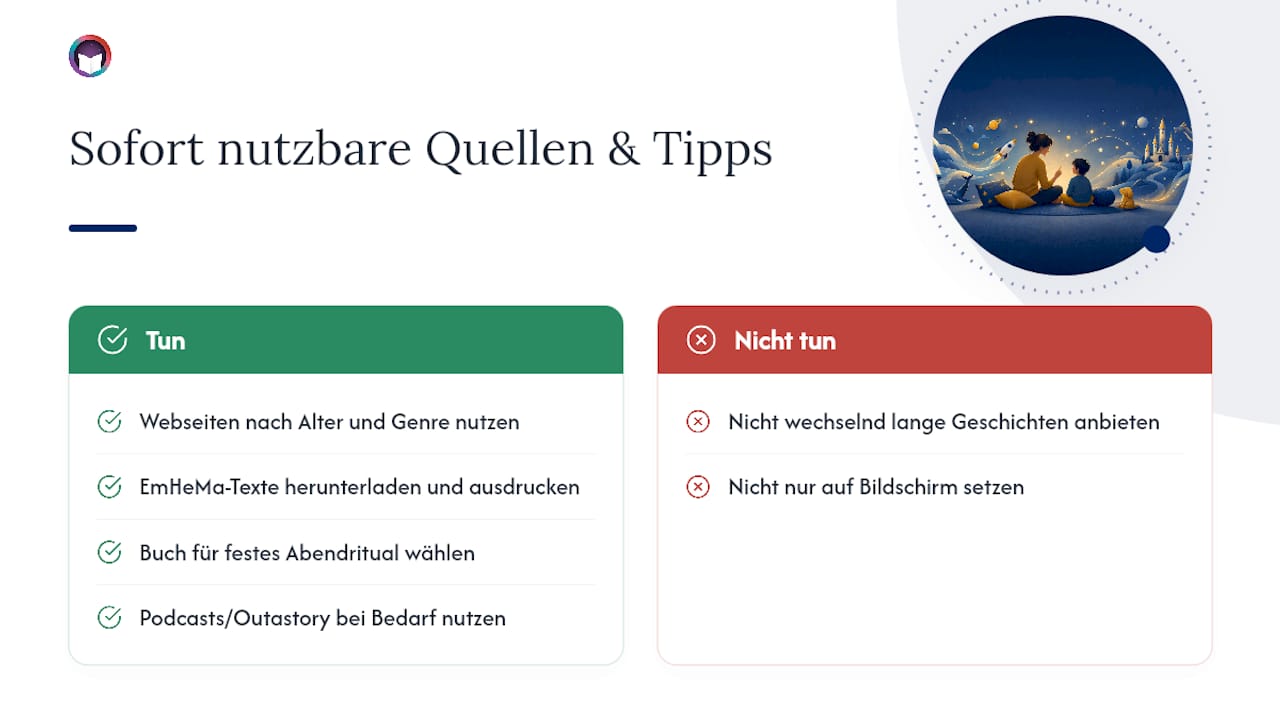
Podcasts füllen eine andere Lücke: Serien mit regelmäßigen Fünf-Minuten-Episoden laufen einfach im Bett oder im Auto, wenn Sie selbst gerade keine Stimme fürs Vorlesen haben.
Plattformen wie Outastory verbinden beide Welten: Text zum Selberlesen und professionell produzierte oder von Autoren gesprochene Audioversion in einem.
Verlässlichkeit schlägt Länge. Ein Kind, das jeden Abend dieselbe kurze Struktur erlebt, schläft oft leichter ein als eines mit wechselnd langen Geschichten.
Was macht Outastory zur praktischen Lösung für Fünf-Minuten-Geschichten?
Outastory sammelt Kurzgeschichten zum kostenlosen Lesen oder Hören, mit einem eigenen Kinderbereich für Gute-Nacht-Geschichten, Tierabenteuer und erste Reime. Jede Geschichte lässt sich direkt als Hörbuch abspielen, wahlweise mit professionell produzierten Stimmen oder der Stimme der jeweiligen Autorin oder des Autors.
- Sofortiger Zugriff ohne langes Suchen in verschiedenen Sammlungen
- Fortsetzungsgeschichten, die kapitelweise erscheinen, für Kinder, die dieselben Figuren wiedersehen wollen
- Veröffentlichungsmöglichkeit für Autorinnen und Autoren, die an den Einnahmen ihrer Geschichten beteiligt werden
Eine Plattform, die Text und Audio gleichzeitig anbietet, nimmt Eltern genau die Entscheidung ab, die abends oft am meisten Zeit kostet: welche Geschichte und in welcher Form.
Jetzt eine Fünf-Minuten-Geschichte auf Outastory starten
Outastory ist die Antwort für Eltern, die keine Zeit haben, zehn verschiedene Webseiten nach der passenden Geschichte zu durchsuchen. Statt zwischen Buch, Podcast-App und Kindersammlung zu wechseln, finden Sie Text und Hörbuch an einem Ort, kostenlos nutzbar und mit einem eigenen Bereich für Kindergeschichten.
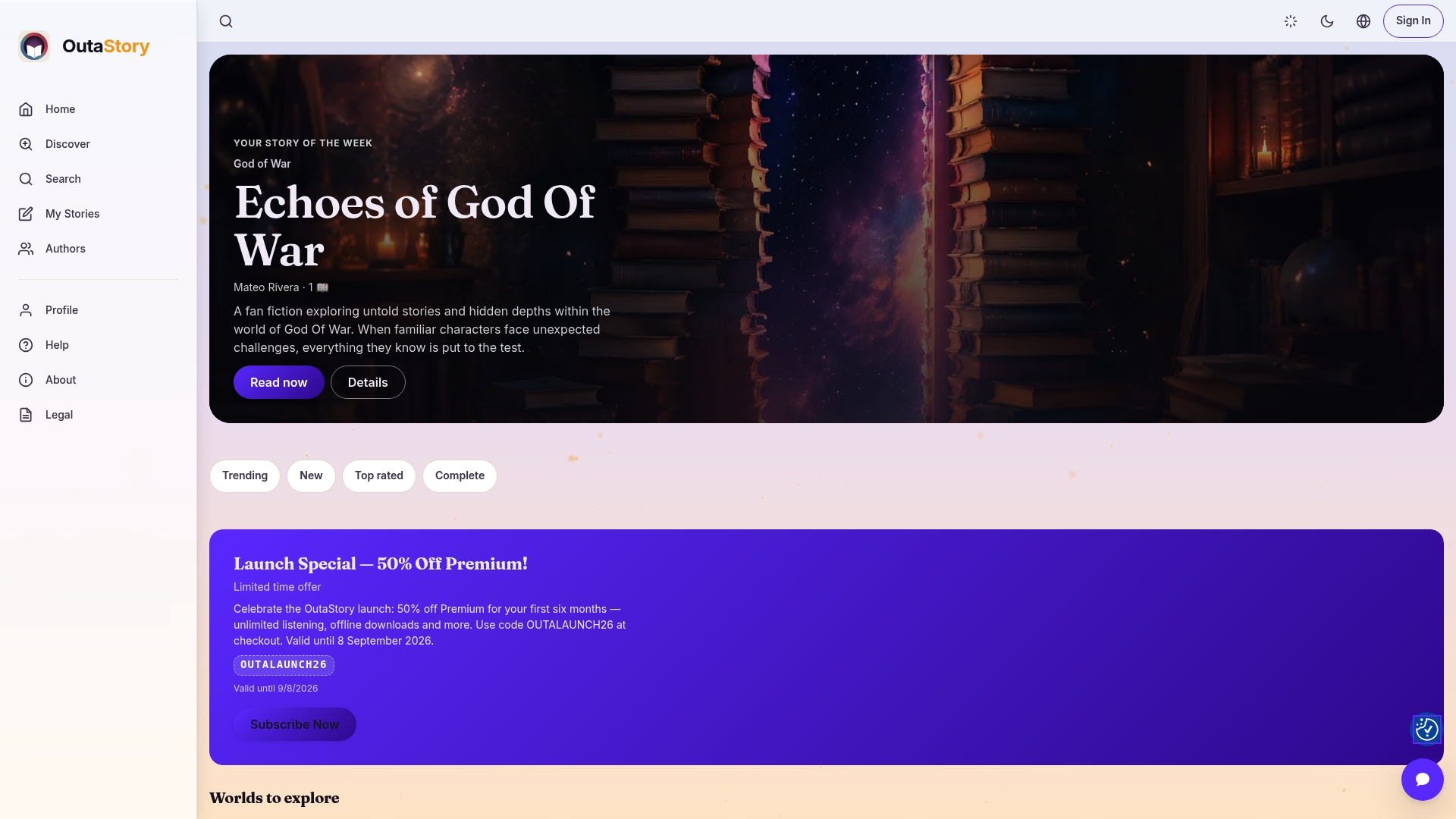
Der kostenlose Zugang reicht für die meisten Abende völlig aus: lesen oder anhören, ganz ohne Anmeldezwang für einzelne Geschichten. Wer regelmäßig unterwegs vorliest oder abends unbegrenzt und werbefrei hören möchte, findet im Premium-Abonnement zusätzlich Offline-Zugriff für lange Autofahrten oder Flugreisen ohne Netz. Öffnen Sie Outastory noch heute, wählen Sie eine Gute-Nacht-Geschichte aus dem Kinderbereich, und lassen Sie sie vorlesen oder lesen Sie selbst vor. Fünf Minuten reichen, um herauszufinden, ob die Stimme und die Geschichte zu Ihrem Abendritual passen.
Quellen
Wer tiefer in Vorlesedauern, Podcast-Formate oder wissenschaftliche Hintergründe einsteigen möchte, findet bei folgenden Quellen solide Anhaltspunkte:
- 5‑Minuten‑Märchen — Hugendubel
- Vorlesen: Warum die Gutenachtgeschichte wichtig für Kinder ist — Spektrum
FAQ
Welche 5-Minuten-Geschichten gibt es für Kinder?
Es gibt Gute-Nacht-Geschichten, Tiergeschichten, Fantasiegeschichten und Fabeln mit Moral, jeweils in Fassungen von etwa vier bis fünf Minuten Vorlesezeit. Plattformen wie Outastory bündeln solche Geschichten in einem eigenen Kinderbereich mit Text- und Audioversion.
Welche sind die kürzesten Kurzgeschichten?
Die kürzesten Formen liegen bei etwa drei Minuten Vorlesezeit, wie sie Sammlungen mit Drei- und Fünf-Minuten-Texten anbieten. Diese eignen sich besonders für Kleinkinder unter drei Jahren.
Welche Ideen gibt es für kurze Geschichten?
Gute Ideen basieren auf einem einzelnen kleinen Konflikt, etwa ein Tier, das seinen Weg verliert, oder eine Figur, die nicht einschlafen kann. Ein sanftes, sicheres Ende macht den Unterschied zwischen einer aufregenden und einer beruhigenden Geschichte.
Welche kurzen, lustigen Gute-Nacht-Geschichten gibt es?
Humorvolle Varianten wie ein Frosch, der Trompete lernen will, oder ein Hahn, der seinen Wecker verliert, funktionieren gut tagsüber oder als Auflockerung vor dem eigentlichen Einschlafritual. Für den reinen Einschlafmoment eignen sich ruhigere Varianten meist besser als sehr lustige Geschichten.
Empfehlung
Lesen und schreiben auf OutaStory
Kurzgeschichten kostenlos lesen – oder eigene Geschichten veröffentlichen und Leser finden.