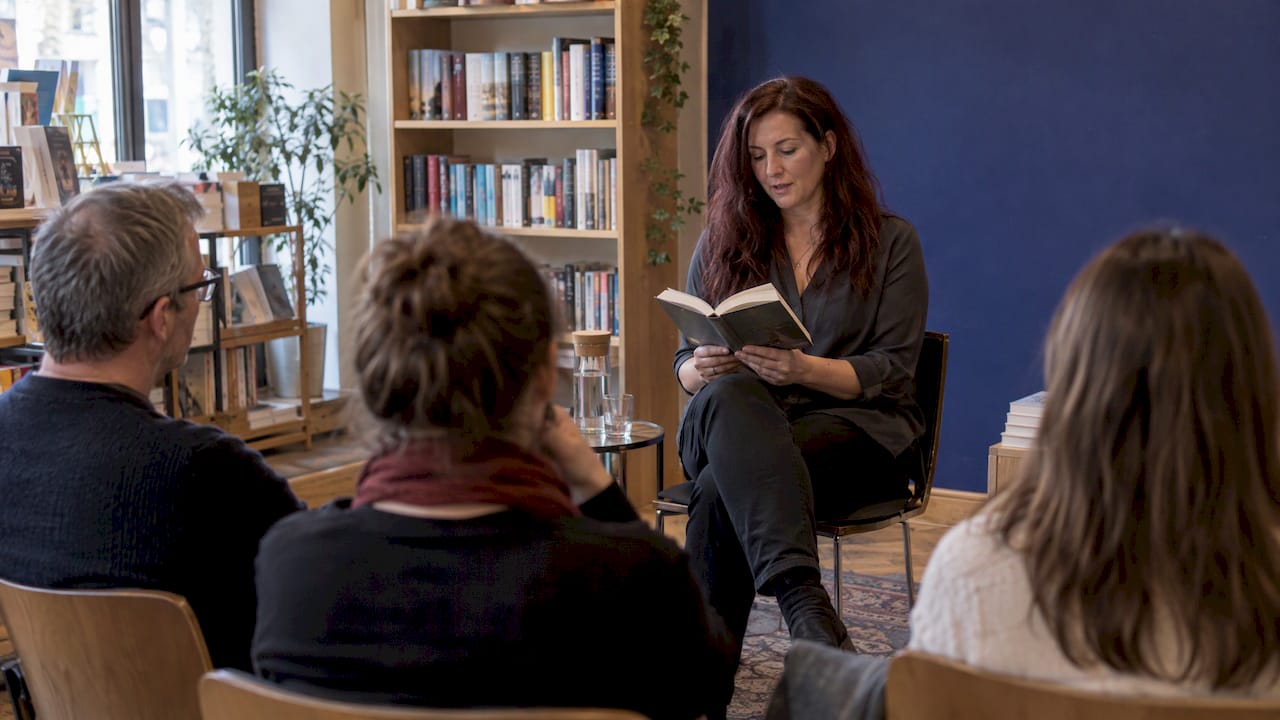
Author reading: What advantages it brings to audiences, children, and authors
An author reading has an advantage that no printed book can offer: you hear a story in the voice of the person who wrote it. Added to that are their emphases, pauses, and the background to the text. For children literature thus becomes tangible, for adults personal, and authors gain readers, feedback and visibility. This experience no longer has to be tied to an evening in the bookstore: on OutaStory every short story can be played as an audiobook, with professionally produced voices or with the author's own voice.
In short
- For the audience: The author's voice, the opportunity to ask questions, and a behind-the-scenes look make a reading more than a read-aloud text.
- For children: Meeting a real author inspires a desire to read and to write. Educational portals and reading promotion organizations explicitly recommend them.
- For authors: Readings bring direct contact with readers, honest feedback, new fans, and a fee. The Association of German Writers recommends 500 euros per reading with discussion.
- To listen afterwards: If you want to experience the impact of a reading at any time, you'll find stories on OutaStory that can also be voiced by their authors.
Table of contents
- What happens at an author reading
- The benefits for listeners
- Why author readings encourage children to read
- The benefits for authors
- How to get the most out of a reading
- Author readings to listen to on OutaStory
- Frequently Asked Questions
- Sources
What happens at an author reading
At an author reading, an author reads passages from their own work to an audience. Typical venues are libraries, bookstores, literary houses, schools, and book fairs. Usually it doesn't stop at pure reading: afterwards the authors tell how the book came about and answer questions.
The Federal Association of the Friedrich-Bödecker-Kreise, which arranges readings at schools, describes the author encounter as a combination of reading and workshop discussion. The workshop discussion deals with the person, the self-understanding as a writer, the creative process and the creation of the book. In schools usually 60 to 90 minutes are available, that is a double lesson. For readings for adults the fee recommendations of the writers' association calculate with about 90 minutes in total for reading and discussion.
In this mix lie all the advantages: the text gets a voice, and behind the text a person becomes visible.
The benefits for listeners
Why sit in a bookstore one evening instead of reading the book comfortably at home? The answer has less to do with the text than with what happens around it.
The voice gives the story a second layer
If you read a story yourself, you put your own melody into the sentences. At a reading you hear how the author meant it: where they slow down, which character they speak more softly, where they leave a pause. Especially with humor, suspense and dialogues this often changes the whole understanding of a scene.
Literary scholar Gunter E. Grimm explains the appeal with the author's "aura": in the reading the separation between author and work is lifted, and the audience wants to form their own impression of the author. This personal added value is the reason why one prefers the reading to the armchair.
Ask questions and learn background
At a reading you learn things that are not in any blurb: where did the idea come from? Was the character real? Why does the story end this way and not another? You can compare your own interpretation with the author's intent, and not infrequently a single sentence from the discussion changes the view of the whole book.
Added to that is the communal experience. A hall that laughs or falls silent in the same place is something different than a lonely reading evening. Libraries have therefore developed formats that emphasize exactly this. The library advisory oebib names formats such as literature days, crime readings, bilingual lectures and themed evenings for adults as proven formats.
Why short stories are made for readings
A reading lives from the audience experiencing an arc: beginning, tension, resolution. With a novel this only works in excerpts, and someone who doesn't know the book enters the action in the middle. A short story, on the other hand, can often be presented in full. You hear the whole story in the author's voice, including the punchline, and leave with a complete experience. This applies especially to fantasy, science fiction or horror: a foreign world, an eerie atmosphere or a surprising ending often have a stronger effect when read aloud than read silently, because the voice sets tempo and mood.
One of the oldest forms of storytelling
The reading is not an invention of the literary industry. Grimm locates it in the oral tradition: epic poets, bards and storytellers developed and passed on their works through performance. Stories were told and heard long before they were printed and read silently. Anyone who visits a reading today or listens to an author-narrated audiobook connects to this tradition.
Why author readings encourage children to read
For parents and teachers this may be the most important advantage. How urgently reading promotion is needed is shown by the figures: according to the PISA results 2025 around one third of young people in Germany have only very limited reading skills, as Stiftung Lesen summarized in September 2026. The foundation calls for daily reading aloud and early support, among other things.
The author becomes a role model
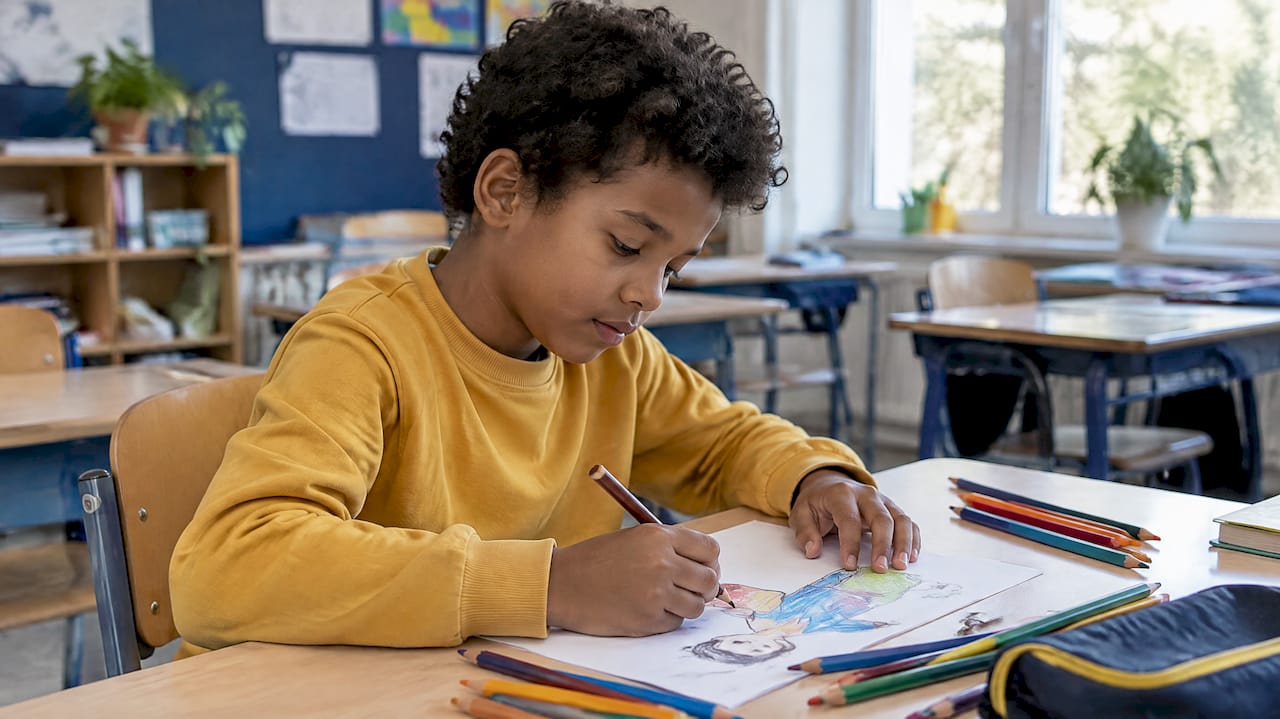
The State Education Server Baden-Württemberg describes what happens in a school reading: children gain insight into the creation of a book and the everyday life of an author. When an author talks about writer's block or reveals where their ideas come from, many children want to paint or write stories themselves afterwards. Signing books is especially popular. The education server recommends readings for kindergarten as well as for German, religion and history classes.
The impact lasts beyond the day
Library professionals observe that many children use the library's media more often after an author event, some for the very first time. According to oebib the response is generally greater among 6- to 10-year-olds than among teenagers. The Friedrich-Bödecker-Kreis speaks of "sustainable impulses for reading promotion" and recommends at most about 50 listeners, i.e., two classes of the same age, so that real conversations can arise.
Research also deals with it: the LITERABOR project at the University of Paderborn investigates what makes an author reading an encounter that resonates beyond the event.
What parents can do with it at home
A school reading may take place once a year. The enthusiasm afterwards can be carried into everyday life, and the same ingredient that makes a reading so effective helps with that: a voice that carries the story.
- Listen together and read along: Children who see the text while hearing it connect the written form with the sound. How that works is explained in our article on reading along with the audiobook.
- Choose short stories: A bedtime story that finishes in one evening gives children a sense of achievement. In our children's section you will find bedtime stories, animal adventures and first rhymes that you can read aloud or listen to.
- Talk about the story: Ask how your child imagined the ending. That's the workshop discussion on a small scale.
The benefits for authors
For writers a reading is stage, market research and advertising at the same time. If you have published your first short story or want to earn money from writing, you should know the following advantages.
Direct contact and honest feedback
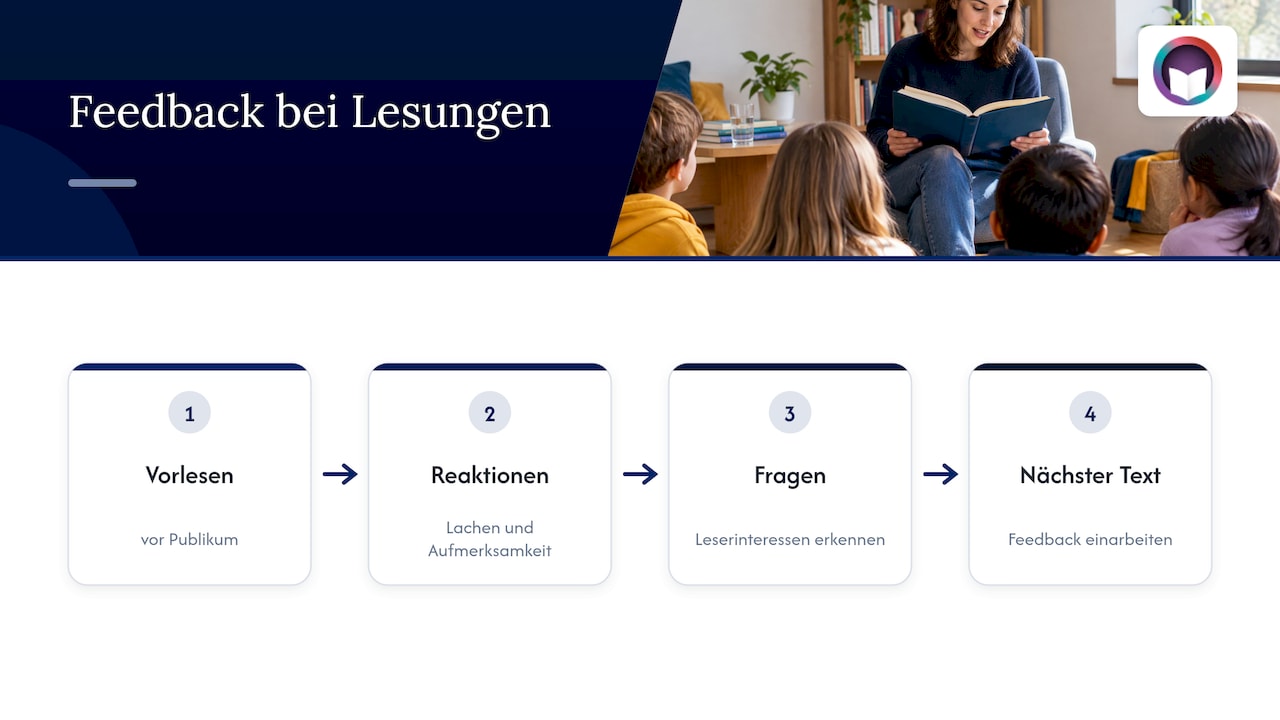
Nowhere will you find out faster whether a punchline lands than in front of an audience. You hear where people laugh, feel where attention wanes, and get questions in the discussion that show you what readers are really interested in. This feedback flows directly into the next text.
The reading also trains your own sense for the text. Whoever reads aloud hears clumsy sentences, overly long descriptions and dialogues that work on the page but not to the ear. Many of these places only become apparent in performance. You can have this experience without a hall as well: as soon as you record a story for an audiobook yourself, you encounter the same spots.
Visibility and loyal readers
Anyone who has experienced an author live associates a voice and a face with their name. Existing readers feel involved, new ones become curious. Publishers do not organize reading tours without reason: Grimm describes that growing recognition and sales figures "ideally go hand in hand."
What a reading brings in
Readings are also a source of income for many authors. The Association of German Writers in ver.di recommends a fee of 500 euros for author readings. For school readings via the Friedrich-Bödecker-Kreise there are separate, standardized rates. They differ by federal state because state ministries fund differently. Some examples from the published conditions of the state associations, for comparison with the association's recommendation:
| Organizer | Fee for the author | What the school pays |
|---|---|---|
| FBK Baden-Württemberg | 250 euros for full funding, 200 or 150 euros for partial funding | Travel and accommodation costs |
| FBK Brandenburg | 300 euros for the first, 200 euros for the second encounter on the same day | The association covers fee and travel costs on application |
| FBK Niedersachsen | The FBK pays the fee | 120 euro cost contribution per reading (110 euros in the Hanover region) |
| VS in ver.di (recommendation, freely agreed reading) | 500 euros for reading with discussion | The organizer pays the fee |
How to get the most out of a reading
Whether you read yourself or plan a reading for your school: the advantages are strongest when the format fits the audience.
- Choose short reading blocks. Prefer reading several short passages and tell something between them rather than presenting for half an hour straight. Short stories are particularly suitable here because they are told to completion in one go.
- Plan the discussion. The exchange is the part the audience remembers. Schedule it firmly into the roughly 90 minutes.
- Think about the venue. An unusual setting, music or a crime reading with guessing make the event memorable.
- Keep the group small for children. Two classes of the same age are a good upper limit so that every child can ask a question.
- Remain reachable after the reading. Someone who goes home excited wants to read or listen more. Make sure your texts are then easy to find.
You can find a detailed list for preparation, procedure and follow-up in our Checklist for author readings.
Author readings to listen to on OutaStory
A reading in a hall lasts one evening. But the voice that brings a story to life can remain. That's exactly why we built OutaStory: you can read short stories for free, or you can listen to them. Every story can be played as an audiobook, with professionally produced voices or in the voice of the author themselves. That way you experience the core of an author reading on the go, on the sofa or for falling asleep.
The spectrum ranges from fantasy, romantic fantasy and science fiction to crime, thrillers and horror and our children's section. If you want to start listening right away, begin with The Last Library or with The Library Where the Books Talk Back at Night. How to find suitable stories online is shown in our guide to author readings online. With OutaStory Premium you listen without limits and also offline.
For authors, OutaStory is the stage that is not taken down after one evening: you publish your short story in minutes, optionally release it chapter by chapter as a serial story and participate in the revenue share from your stories. The platform commission of 8% is openly stated. OutaStory is available in German and English, so your story can reach readers in both language areas.
Frequently Asked Questions
How long does an author reading last?
A reading with a subsequent discussion usually lasts about 90 minutes. In schools, a double lesson is typically available, so 60 to 90 minutes. The actual presentation takes only part of that time; the rest belongs to the exchange.
How much does an author reading cost for a school?
That depends on the federal state. Through the Friedrich-Bödecker-Kreise authors receive standardized fees; in Baden-Württemberg, for example, 250 euros for full funding. The school there bears travel and accommodation costs. The current conditions are stated by the respective state association.
What benefits does an author reading have for children?
Children experience a real author, learn how a book is created, and are encouraged to read and write themselves. Many use the library more often afterwards. The effect is particularly strong in children between 6 and 10 years old.
Can author readings also be listened to online?
Yes. On OutaStory every short story can be played as an audiobook, with professionally produced voices or with the author's own voice. Reading and listening are free, and with Premium you can listen without limits and offline.
Sources
- Federal Association of the Friedrich-Bödecker-Kreise: Author encounters
- VS NRW: Base fees for independent literary work (2026)
- Gunter E. Grimm: Nothing is more repulsive than a poetry reading (Goethezeitportal)
- oebib: Readings
- Stiftung Lesen: Press release on PISA 2025
- Landesbildungsserver Baden-Württemberg: Author reading
- University of Paderborn: LITERABOR, didactics of author readings
- VS: Association of German writers in ver.di
- FBK Baden-Württemberg
- FBK Brandenburg
- FBK Niedersachsen: Living literature, reading promotion through author encounters
- Süddeutsche Zeitung: What do writers actually earn?
Recommendations
Read and write on OutaStory
Thousands of short stories to read for free — or publish your own and find an audience.