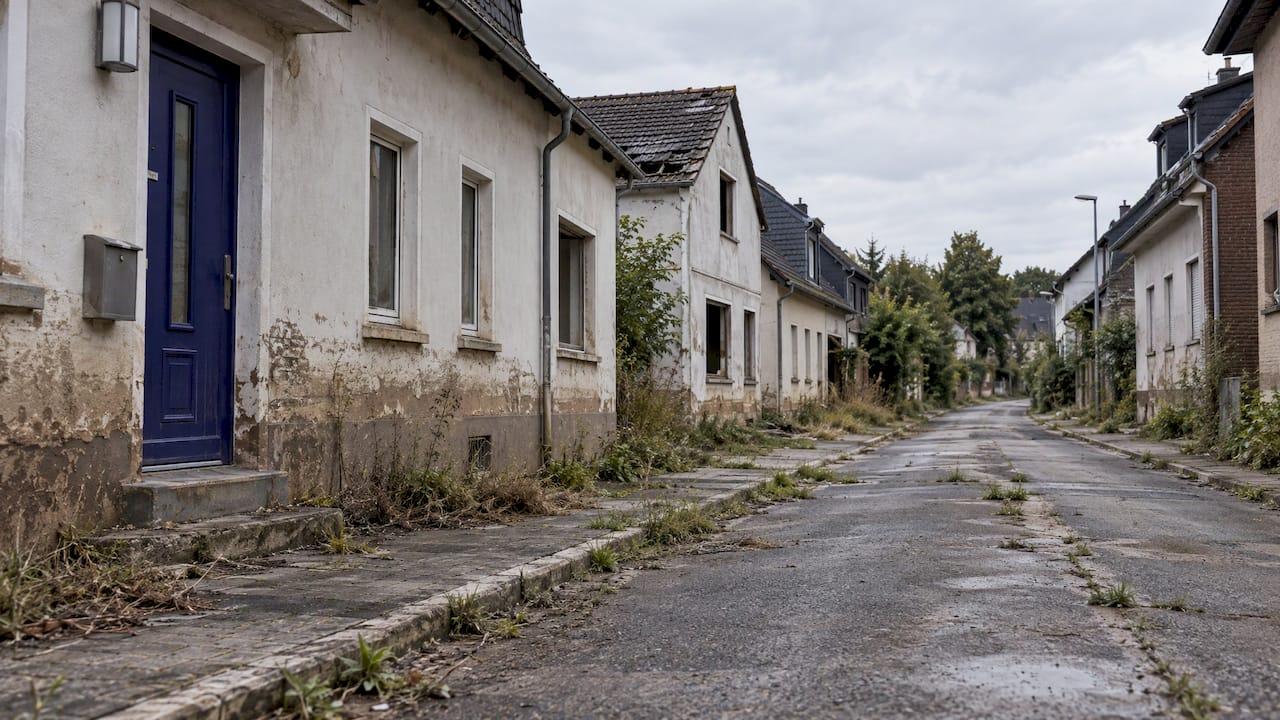
Post-apocalyptic short stories: read, listen, write
Post-apocalyptic short stories tell us what comes after the end, in just a few pages. That is exactly what makes them so powerful: a bunker, a last stockpile of supplies, or a city without electricity is all they need as a setting, and after twenty minutes, an entire world has ended and begun anew. The best way to experience these stories is somewhere you can read them for free or have them read to you as audiobooks. At OutaStory, you can do both: every story is free to read and listen to, narrated by professionally produced voices or by the author themselves. In this article, we show you what defines the genre, which stories have shaped it, what parents should look out for, and how to write and publish your own end-of-the-world story.
In brief
- Post-apocalypse means: the catastrophe has happened. The story is about surviving afterward, not the collapse itself.
- The short form is a perfect fit. A single character, a single place, a single decision carries the entire story.
- Listening heightens the atmosphere. Silence, empty streets, and bunker air feel particularly intense when narrated, whether you are on the go or relaxing in the evening.
- For children, the rule is: hope rather than harshness. Many classics contain violence and loss and do not belong in a child's bedroom.
- Writing your own is worthwhile. On OutaStory, you can publish in just a few minutes, including chapter by chapter, and receive a share of the revenue.
Table of contents
- What defines a post-apocalyptic story
- Why the end of the world works so well in short fiction
- Stories that have shaped the genre
- An overview of end-of-the-world scenarios
- Listening to the end of the world: on the go and in the evening
- Post-apocalypse and children: what matters when reading aloud
- Writing your own end-of-the-world story
- Read, listen, and publish on OutaStory
- Frequently asked questions about post-apocalyptic short stories
- Sources
What defines a post-apocalyptic story
The word sounds cumbersome, but the idea is simple. In everyday usage, “apocalypse” means the end of the world, and “post” means afterward. A post-apocalyptic story therefore takes place in a world where the great catastrophe has already happened: a war, a plague, a meteorite, a climate collapse, a power outage that never ends.
It is important to distinguish it from two related genres:
- Apocalyptic stories tell of the collapse itself, the hours and days when everything falls apart.
- Dystopias portray a functioning but oppressive society. There is electricity, there are authorities and rules, but they are bad ones.
- Post-apocalypse begins when the old order is gone. The questions become fundamental: Where can I find water? Who can I trust? What remains of humanity when nothing else remains?
The boundaries are fluid, and the best stories in particular play with them. What unites them all is a focus on what truly matters. When supermarkets, smartphones, and appointments disappear, relationships, memories, and decisions remain. That is why, despite its ruins and ashes, the genre is often surprisingly human, sometimes even tender.
Why the end of the world works so well in short fiction
A post-apocalyptic novel has to explain how the catastrophe happened, how the new society works, and who is fighting whom. A short story can leave all that out. It begins right in the aftermath and trusts you to fill the gaps with your own imagination. And when it comes to this subject, the imagination is ruthlessly good.
Three reasons why the short form is so powerful here:
- Gaps create unease. When no one explains why the city is empty, every locked door becomes unsettling.
- One moment carries everything. A mother dividing up the last tin of food says more about the new world than a hundred pages of worldbuilding.
- The twist hits home. Many of the best-known end-of-the-world stories rely on a final twist that would lose its impact in a novel.
There is also a practical advantage: a short story fits into a train ride, a lunch break, or the half hour before you fall asleep. You get a complete experience without committing to a 600-page book.
Stories that have shaped the genre
Anyone looking to explore post-apocalyptic short stories soon encounters a few names that come up again and again. Here is an overview, from the classics to the present:
The American classics of nuclear fear
In the years after the Second World War, fear of nuclear war shaped science fiction. Ray Bradbury's “There Will Come Soft Rains” is one of the most widely read stories of that era: an automated house continues its routines even though its inhabitants have disappeared. The story features almost no people, and that is precisely what makes it so unsettling. Fritz Leiber's “A Pail of Air” tells of a family surviving after Earth has lost its sun, and many readers consider it one of the finest stories in the entire genre.
Modern end-of-the-world fiction: surveillance, climate, impact
Cory Doctorow's “After the Siege” depicts a besieged city where hunger and a lack of medicine dominate daily life. The author published the story under a Creative Commons license that permits noncommercial sharing with attribution.
The genre also has a vibrant scene in the German-speaking world. In 2020, Deutschlandfunk Kultur described the anthology “Der Grüne Planet – Zukunft im Klimawandel” as a collection of German-language climate-fiction short stories featuring post-apocalyptic landscapes, climate impacts, and artificial intelligence, but in some cases also a successful climate transition. This idea is typical of more recent end-of-the-world literature: it asks not only how the world ends, but also whether and how we can make it better afterward.
New voices from the community
Today, the most exciting end-of-the-world stories often emerge outside major publishing houses, written by authors who want to explore a scenario. Browse our science fiction, horror, and thriller sections, and you will find exactly these kinds of stories, free to read and available as audiobooks. If you prefer a mythic end of the world, try our fantasy story “Götterdämmerung”: the title draws on the term used in Norse mythology to describe the end of the world of the gods. And if, after all those ruins, you are looking for an alternative vision, follow it up with the utopia “Die gläserne Allmende”.
An overview of end-of-the-world scenarios
Not every post-apocalypse feels the same. The cause of the catastrophe determines the atmosphere, and therefore which story suits your mood.
| Type | The story's typical question | Atmosphere | Right for you if you … |
|---|---|---|---|
| Nuclear war and fallout | What remains of a civilization that has destroyed itself? | unsettling, reflective | like classics and powerful twists |
| Plagues and zombies | Who can you still trust when anyone could be contagious? | suspenseful, often horror | want thrillers and chills |
| Climate collapse | How do people live in a world they have changed themselves? | serious, sometimes hopeful | find social questions intriguing |
| Cosmic catastrophe | What do you do when nothing can be prevented anymore? | epic, melancholy | love science fiction with a grand scope |
| Blackout and system failure | How quickly does everyday life collapse without technology? | realistic, down-to-earth | want stories close to the present day |
| Mythic end of the world | What comes after the fall of the gods? | fantastical, dark | prefer fantasy and dark fantasy |
A little reading guidance: if you are new to the genre, start with realistic scenarios, such as blackouts or climate change. They are the easiest to relate to. Those already immersed in science fiction will love the cosmic and mythic variations because they leave more room for grand imagery. The Western is related, too: a frontier world without a functioning state, where every decision is a matter of life and death, is familiar from both genres. If that appeals to you, “Wenn das Tauwetter kommt” is a frontier story from our library.
Listening to the end of the world: on the go and in the evening
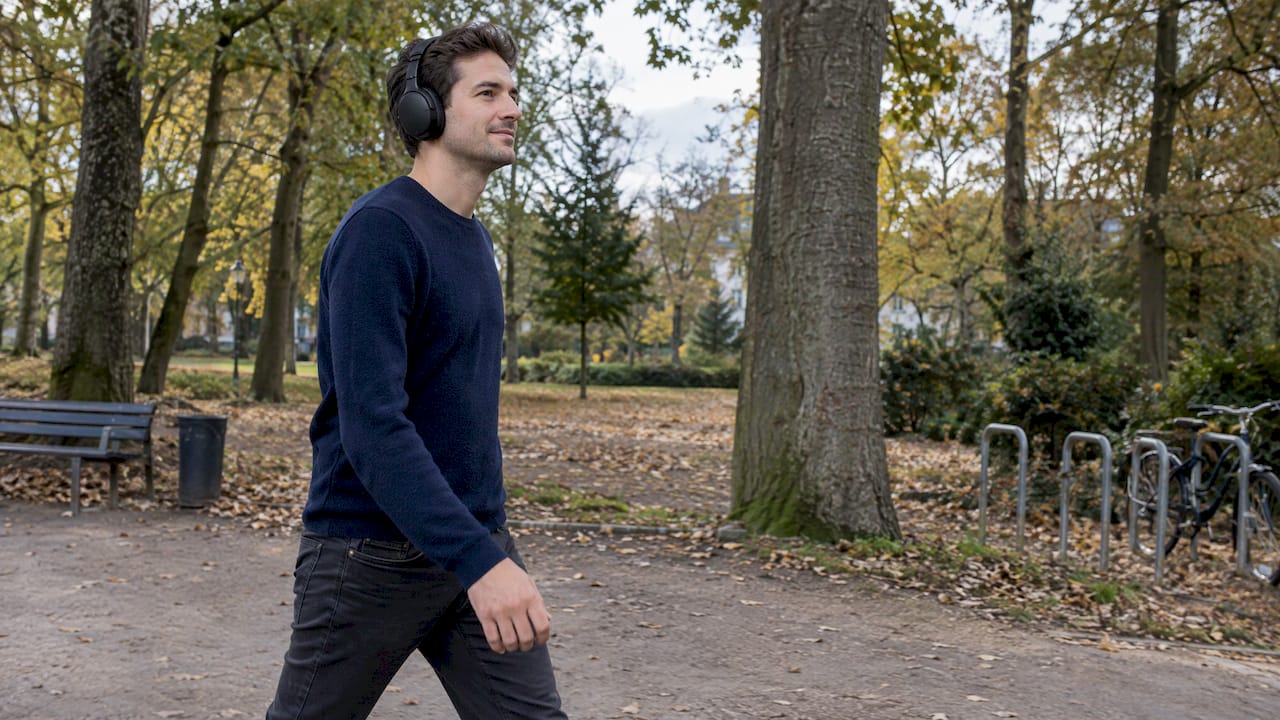
Few genres benefit as much from a good voice as post-apocalyptic fiction. The reason lies in its raw material: silence, emptiness, wind over deserted streets, a crackling radio. Narration gives these elements an impact that can easily be lost when reading silently. A well-placed hesitation before opening a bunker door can be heard before it can be read.
That is why we built OutaStory so that every story can be played as an audiobook. You have two options:
- Professionally produced voices that deliver a story with consistency, clarity, and atmosphere.
- The author's own voice, if they have recorded their story. Particularly with very personal end-of-the-world stories, this creates a special intimacy: you hear the world as its creator imagined it.
Two practical tips:
- On the go, suspense-driven stories work well, such as plague or blackout scenarios. They keep you engaged even with background noise.
- For falling asleep, choose the melancholy, quieter variations: a world slowly turning green again, a character meeting another person after a long time. Save intense horror stories for daytime listening.
If you listen a lot, our Premium subscription is worthwhile: it offers unlimited listening, an ad-free experience, and offline access, so your favorite stories keep playing even when you have no signal. A detail that feels almost ironic in this genre.
Post-apocalypse and children: what matters when reading aloud
Many parents wonder whether end-of-the-world stories are suitable for children. The honest answer: most classics of the genre were written for adults, and it shows. Doctorow's “After the Siege,” for example, as seen in the freely accessible version, depicts a harsh world of survival with hunger, dependence on medication, and seizures. Other classics from the nuclear-war era contain domestic or sexual violence and graphic destruction. These stories do not belong in a bedtime reading session.
That does not mean children do not need adventures in which the world is thrown into turmoil. What matters is how the story is told. Look out for these points when choosing:
- Hope at the heart: The story should show that difficulties can be overcome together.
- No graphic imagery: Loss can be part of the story, but violence should not be described in detail.
- A reassuring figure: Children need a character they can hold on to, such as a brave captain or a loyal animal.
- A happy ending: Especially before sleep, the world should be back in order by the end, at least to some extent.
For younger children, a big storm, an adventure at sea, or a thunderstorm usually provides the right amount of excitement. In our children's section, you will find bedtime stories, animal adventures, and first rhymes, such as “Käpt’n Mira und der singende Sturm” or “Leises Gewitter” from the big feelings section. You can read both aloud or have them read to you when your own voice needs a break after a long day.
For young people from around their early teens onward, however, post-apocalyptic stories can be a good introduction to big questions: responsibility, climate, solidarity. If in doubt, read the story yourself beforehand or listen to a sample, so you know what to expect.
Writing your own end-of-the-world story
Post-apocalyptic short stories are an ideal training ground. Author Nina Casement, for example, explains that her three short stories about a meteorite impact emerged while researching a novel, each from its own perspective. Short texts allow you to try out a scenario before committing to a major project. Here is how to proceed:
- Choose a catastrophe, but do not explain it. One suggestive sentence is enough. The most common mistake is a long prologue recounting the collapse. Start in the aftermath instead.
- Build the story around a decision. Does the character share their supplies? Open the door? Leave the safe place? A clear decision gives the short story its backbone.
- Work with details rather than panoramas. An expired tin of food, a calendar still stuck on March: details like these tell more than any description of destroyed cities.
- Give your world one rule. What is scarce, what is dangerous? Water, light, trust? A single rule, consistently applied, makes your world believable.
- Read aloud. Post-apocalyptic fiction thrives on sound. Where you stumble when reading aloud, your audience will stumble too. And because stories on our platform are also listened to, this step is doubly worthwhile.
- Publish, including in installments. On OutaStory, you can publish your short story in just a few minutes. If your world grows beyond a single story, release it as a serial, chapter by chapter. That suits the genre well, since many end-of-the-world narratives call for more stories.
- Share in the revenue. Through our revenue-sharing model, you receive a share of the income from your stories. The platform is free for authors to use.
If you would like to tell your story in English too: OutaStory is available in German and English, and the genre has a loyal audience in both languages.
Read, listen, and publish on OutaStory
We built OutaStory for everyone who loves stories, whether they prefer reading, listening, or writing. You can read short stories for free across fantasy, romantasy, science fiction, crime, thrillers, and horror, and play each one as an audiobook. Families have their own dedicated children's section.
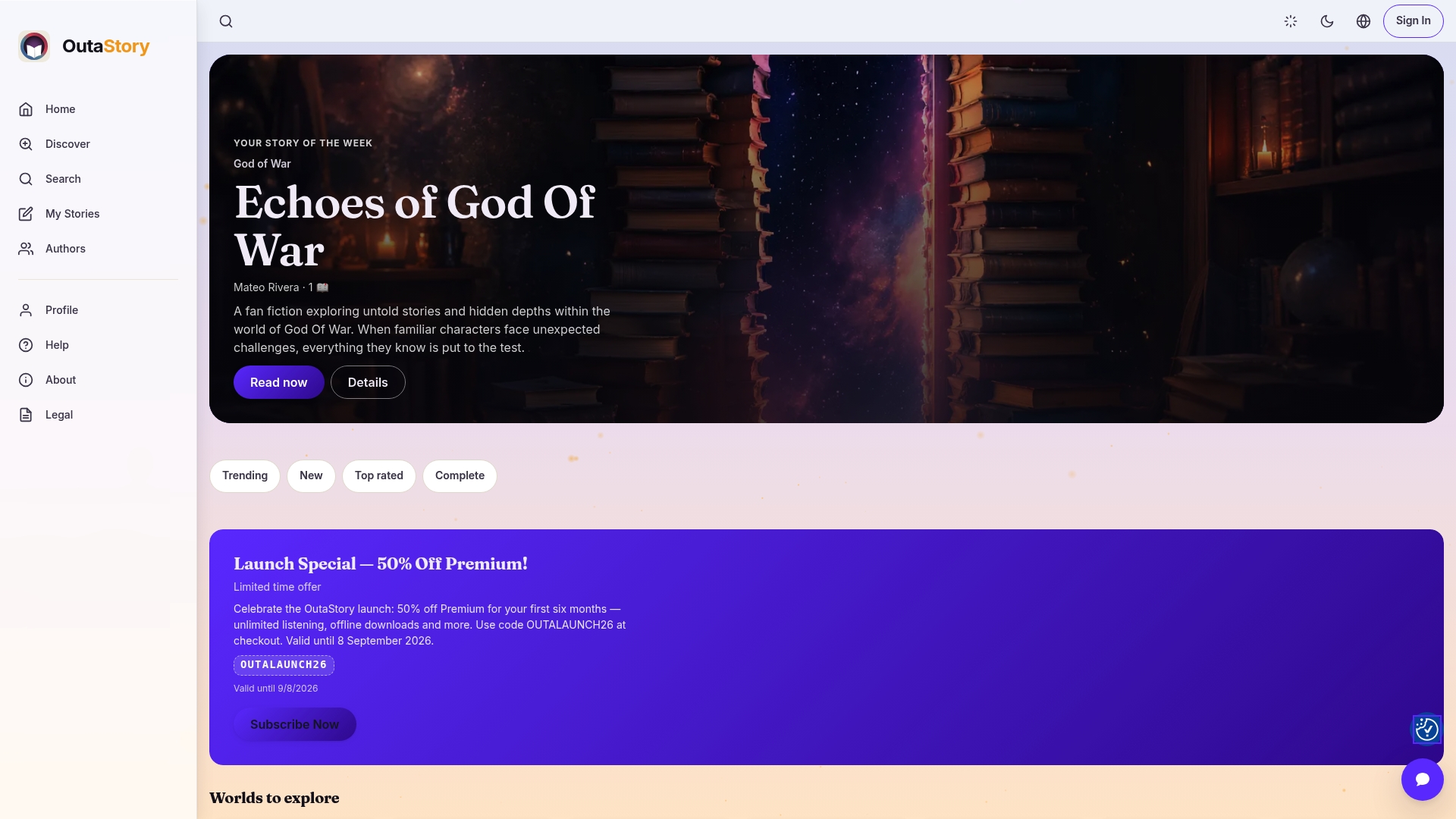
If you want unlimited listening, an ad-free experience, and stories to take offline, you will find all the details on our OutaStory Premium page. And if you have your own end-of-the-world setting in mind: our platform commission page explains how the revenue share works. The platform commission listed there is 8 %. Your world, your stories: write, read, listen.
Frequently asked questions about post-apocalyptic short stories
What is the difference between post-apocalypse and dystopia?
A dystopia portrays a society that still functions but oppresses people, for example through surveillance or coercion. A post-apocalyptic story takes place after the collapse, when the old order no longer exists. Many stories combine the two, for example when a new, harsh regime emerges after the collapse.
Where can I read post-apocalyptic short stories for free?
On OutaStory, you can read short stories for free, including science fiction, horror, and thrillers, the genres where end-of-the-world fiction finds its home. You can also play every story as an audiobook. Premium offers unlimited listening and offline use.
Are end-of-the-world stories suitable for falling asleep?
That depends on the story. Quiet, melancholy stories about a world slowly recovering work well in the evening. Suspenseful horror or plague scenarios are better listened to during the day or on the go.
At what age are post-apocalyptic stories suitable?
Most classics of the genre were written for adults and contain violence, hunger, or loss. For younger children, adventures involving storms or thunderstorms with happy endings are more suitable, like those in our children's section. For teenagers, it is worth reading or listening to a story yourself beforehand.
Can I publish my own end-of-the-world story as a serial?
Yes. On OutaStory, you can release a story as a serial, chapter by chapter. Through revenue sharing, you receive a share of the income from your stories.
Sources
- Cory Doctorow: After the Siege (online version, CC BY-NC-SA 2.5)
- Deutschlandfunk Kultur: Short story collection “Der Grüne Planet”
- Nina Casement: Meteorit, three perspectives on the impact
Recommendations
Read and write on OutaStory
Thousands of short stories to read for free — or publish your own and find an audience.