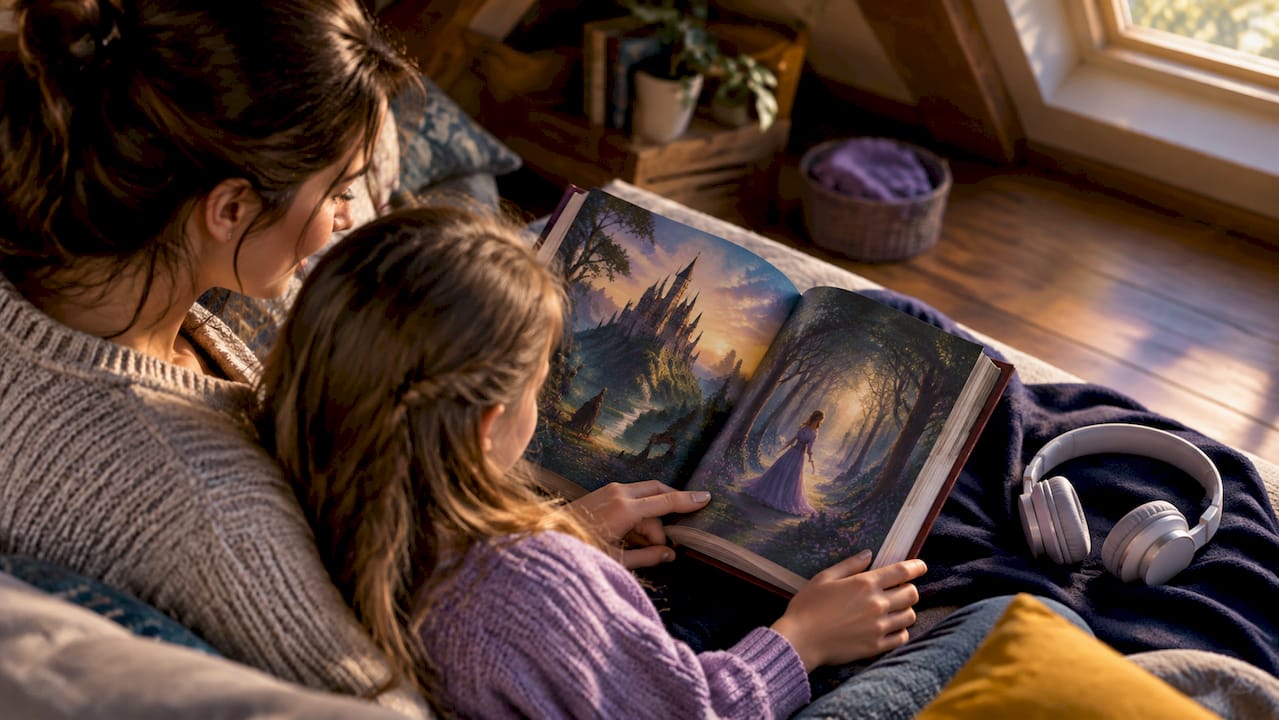
Modern fairy tales: For children and adults, 3 reading and listening directions
A modern fairy tale retains the classic structure of the genre without needing magic and princesses. It addresses themes like autonomy, tolerance and self-determination, often in new media formats ranging from audiobooks to video games. Researchers at the Friedrich-Alexander University confirm this development. Those looking for concrete examples and listening tips will find them further below, among others on Outastory.
In short:
- Modern fairy tales deal with values such as autonomy and tolerance, with language that is colloquial and characters showing contradictions.
- Compared to classic fairy tales, contemporary versions question role models, promote critical thinking, and appear in a variety of media formats.
- For children, everyday motifs are reinterpreted with diversity and self-efficacy, with themes adapted to the child's life in an age-appropriate way.
- For adults, modern fairy tales mostly serve deconstruction, with familiar motifs reinterpreted ironically or from a feminist perspective.
- Interactive media like audiobooks, games, and comics change the storytelling and offer new ways into modern fairy tales.
Table of contents
- What exactly defines a modern fairy tale
- How modern fairy tales differ from classics
- Modern fairy tales for children: themes and examples
- Modern fairy tales for adults: deconstruction and reinterpretation
- Formats and interactivity: audiobooks, games, comics
- Curated reading and listening recommendations for children and adults
- OutaStory as an alternative: discover short stories and audiobooks
- Sources
- FAQ
What exactly defines a modern fairy tale
A modern fairy tale sticks to the classic narrative form: a short plot, clear characters, a recognizable conflict. What changes is the content. Instead of obedience and submissiveness, autonomy, education and tolerance are now at the center of the story. Prof. Dr. Maren Conrad describes fairy tales as an emotional tool that works through primal fears, and modern variants translate those very fears into contemporary life questions such as school stress or the feeling of being an outsider.
Formally, the difference appears in several points:
- The language is casual, everyday colloquial speech instead of the elevated fairy-tale diction.
- Narrative perspectives change more frequently; sometimes the supposedly evil character tells the story themselves.
- Characters are no longer pure types but have fractures and contradictions.
The distinction between a merely newer fairy tale and a genuinely substantive modernization lies in the intent. A modern narrative text uses old motifs deliberately to mirror contemporary values, not just because it was created later in time.
How modern fairy tales differ from classics
Three differences become immediately apparent in direct comparison.
- Role models: Classical fairy tales work with rigid moral ideas where obedience is rewarded and disobedience is punished. Modern versions question exactly these roles and portray more inclusive, multi-layered characters.
- Educational aim: Where old versions aimed to train obedience, new texts aim at critical thinking and independent decisions.
- Format: Classics exist almost exclusively as text. Modern versions appear as films, series, audiobooks, or interactive games and thus adapt to the media consumption of their readers.
This plurality of media is no coincidence. It follows from the fact that modern fairy tales are more a mode of storytelling than a fixed genre, and storytelling modes migrate effortlessly between media.
Modern fairy tales for children: themes and examples
Children's literature likes to relocate classical motifs into everyday life. The Frog Prince today might live in a two-room apartment instead of a castle, as researchers at FAU show in their analysis of modern fairy-tale motifs. School replaces the forest as a place of trial, and diversity is a natural part of the plot rather than an exception.
Journalistic recommendations list concrete titles for age groups 4 to 14. Der SPIEGEL names, for example, “Der kleine Holzroboter und die Baumstumpf-Prinzessin” as an example of a successful modern narrative style that combines classic building blocks with new characters.
Three criteria help with selection:
- Does the theme fit the child's life-world (school, friendship, moving house)?
- Does it tell of self-efficacy rather than powerlessness?
- Is the text suitable for reading aloud or listening, for example in the evening or in the car?
Pro tip: Let children decide for themselves whether to consume a story as text or audiobook. Some children process tension via the voice more easily than through reading itself.
Modern fairy tales for adults: deconstruction and reinterpretation
For adults, modern fairy tales work differently. It's not about adapting to new life worlds here, but about deconstruction. Female authors take a familiar motif and deliberately turn it against its original moral.
Angela Carter is the standard example for this. Her retellings use exaggeration and irony to undermine the role models of classic sources instead of confirming them. Such texts often appear as feminist literature or as a horror variant, because both forms thrive on subversion, as described in Caribbean Ghost Stories Are About Memory, Not Fear.
What readers appreciate about these texts:
- The familiar structure of a fairy tale, but with an unexpected moral outcome.
- A literary aesthetic that deliberately breaks expectations.
- The possibility to reread a childhood motif from an adult perspective.
Those who like this style will find related moods also in horror short stories, which use similar procedures of estrangement.
Formats and interactivity: audiobooks, games, comics
New media not only change how a fairy tale is consumed, but also its structure itself. Interactive formats allow the audience to help determine the ending or the relationships between characters, which is simply not possible with printed text.
Common formats for modern fables and fairy tales today:
- Audiobooks: suitable for car rides or as an evening ritual without a screen.
- Podcasts: often episodic, with a serial character.
- Video games: change role relationships through real decision-making freedom.
- Comics and graphic novels: convey irony and subversion visually.
Such formats can be found in public libraries, on specialized streaming platforms and at literature festivals that increasingly curate their own audio series.
Curated reading and listening recommendations for children and adults
For children between 4 and 10 years old, texts that combine everyday topics with a clear narrative arc are suitable, as they also appear in journalistic children's book recommendations. Those looking for suitable bedtime stories for the evening will find them in the collection of the best bedtime stories.
For adult readers, three directions are worthwhile:
- Feminist retellings in the style of Angela Carter if you are looking for subversion and literary density.
- Horror variants of classic motifs if you prioritize atmosphere over pure plot.
- Romantic adaptations for readers who want to retain the fairy-tale tone but without the dark flip side. Suitable examples can be found in the romantic short stories.
Outastory serves as a practical starting point to browse both directions easily.
OutaStory as an alternative: discover short stories and audiobooks
Those who want to not only read but also listen to modern fairy tales will find platforms with free short stories in genres from fantasy to romantasy to horror, complemented by their own children's section with bedtime stories and animal adventures.
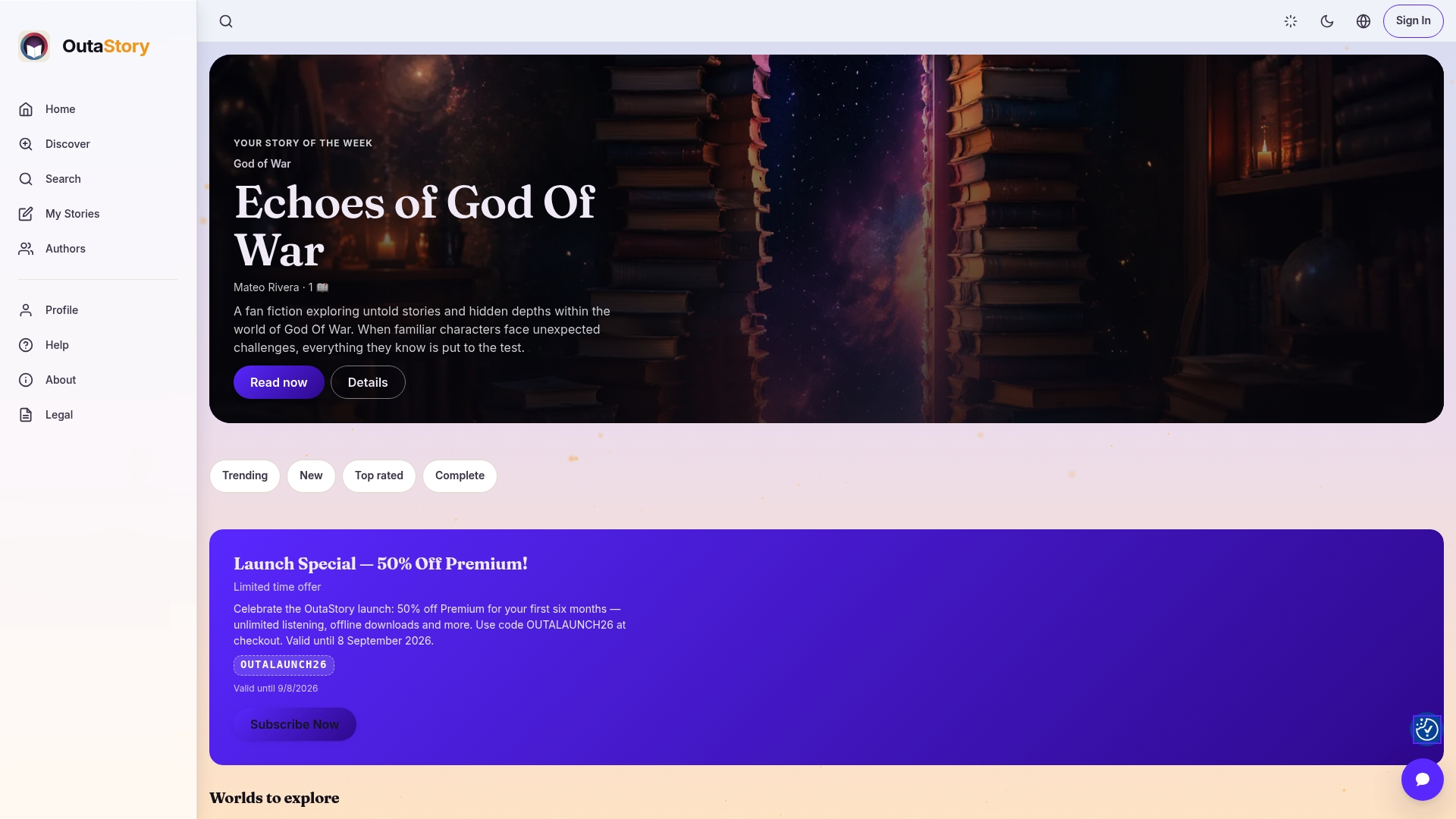
Many stories can be played as audiobooks, for example with professionally produced voices or with the author’s own voice. This allows parents to play a bedtime story without having to read aloud themselves. Adult readers looking for modern fairy tales in their deconstructed form can find suitable stories in crime, thriller, or horror categories. Authors who want to write modern fairy tales themselves publish their short stories, can release them chapter by chapter as continuations, and hope for a share of the revenue.
Start on the Outastory homepage and also check the collection of the best bedtime stories to find suitable modern fairy tales for children directly.
Sources
- What is a modern fairy tale? | Friedrich-Alexander University
- Modern fairy tales | Goethe-Institut
- Modern fairy tales: recommendations for children and teenagers | DER SPIEGEL
- Suhrkamp Verlag — Angela Carter and retellings
FAQ
What modern fairy tales are there?
Modern fairy tales range from child-friendly everyday stories with themes like school or friendship to feminist or horror adaptations for adults, often in the form of audiobooks, films or comics.
Which new fairy tales are there?
More recent works place classical motifs in contemporary settings, for instance in apartments instead of castles, and address themes like diversity and self-efficacy; DER SPIEGEL lists examples for different age groups.
Which modern fairy-tale films are there?
The Goethe-Institut cites authors like Walter Moers as examples of modern fairy-tale material that has also been filmed or adapted into audio and introduces children to classic world literature.
What distinguishes a modern fairy tale from a classical one?
Classical fairy tales emphasize obedience and fixed role models, modern variants question these roles and promote critical thinking, often in new media formats rather than only as text.
Where can I find modern fairy tales to listen to?
The platform Outastory offers free short stories and audiobooks in multiple genres, including a children's section, both for reading and listening.
Recommendations
- The best bedtime stories for children from 0 to 8+
- Stories to read aloud: free and age-appropriate for children
- Bedtime stories for children: free reading and listening tips
Read and write on OutaStory
Thousands of short stories to read for free — or publish your own and find an audience.