Short stories for on the go: What parents should play now
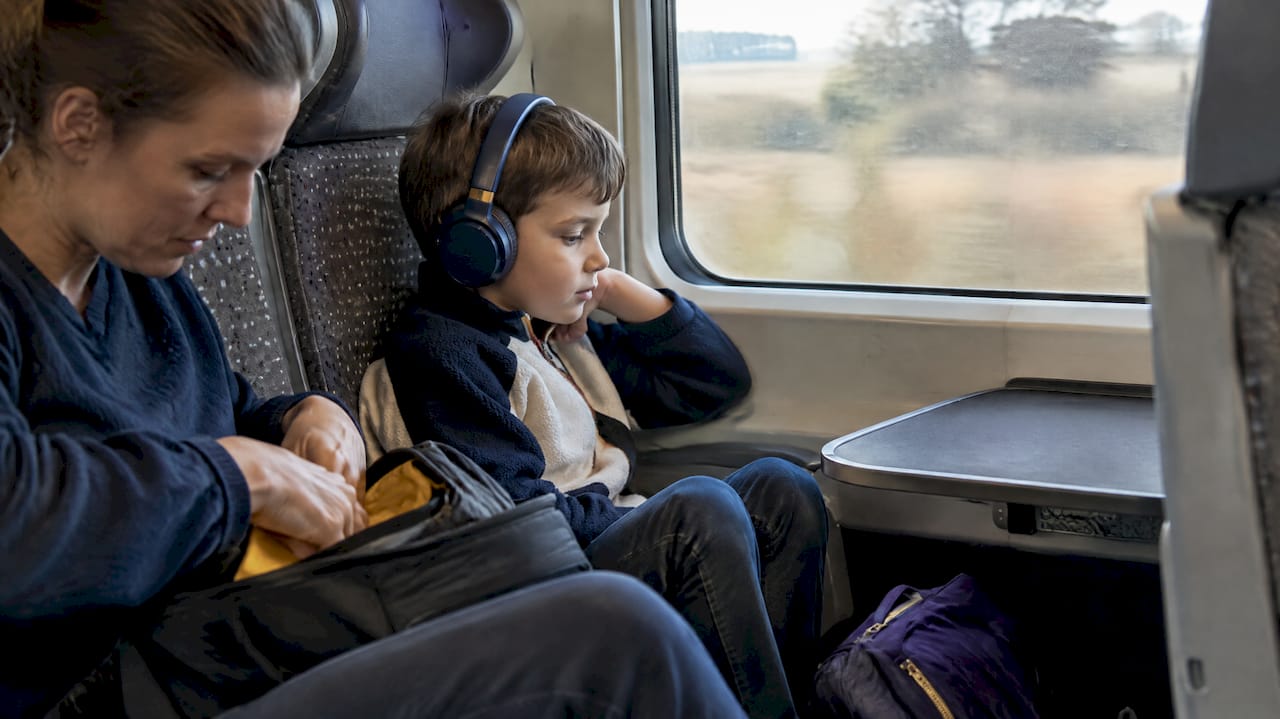
For the next car trip or train journey, self-contained audio plays of about 5 to 10 minutes work most reliably; for the youngest, 3 to 5 minutes of rhymes are often enough. Both formats can be downloaded in advance and play offline, without a shaky connection on the road. There are platforms where such short stories can be played directly as audio versions, free and with professional voices.
In short:
- Short, self-contained audio plays of 5 to 10 minutes are best suited for travel because they are complete in themselves and don't require interruptions.
- Rhymes and mini-stories of 3 to 5 minutes suit small children, while children aged 6 to 10 can tolerate up to 15 minutes of listening time.
- Public broadcasters, libraries and platforms like OutaStory offer free, legal short stories for downloading and offline listening.
- Downloading in advance and creating a playlist with several short episodes minimizes technical problems on the road and makes childcare easier.
- Short follow-up questions after listening promote memory and imagination and turn the listening experience into a small learning experience.
Table of contents
- Quick options: Which formats work on the go
- How long should stories be on the go? Age-based duration recommendations
- Where to find legal short stories and audio plays
- Practical technical and preparation tips for on the go
- How to turn the listening experience into a small learning experience
- Why parents can trust our stories on the go
- There are premium subscriptions that provide full access to stories without having to choose between reading and listening.
- FAQ
- Sources
Quick options: Which formats work on the go
Not every format suits every situation. In the car you often need a distraction when things are restless; on the train you might prefer something calm to settle down. That's why a small toolkit is better than a single solution.
- Self-contained 5 to 10 minute audio plays: ideal for short trips because the plot is self-contained and there are no annoying cliffhangers.
- Mini-read-aloud stories of 3 to 5 minutes: suitable for very young children whose attention quickly fades.
- Rhymes and short verses: have a calming effect and are especially suitable as a sleep aid on trains or planes.
- Playlists with several short episodes: accommodate different trip lengths without having to search on the go.
For listening together with multiple children, self-contained audio plays work best because no one misses a continuation if someone gets out early or falls asleep. Rhymes, by contrast, are often too short to carry a group experience but are perfect for the moment directly before falling asleep.
How long should stories be on the go? Age-based duration recommendations
Duration is not accidental; it follows attention span. For 6 to 10-year-olds, Stiftung Lesen recommends reading bites of no more than 10 to 15 minutes and advises matching the length to the child's attention span. Younger children therefore need correspondingly shorter units.
- 0 to 3 years: 3 to 5 minutes, preferably rhymes or simple picture stories.
- 3 to 5 years: 5 to 8 minutes, self-contained mini-plots without side stories.
- 6 to 10 years: up to 10 to 15 minutes, somewhat more complex audio plays are also possible.
A concrete example is provided by the series „MausHörspiel kurz“ (https://kinder.wdr.de/radio/diemaus/audio/maushoerspiel/index.html) from WDR, which offers episodes with runtimes of 5:00, 5:15 and 8:05 minutes and thus stays exactly within this time window.
Shorter, self-contained episodes suit younger children better because they can only process a limited number of plot elements at once. An ongoing subplot quickly overwhelms, while a clear structure with a beginning and end provides security. That's exactly why it's worth choosing several short episodes rather than a single long story that is often interrupted on the go anyway.
Where to find legal short stories and audio plays
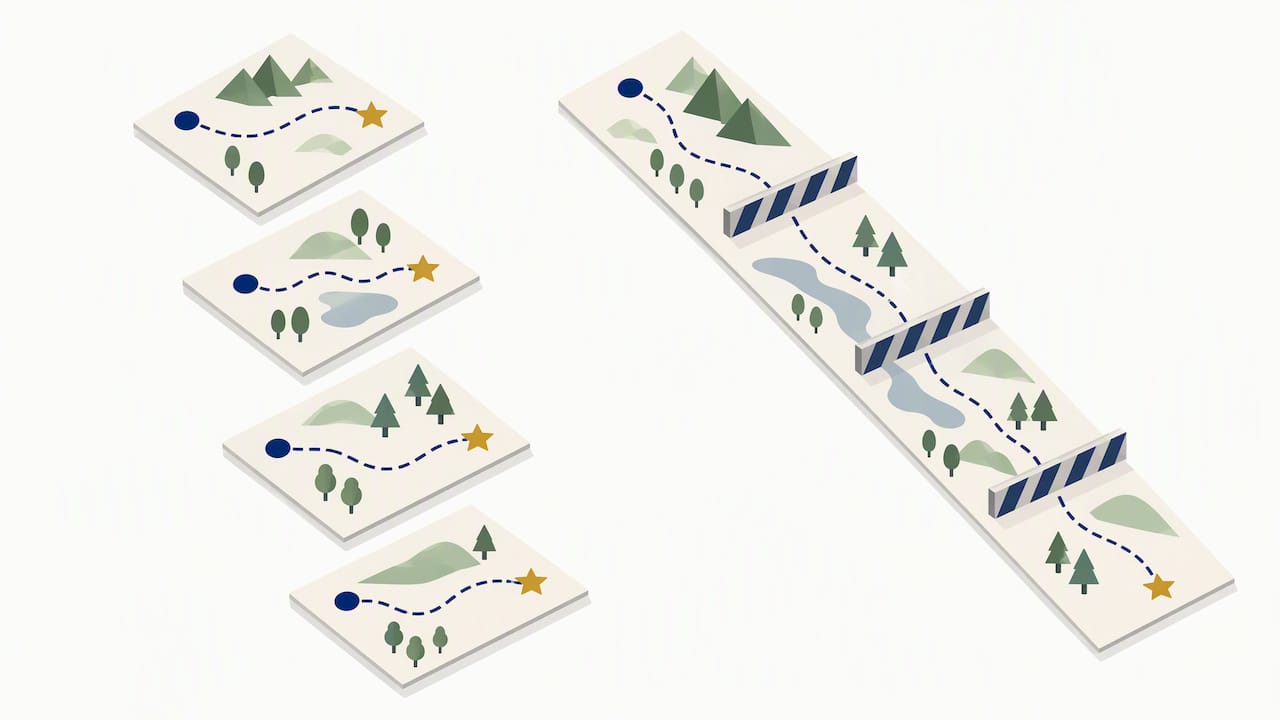
Before you head out, you need the right source, preferably one that works offline. There are several reliable ways to do this, both free and paid.
- Public broadcasters: WDR offers, with „MausHörspiel kurz“, episodes like „Pommes im Urwald“ with an 8:05 minute runtime for download, including an RSS feed for automatic updates.
- Libraries and digital lending: Many libraries and public broadcasters offer audio files for borrowing or download, a widespread and free source according to Kindergesundheit-info.
- Publisher collections: Publishers like Carlsen release anthologies with several short stories that are well suited for travel and serve as a bound alternative to an audio file.
- OutaStory: We provide short stories free to read and listen to; each can be played as an audiobook, with professionally produced voices or the voice of the respective author. In our dedicated children's area you'll find bedtime stories, animal adventures and first rhymes, suited exactly to the short formats that work on the go.
Those who travel regularly benefit from compiling a fixed playlist from several sources: public broadcasters for classic formats, plus a platform like ours for stories that can be played flexibly depending on mood and age. For longer journeys, it's also worth taking a look at short audiobooks under five hours in case the trip ends up being longer than planned.
Practical technical and preparation tips for on the go
The best story is of little use if it can't find a connection when starting. A quick preparation before departure saves nerves.
- Download stories and audio plays in advance instead of relying on mobile networks while traveling.
- Create a playlist with several self-contained short episodes, sorted by age: first 3 to 5 minutes, then 5 to 10 minutes.
- Quickly test speakers or headphones before the trip to avoid mishaps.
- Have a backup file ready on a second device in case the first device fails.
- Stay close to toddlers instead of just leaving the device running.
Pro tip: Children's headphones with volume limiting protect hearing while still allowing enough range for a lively listening experience.
A quick technical check before departure — offline file present, speakers tested, backup file ready — significantly reduces mishaps. Those who want to do without technology entirely can turn to printed mini-stories, tell short rhymes themselves, or use picture cards as a conversation starter. For trips with small children, it's also worth looking at the right equipment, for example at swim wings for carry-on, if the trip leads to a place with water.
How to turn the listening experience into a small learning experience
After listening comes the next conversation. A few simple questions are enough to make a story more than mere entertainment.
- Which character did you like best and why?
- Was there a sound in the story that surprised you?
- What would you have done in the hero's place?
- Which image stayed with you?
Such short follow-up questions deepen what was heard, as Kindergesundheit-info notes: audio stories stimulate imagination and become a shared experience through a short conversation about characters and plot. As a follow-up game, it's also suitable to briefly reenact a scene, guess a sound from the story, or draw the favorite scene. That takes no extra preparation and can be done directly at the destination while the story is still fresh in the mind.
Why parents can trust our stories on the go
We provide short stories free to read and listen to, each with an audio version, either professionally narrated or in the voice of the author themselves. The genre range extends from fantasy to crime to a dedicated children's section with bedtime stories, animal adventures and first rhymes, available in German and English. Find out more on the OutaStory homepage.
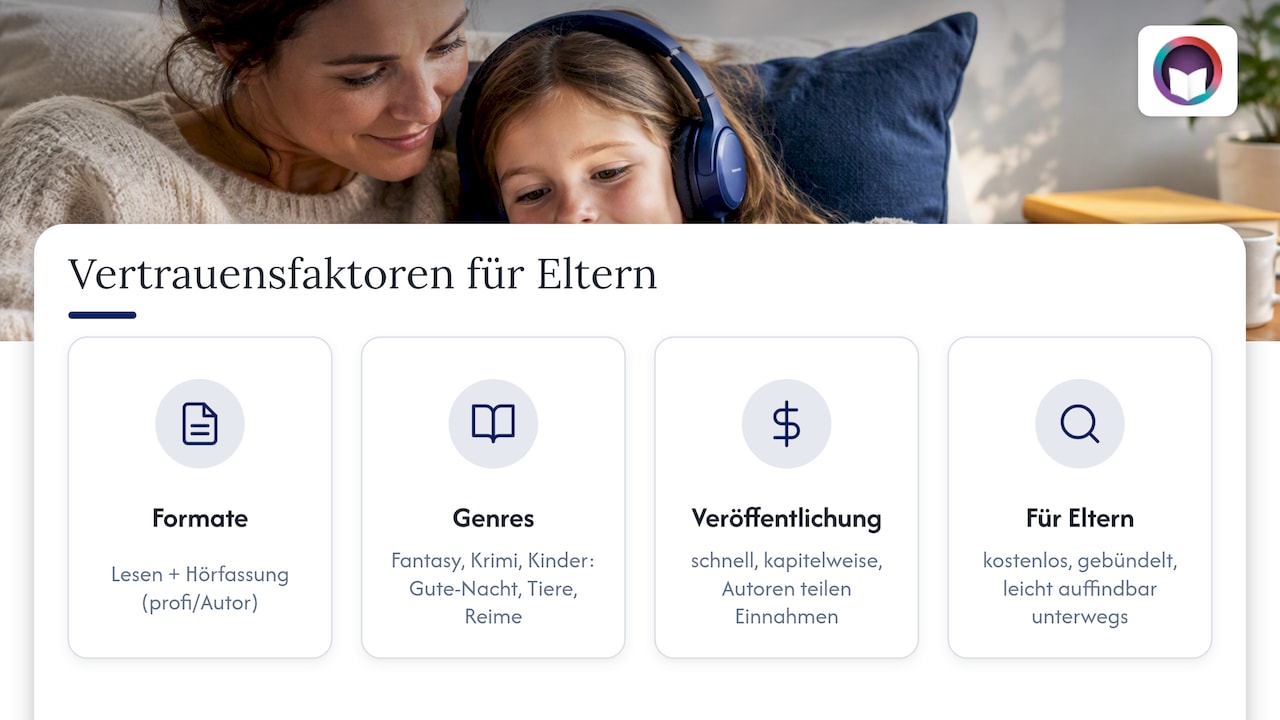
Many authors publish their stories quickly and can release them chapter by chapter as continuations; they also often take part in the revenues of their stories. This ensures a steady supply of new, short formats, especially in the children's area. For parents this means: the short audio plays and rhymes that work best on the go are bundled with us in one place, free to use and without a long search.
There are premium subscriptions that provide full access to stories without having to choose between reading and listening.
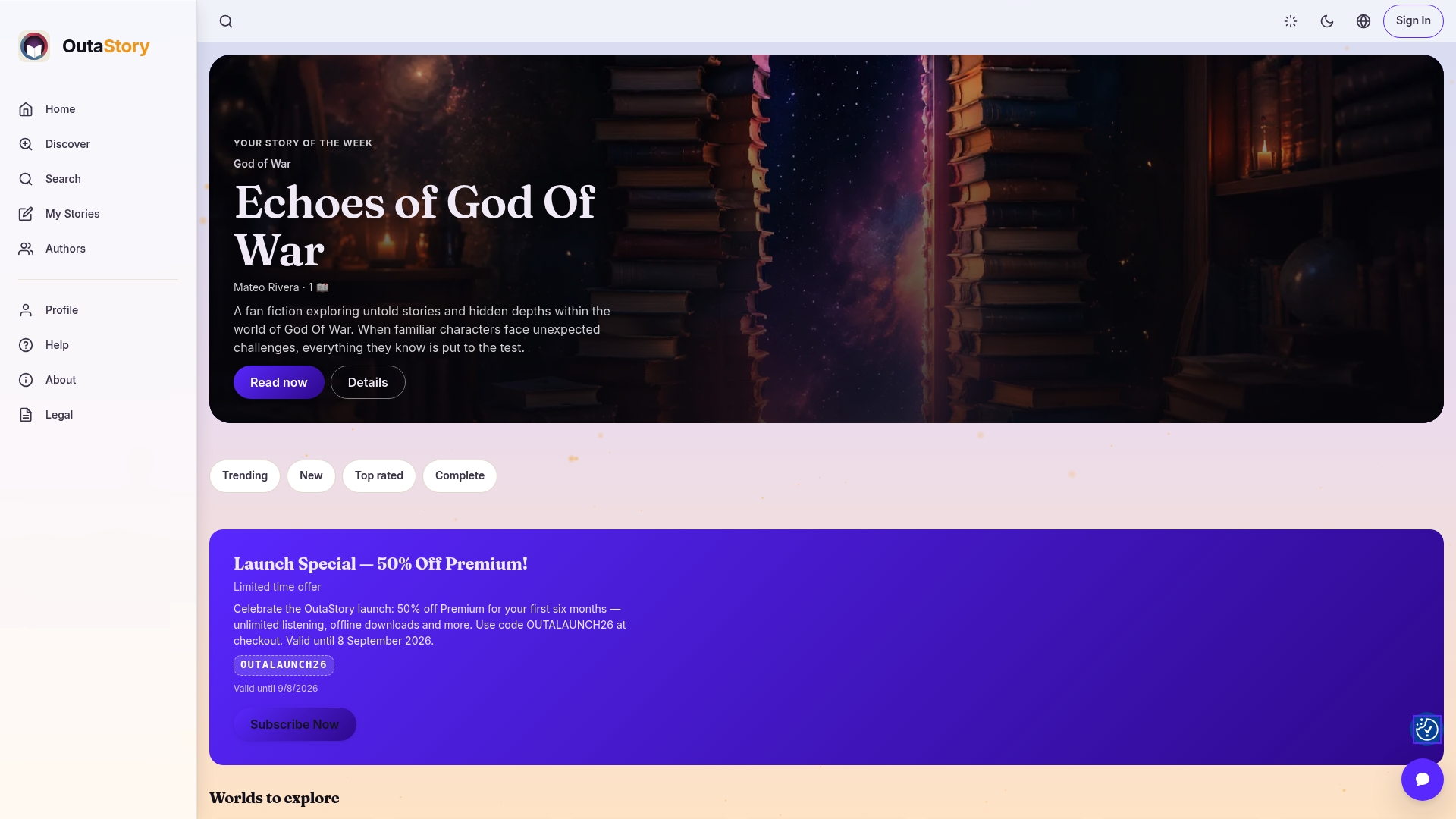
- Offline downloads: Save stories in advance and listen completely without a network on the go.
- Ad-free use: no interruptions in the middle of the story.
- Unlimited listening: as many short stories as you want, instead of just a selection.
Free access remains unaffected; even without a subscription, stories can be read and listened to. But if you travel regularly and want to save yourself the search for new material, you can find all the details about the membership model on the Premium page.
FAQ
Which audio-play length is best for short car rides?
For short trips, self-contained audio plays of 5 to 10 minutes work most reliably because the plot is self-contained. The WDR series „MausHörspiel kurz“ offers exactly such episodes, for example with runtimes of 5:00 or 8:05 minutes.
How long should audio stories for small children be?
For 0 to 3-year-olds, 3 to 5 minutes are suitable; for 3 to 5-year-olds about 5 to 8 minutes. Stiftung Lesen recommends bites of no more than 10 to 15 minutes for 6 to 10-year-olds, based on the child's attention span.
Where can I find free short stories to download?
Public broadcasters like WDR and libraries with digital lending services provide audio files free to download or borrow. On our site, short stories can also be read for free and listened to as audio versions, including a dedicated children's section.
What does OutaStory Premium cost?
The exact price for OutaStory Premium can be viewed on the membership page upon request. Free access to stories and audio versions remains available regardless.
How do I discuss a story with my child after listening?
A few short questions are enough, for example about the favorite character or a surprising moment in the story. Such conversations deepen what was heard and, according to kindergesundheit-info.de, turn the story into a shared experience.
Sources
Recommendations
- The best bedtime stories for children from 0 to 8+
- 5-minute stories: Ready-to-read ideas for parents
Read and write on OutaStory
Thousands of short stories to read for free — or publish your own and find an audience.