
The Audiobook Market in 2026: The Key Trends for Listeners and Authors
The German audiobook market is growing while the book market as a whole is shrinking: audiobook revenue rose by 13.2 percent in 2025, while the overall book market lost 2.7 percent. This is shown in the statistical overview Book Market at a Glance 2025/2026 from the Börsenverein. Behind this figure are three shifts shaping 2026: listening happens through streaming and subscriptions, the voice becomes a reason to choose a title, and visibility is determined on platforms. For listeners, this means more choice in small portions; for authors, a real opportunity if their story appears where people listen. That is exactly what we built OutaStory for: reading short stories for free or listening to them as audiobooks, with professionally produced voices or the author's own voice.
In Brief
- Growth: Audiobook revenue in Germany rose by 13.2 percent in 2025, while the overall book market fell by 2.7 percent.
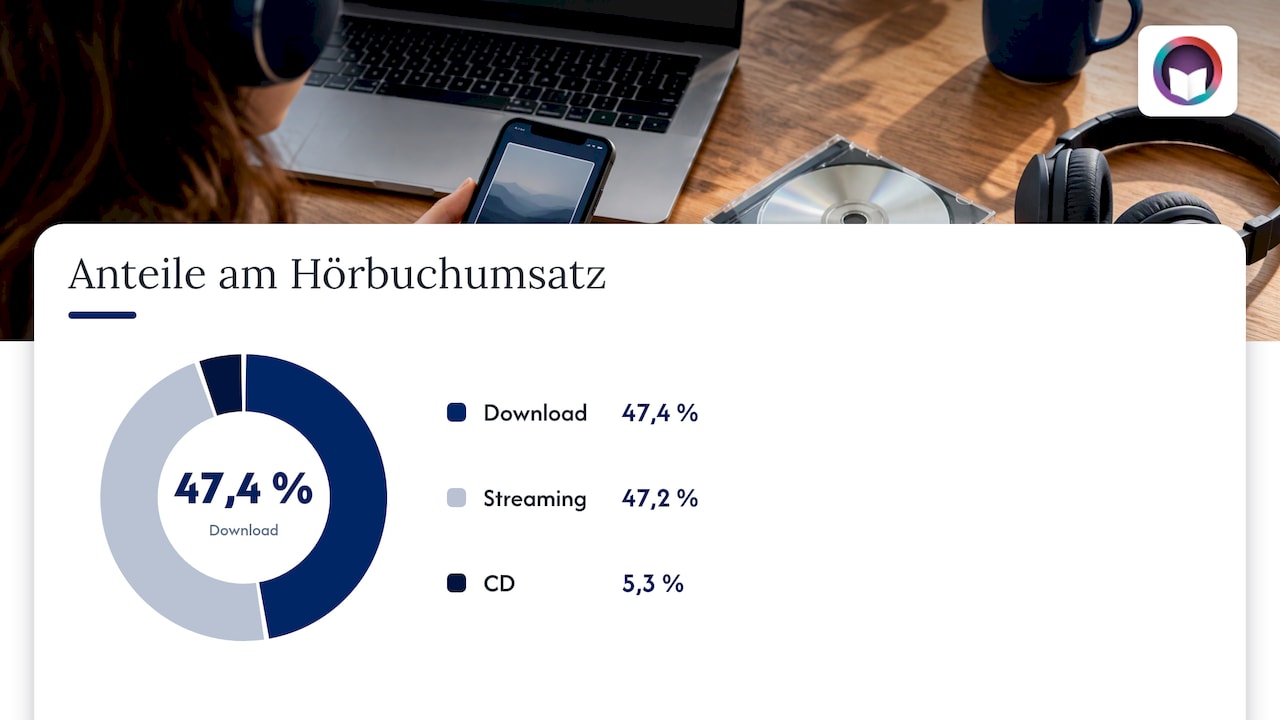
- Digital dominates: Downloads (47.4 percent) and streaming (47.2 percent) account for almost all audiobook revenue, with CDs at 5.3 percent.
- More listening rather than more listeners: Growth comes primarily from more intensive use and new formats.
- The voice matters: Almost half of listeners choose based on familiar voices, while openness to new types of voices is growing.
- For authors: If you are missing from the audio catalog, you are giving up potential reach. Short, serialized stories fit well with how people listen today.
Table of Contents
- The Figures: Where the Audiobook Market Stands in 2026
- Trend 1: Streaming and Subscriptions Become the Norm
- Trend 2: More Listening Rather Than More Listeners
- Trend 3: The Voice Becomes a Brand
- Trend 4: AI Voices and New Production Methods
- Trend 5: Visibility Is Determined on Platforms
- Trend 6: Genres with a Clear Promise
- What the Trends Mean for Listeners
- What the Trends Mean for Authors
- Read and Listen to Stories on OutaStory
- Frequently Asked Questions About the Audiobook Market in 2026
- Sources
The Figures: Where the Audiobook Market Stands in 2026
The authoritative figures for Germany are published by the Börsenverein des Deutschen Buchhandels, the industry association for publishers and bookshops. Its overview for 2025, published in 2026, bases its audiobook figures on the Hörbuch Kompass from Media Control, a market research study that analyzes sales and streams. The key message: audio is the part of the book market that is growing.
| Metric (Germany, 2025) | Value |
|---|---|
| Audiobook revenue growth | +13.2 % |
| Overall book market revenue growth | −2.7 % |
| Download share of audiobook revenue | 47.4 % |
| Streaming share of audiobook revenue | 47.2 % |
| CD share of audiobook revenue | 5.3 % |
| New releases in the book market | −9.8 % |
Source of all figures: Börsenverein, Book Market at a Glance 2025/2026.
In absolute figures: at the IG Hörbuch meeting in spring 2026, discussion centered on around 374 million euros in audiobook revenue and an increase of 13 percent, as reported by the Börsenblatt podcast Die Nachlese in its week 18/2026 episode. The Börsenverein will not present the figures for the current year, 2026, until next year. Anyone looking for the latest figures can find them in the current edition of Book Market at a Glance.
Why is this relevant to you as a reader, listener, or author? Because it shows where attention is shifting. Printed books and new releases are coming under pressure, while stories to listen to are gaining ground. Anyone telling stories should have a presence there.
Trend 1: Streaming and Subscriptions Become the Norm
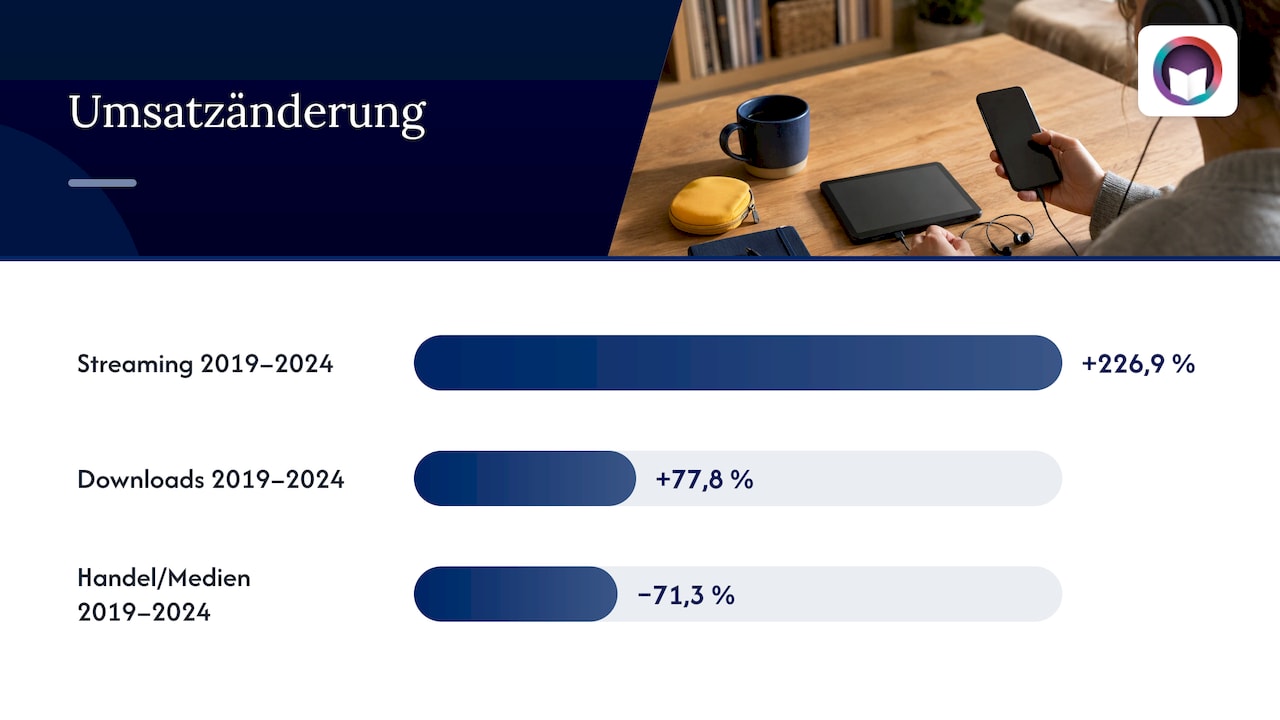
The most striking trend is the shift from ownership to access. Downloads and streaming are almost level in 2025, separated by just 0.2 percentage points. The longer-term view is even clearer: according to a study by Sven Stollfuß in New Media & Society, which draws on figures from the Börsenverein, audiobook revenue from streaming grew by 226.9 percent between 2019 and 2024, while downloads increased by 77.8 percent. Revenue through traditional bookshops and physical media such as CDs fell by 71.3 percent over the same period.
Germany is a special case here. According to an analysis of the German digital audiobook market, 87.4 percent of German-language audiobooks are listened to through subscription models. In other language markets, significantly more are still purchased individually.
For listeners, this means trying more things because an individual title costs nothing extra. People listen in shorter stretches, switch genres, stop one story, and start something new. This is exactly where short stories show their strength: a self-contained story fits into a train journey, a lunch break, or the last fifteen minutes before falling asleep. If you are deciding whether to save files or stream directly, our comparison MP3 or Streaming for Audiobooks can help.
Trend 2: More Listening Rather Than More Listeners
After years of booming growth, Börsenblatt describes the audiobook market as having reached a plateau: the number of listeners remains stable, while growth comes from more intensive use, greater format variety, and stronger differentiation. That may sound dry, but it is good news for everyone who tells and listens to stories. Those who already listen are listening more and looking for new forms.
What does format variety mean in practice? Alongside the traditional novel lasting many hours, formats that fit into everyday life are gaining ground:
- Short stories that can be listened to in full in one sitting.
- Serialized stories released chapter by chapter that keep bringing listeners back.
- Genre formats with a clear promise: goosebumps in thrillers, worldbuilding in fantasy, calm in bedtime stories.
These forms suit a market in which people are listening more intensively. Anyone who listens to a chapter every evening builds a habit, and habit is the most valuable currency in audio.
Trend 3: The Voice Becomes a Brand
In an audiobook, the voice is not packaging; it is part of the story. The analysis of the German audiobook market mentioned above puts a figure on this: 49 percent of German listeners choose titles based on familiar voices. Narrators themselves thus become a reason to press play.
Two approaches are gaining importance:
- Professionally produced voices that convey a story consistently well and clearly, from the first sentence to the last.
- The author's own voice. No one knows the rhythm of a text as well as the person who wrote it. For listeners, this creates a sense of closeness; for authors, recognizability that builds across many stories.
OutaStory offers both: every story can be played as an audiobook, with professionally produced voices or the author's voice. For listeners, this means they can find their favorite voice. For authors, it means their voice can become part of their brand.
Trend 4: AI Voices and New Production Methods
The dominant industry topic in 2026 is artificial intelligence in voice production. According to Die Nachlese, the IG Hörbuch meeting focused on the future of voices: Danish actress Maria Garde has licensed her voice for a voice-switching project in which her voice will be used for 50 narrated books over one year. Her aim was to help shape the development and negotiate better contracts for narrators. Guidelines for labeling AI voices were also presented.
At the same time, acceptance of synthetic voices is increasing, especially among younger listeners, as the analysis of platformization in the audiobook market notes. This opens doors for authors: a text no longer has to wait months for a studio production before it can be heard.
We have described in detail how good AI voices sound today and where you encounter them in AI Voices in Audiobooks. And anyone who wants to understand the steps between a finished manuscript and an audio file can find them in How an Audiobook Is Made, from choosing the voice to uploading.
Trend 5: Visibility Is Determined on Platforms
Media scholar Sven Stollfuß distinguishes between a digital audiobook culture and a platformized one. In the latter, audiobooks become data objects: according to his analysis, whether a title is seen depends more on algorithmic curation, meaning recommendation systems, than on editorial decisions. Platforms reward engagement—how often and how long people listen—more than individual sales. A title missing from streaming catalogs is at a clear competitive disadvantage.
Incidentally, this applies beyond audiobook apps. Search engines are also increasingly using AI to organize content, as the overview of AI in SEO in 2026 shows. For authors, this means a good story needs a place where it can be found, read, and heard, and a format that keeps listeners coming back.
This is where short and serialized formats have an advantage. A short story is more likely to be listened to in full than a 14-hour novel. A serialized story creates a new reason to listen with every new chapter. Both generate engagement, and that is exactly what counts in platformized markets.
Trend 6: Genres with a Clear Promise
What are people listening to? On the plateau described by Börsenblatt, those who clearly stand out are the winners. For listeners, this means deliberately seeking a particular mood. Three areas stand out for our readers.
Fantasy, romantasy, and science fiction. These genres thrive on worlds people want to immerse themselves in, and they are particularly well suited to serials. A world created in chapter one can easily sustain ten more.
Crime, thrillers, and horror. Suspense works wonderfully in audio because the voice sets the pace and pauses. One example from our catalog is the thriller Dunkle Geschäfte; those who prefer something darker will find a dark fantasy story in Häusergeflüster.
Children's stories and bedtime stories. For parents, an audiobook is a helper in the evening routine: a story that lasts exactly as long as the time between brushing teeth and lights out. Animal adventures and first rhymes work particularly well in audio because children love sound and repetition.
What the Trends Mean for Listeners
For you as a listener, the trends come down to a simple question: where can I get good stories of a length that fits my day, with a voice I like?
- On the go: Short stories are tailored to commutes. One story, one journey.
- For falling asleep: A self-contained, calm story is easier to let go of than a novel whose plot keeps unfolding in your head.
- For trying something new: Anyone wanting to try a new genre does not need 12 hours, just 20 minutes.
- Alternating between reading and listening: Continue reading in the morning, continue listening in the evening; either way, it is the same story.
People with visual impairments benefit particularly from the audio trend. Our guide Audiobooks for People with Visual Impairments describes ways to access short stories as audiobooks with fewer barriers.
What the Trends Mean for Authors
For writers, 2026 is a year in which audiobooks are evolving from an extra into a standard. The 2026 survey by the Selfpublisher-Verband makes this clear: 94 percent of respondents always publish digitally, and audiobooks rank directly after e-books and paperbacks as a format. Among professionals, meaning self-publishers with average monthly revenue of 2,500 euros or more, the proportion without an audiobook fell from 27 to 15 percent.
The same survey also describes the downside of one-sided strategies: anyone earning almost all their revenue through a single large platform depends on its rules. Technical problems can cause reach to collapse, and a suspension can threaten their livelihood. A second channel for text and audio is therefore not a luxury, but a precaution against risk.
What practical steps can you take?
- Start with a short story. A short text is quicker to finish, quicker to turn into audio, and quicker to publish. It shows how your voice and style resonate with an audience.
- Think in serials. If a world can sustain more stories, continue exploring it as a serial. Each new chapter is a new reason to return.
- Use your own voice. If almost half of listeners choose based on familiar voices, your voice can become your trademark.
- Share in the revenue. Choose a place where your story is not only found, but where you also receive a share of the proceeds.
On OutaStory, you can publish your short story in just a few minutes, release it chapter by chapter as a serial, and receive a share of your stories' earnings through revenue sharing. Our guide Publish an Audiobook for Free shows the process step by step. The platform commission is 8 %; you can find the details on our page for narrators.
Read and Listen to Stories on OutaStory
We built OutaStory for exactly the market the figures describe: listeners who listen in short stretches, families with established evening routines, and authors who want to make their stories available in audio without lengthy detours. All stories can be read for free or listened to as audiobooks, in German and English, ranging from fantasy, romantasy, and science fiction to crime, thrillers, and horror, as well as our children's section with bedtime stories, animal adventures, and first rhymes.
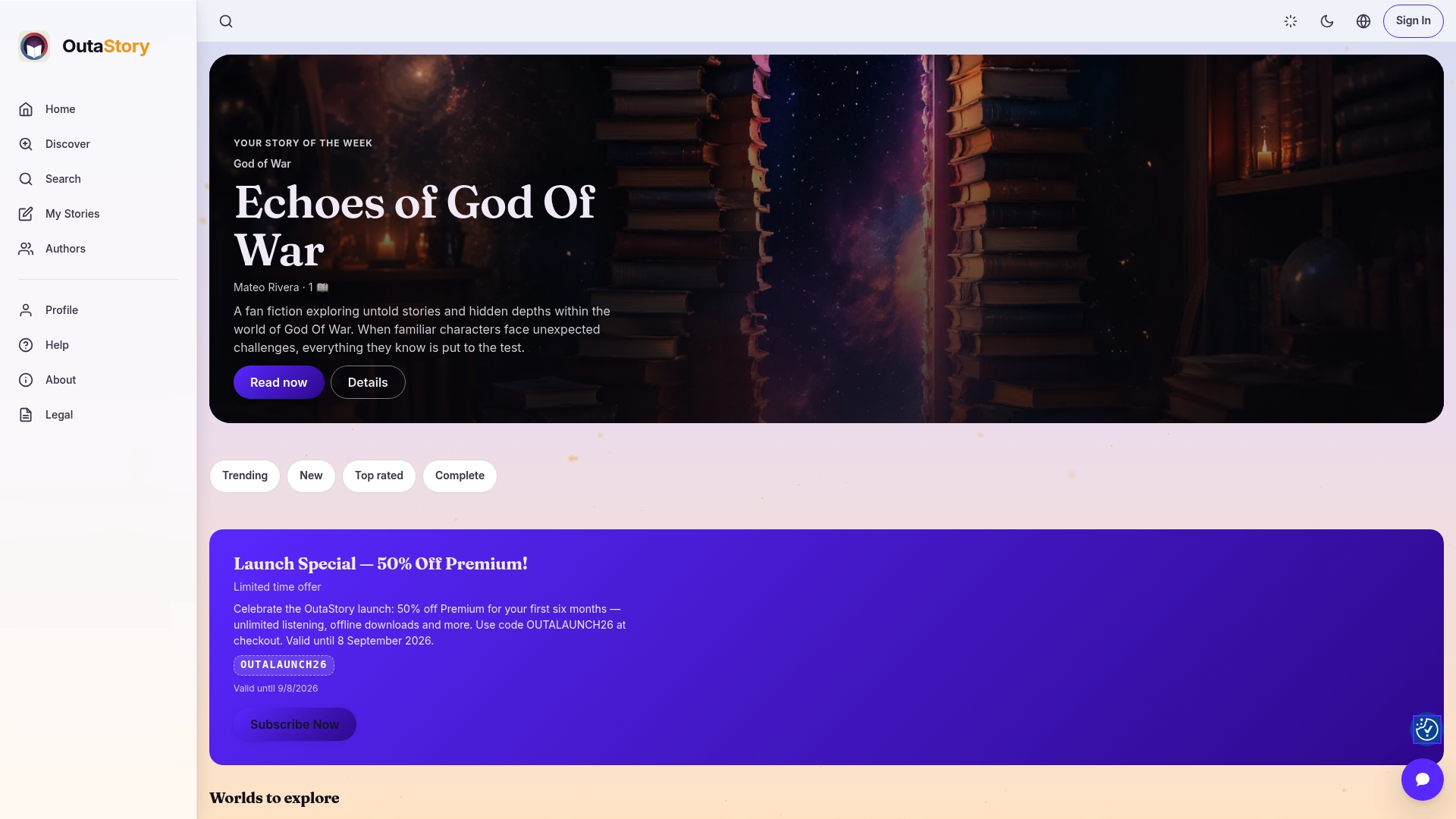
Anyone who wants to listen more can find enhanced features in our Premium subscription, such as unlimited listening, ad-free use, and offline access, ideal for mobile dead zones along a train route. A good starting point is the literary fiction story Briefe an mich or the drama Zwischen den Zeilen. Your World, Your Stories: Write, Read, Listen.
Frequently Asked Questions About the Audiobook Market in 2026
Is the Audiobook Market in Germany Still Growing?
Yes. Audiobook revenue rose by 13.2 percent in 2025, while the overall book market shrank by 2.7 percent. Growth comes primarily from more intensive use and new formats. The Börsenverein will publish the figures for 2026 the following year.
Do People Today Listen to Audiobooks More Through Streaming or Downloads?
Both are almost equally popular: in 2025, downloads accounted for 47.4 percent of audiobook revenue and streaming for 47.2 percent. CDs now play only a minor role at 5.3 percent. In Germany, a particularly large proportion of audiobooks are listened to through subscription models.
Will AI Voices Replace Human Narrators?
In 2026, the industry is primarily discussing how AI voices can be fairly licensed and labeled. At the same time, the voice remains a key reason for choosing a title: 49 percent of listeners choose based on familiar voices. That is why both professionally produced voices and the author's own voice are gaining importance.
Is It Worthwhile for Authors to Publish a Short Story as an Audiobook?
Short and serialized formats fit well in a market where people listen frequently and in short stretches. A short story is quick to publish and shows how your style resonates. On OutaStory, you can publish in just a few minutes and receive a share of the earnings through revenue sharing.
Which Genres Are Particularly Popular for Listening?
Suspense, fantasy, and romance benefit especially from formats that bring listeners back chapter by chapter. For families, bedtime stories are an established part of the evening routine. What matters is a clear promise: goosebumps, worldbuilding, or calm.
Sources
Börsenverein des Deutschen Buchhandels: Book Market at a Glance 2025/2026
Stollfuß: The German Digital Audiobook Market, New Media & Society (2026)
The German digital audiobook market in the context of platformization (2026)
Börsenblatt: After the Boom: Audiobook Market Reaches a Plateau
Selfpublisher-Verband: 2026 Survey, Part 2 Best Practice
Recommendations
- MP3 or Streaming: Which Audiobook Format Suits You?
- How Is an Audiobook Made? From Choosing the Narrator to Uploading
- Podcast or Audiobook: Which Audio Format Suits You?
- Publish an Audiobook for Free: The Short Story Route
Read and write on OutaStory
Thousands of short stories to read for free — or publish your own and find an audience.