Dystopian short stories: the best texts and writing tips
Anyone looking for dystopian short stories will find the strongest entry points in Kafka's ‚In the Penal Colony‘, in current translations on Clarkesworld and in German-language rediscoveries like ‚Projekt Rhein‘. All three show how short form and major societal questions fit together. Anyone who wants to write can find a way to publish and present their own texts quickly on an online platform.
In short:
- Most influential dystopian short stories play with societal questions and use flexible narrative forms such as microfiction or episodic structures.
- Popular sources for German and international stories are magazines like Tor Online, Clarkesworld and self-publishing platforms like OutaStory.
- When writing a short story, it's advisable to focus on a concrete detail, foreground characters and plan the ending early.
- Authors can publish their stories for free and share in the revenue, which is especially attractive for short and topical dystopias.
- Technical research for a believable world is based on current debates, concrete details and real systems to portray the world convincingly.
Table of contents
- The best dystopian short stories to read right away
- Where can you find dystopian short stories?
- How do you write a convincing dystopian short story?
- What can you learn from Kafka and modern short fiction?
- OutaStory as a tool for readers and authors of dystopian short stories
- Which contemporary authors are shaping the genre right now?
- Why is dystopia as a short form so literarily significant?
- How do you research a believable dystopian world?
- Fancy unlimited listening to your favorite dystopias?
- Sources
- FAQ
The best dystopian short stories to read right away
A good dystopian short story often works better than a whole novel, precisely because it has no time for digressions. The following selection mixes classics with current voices and covers different reading lengths, from micro-stories to longer novellas.
- ‚In the Penal Colony‘ by Franz Kafka (1919): A torture machine as a symbol for a system that no longer questions its own cruelty. Anyone who wants to understand how allegory works in short form should read this text. The summary on Wikipedia provides a good introduction to its interpretive history.
- ‚National Center for the Preservation of Human Dignity‘ by Youha Am (translated, published on Clarkesworld, about 25 minutes): A Korean story about state-managed memory that shows how international translations bring new perspectives to a familiar genre.
- ‚Against the End‘ by Marco Rauch (German-language, short reading time): A sci-fi dystopia that demonstrates how German-language authors approach the genre through near-future scenarios rather than distant apocalypses.
- ‚Projekt Rhein‘ (German-language, self-published): A locally anchored short story, listed with the Selfpublisher Verband, that shows how dystopian motifs can be linked to everyday German locations.
- Short story selections on Tor Online: The piece “Stroll through the future” collects several science-fiction short stories and serves as a springboard to further texts on the border of dystopia.
- Microfiction formats: Texts under 1,000 words, often only a single scene, are particularly suitable for readers with little time. They largely omit background and rely on a single disturbing moment.
- Serial formats on platforms like OutaStory: Some authors publish their dystopian story chapter by chapter, which places it between a short story and a series and is particularly practical for listeners.
This mix shows a range that works equally well for beginners and experienced readers: Kafka for the literary foundation, Clarkesworld for international voices, German-language authors for current, locally anchored perspectives. If you're undecided between classic dystopia and modern short prose, it's best to read across all three categories before committing to a subgenre.
Where can you find dystopian short stories?
Searching for good dystopian short prose runs through a few reliable channels. Those who search with purpose reach their goal faster than by random clicking.
- German-language magazines: Tor Online regularly publishes essays and curated lists of science-fiction and dystopian short stories.
- International genre magazines: Clarkesworld brings award-winning short stories and translations that would otherwise be hardly visible in the German-speaking area.
- Self-publishing platforms: The Selfpublisher Verband lists projects like ‚Projekt Rhein‘ and gives insight into how independent authors work with the genre in Germany.
- Discussion forums: Communities like r/classicliterature often discuss short stories in threads that combine reading recommendations with direct text references. For dystopia specifically, it's worth searching for threads on Kafka, Orwell or Ray Bradbury.
- Genre platforms with listening features: OutaStory aggregates short stories from science fiction, horror and adjacent genres and can be filtered by category and length.
- Calls for submissions: Magazines often publish open calls with thematic focuses, such as “near-future” or “climate dystopia”. Following such calls will quickly surface current texts before they appear in anthologies.
For targeted searches, simple keywords like “dystopia”, “near future” or “speculative fiction” combined with length filters help. Many platforms also tag texts by reading time, which is especially useful for quickly finding fitting microfiction.
How do you write a convincing dystopian short story?
A dystopian short story does not live from the size of the invented world, but from the precision with which a single excerpt of it is told. If you want to make a whole system believable on a few pages, you need different tools than a novelist.
- Focus your worldbuilding: Don't show the entire system, but one detail that reveals it, such as a queue, a form, a sound that no one questions anymore.
- Put characters before concepts: A character with a concrete desire, for example to retrieve a lost letter, carries the story better than pure system critique.
- Choose perspective and tone: An unreliable first-person narrator who describes the injustice around them as normal often creates more unease than an omniscient, accusatory voice.
- Plan the ending in advance: Decide early whether the story ends openly (uncertainty remains) or closed (a judgment is made), because that already determines the tone of the opening paragraphs.
- Tighten and test: First write the scene longer, then cut every sentence that only explains instead of showing, and have beta readers focus specifically on the last two paragraphs.
Pro tip: Delete in revision every sentence that explains the rules of your dystopian world. If a character simply complies with them without commenting, the world automatically feels more real.
What can you learn from Kafka and modern short fiction?
Kafka's ‚In the Penal Colony‘ works through an allegory that needs no explanation: a machine pronounces guilt without the narrative ever intervening morally. There is no comforting identification figure for the reader, only a routinized procedure that treats its own cruelty as administrative process. That very distance makes the text so unsettling, and that is precisely what can be transferred to short modern dystopias.
Translated short stories like the ones published on Clarkesworld show how effective a near-future setting can be when it stays close to the present instead of distant science fiction. For your own texts this means a clear choice: allegory works well if you want distance from the theme, direct social criticism works better if you want to confront the reader immediately.
OutaStory as a tool for readers and authors of dystopian short stories
OutaStory aggregates science-fiction short stories and adjacent genres for free reading and listening, with professionally produced voices or the author's own voice. You can find dystopian texts via genre categories and tags, and many can be played directly instead of only read.
Those who write can publish their own story in minutes and, if needed, release it chapter by chapter as a serial, which is suitable for longer dystopian narratives. Through the revenue sharing for authors you can participate in the earnings from your texts, while readers continue to discover the stories for free.
Which contemporary authors are shaping the genre right now?
Alongside established international voices translated by magazines like Clarkesworld, a distinct scene of self-publishers and platform authors is emerging in the German-speaking area. Marco Rauch, for example, publishes his sci-fi dystopias directly online and shows that the genre is developing outside traditional publishing structures. Projects like ‚Projekt Rhein‘, listed by the Selfpublisher Verband, intentionally root dystopian motifs in German cities and landscapes instead of generic future backdrops.
This development is worth watching because it shows where the genre is moving: away from the grand, distant end-times and toward near, concrete shifts in everyday life, such as workplace surveillance, algorithmic rating systems or regional water shortages. If you want to discover new authors, you will find ongoing releases on various platforms, often by writers who work on multiple short texts in parallel instead of a single novel. This is especially rewarding for readers who want current societal issues reflected in fiction rather than waiting for the next major publisher release.
Why is dystopia as a short form so literarily significant?
Dystopia is one of the forms that process societal fears most directly, from surveillance and environmental destruction to algorithmic control. In short form this effect often appears more concentrated than in the novel because there is no room for subplots that distract from the central unease. Kafka's ‚In the Penal Colony‘ already shaped this tradition in 1919, long before Orwell or Huxley established the genre in large format.
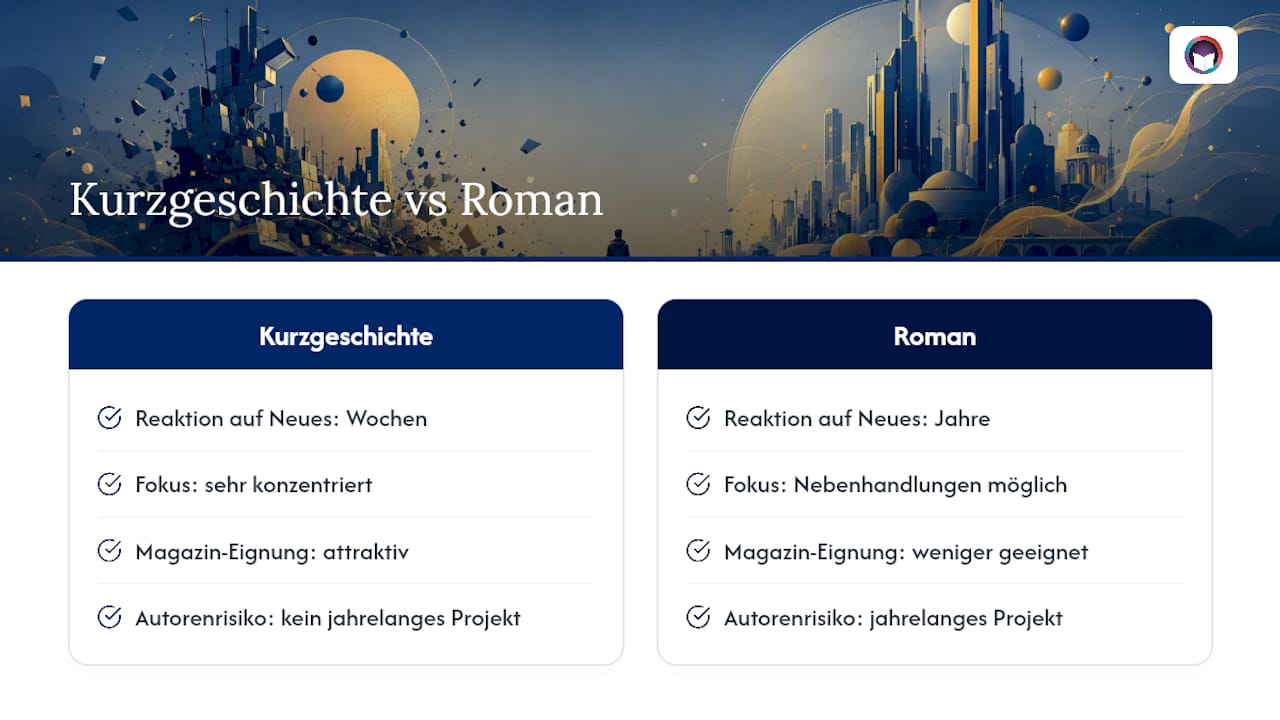
Culturally, the dystopian short story often functions as a quick reaction to current developments. While a novel takes years to write, a short story can respond to a new law, a technology or a political event within weeks. That is exactly what makes the format attractive to magazines and platforms: it delivers literary reflection almost in real time. For readers this means a more direct connection between fiction and the present; for authors it offers a way to comment on societal debates in fiction without risking a multi-year novel project.
How do you research a believable dystopian world?
The most convincing dystopian worlds rarely come from pure imagination, but from a slight shift of real conditions. Observe current debates on surveillance, climate impacts or automated decision systems and ask yourself what happens if an existing trend continues for ten or twenty years.
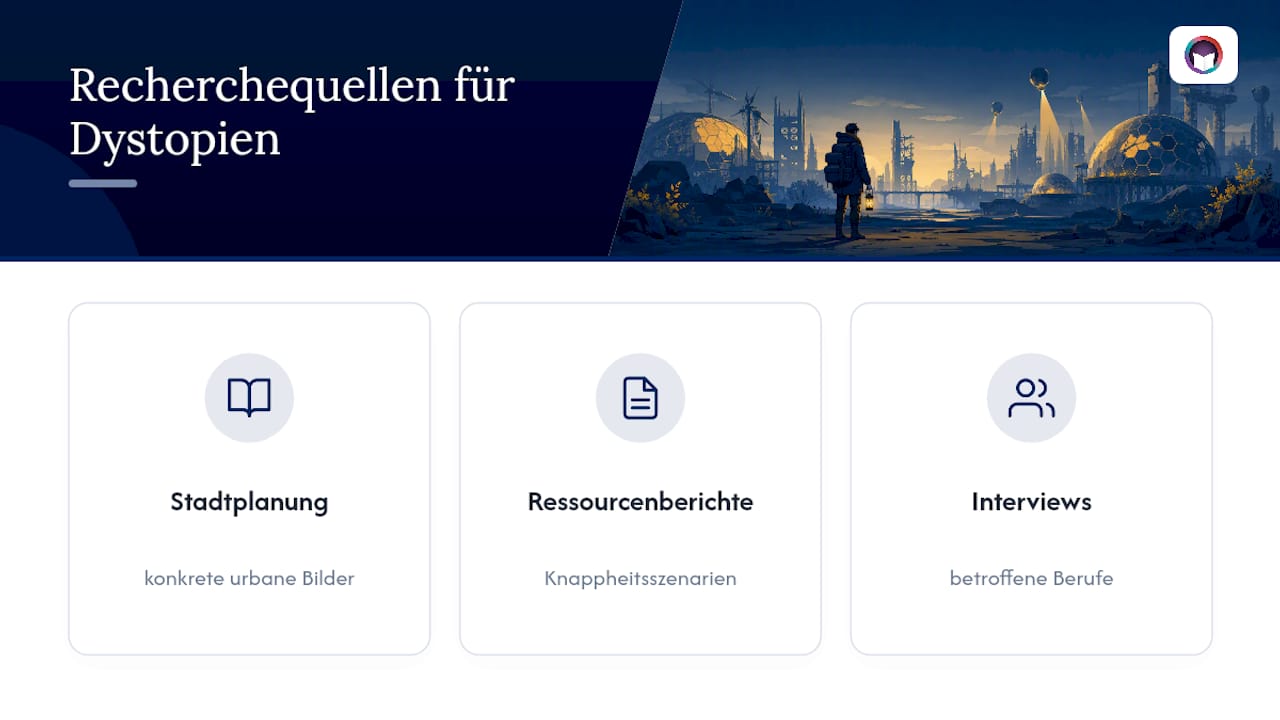
Concrete research sources help you find believable details instead of generic future clichés: non-fiction on urban planning, reports on resource scarcity or interviews with people in professions threatened by automation. If you write a story about a rating system, for example, you should look at how real scoring systems work instead of inventing a plausibly sounding system. A look at older dystopias like Kafka's Penal Colony is also worthwhile as research because the techniques of defamiliarization are already rehearsed there. Note down single, concrete images during research rather than whole systems, because these images later carry the short story, not the theory behind them.
Fancy unlimited listening to your favorite dystopias?
Once you start listening through dystopian short stories, you quickly notice that free use hits limits at some point, for example with ads or when offline listening on a train is missing.
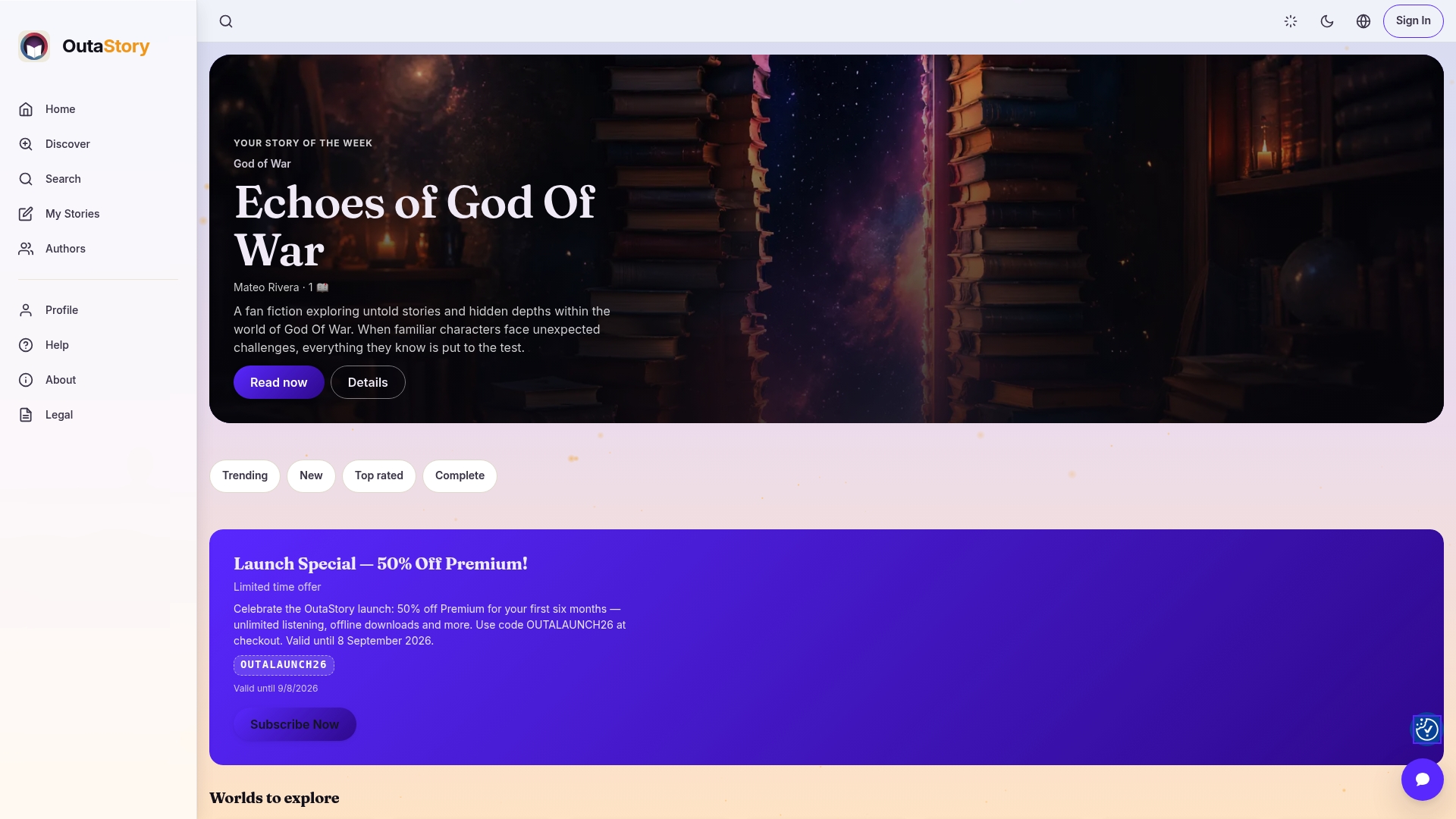
With OutaStory Premium you can keep listening without limits, even without an internet connection, and stay within the same platform where you already read. Details about membership benefits can be found on the premium page. The basic consumption remains free: occasional listeners do not need a subscription. Those who regularly listen on the go or want to binge entire serials will find Premium the right complement without having to switch platforms.
Sources
Those who want to dive deeper will find the literary-historical background on Kafka's ‚In the Penal Colony‘ on Wikipedia, current German-language curation on Tor Online and international translated short fiction on Clarkesworld. Further genre recommendations are collected in the piece on science-fiction subgenres.
- In der Strafkolonie — Wikipedia
- Stroll through the future: science-fiction short stories — Tor Online
- National Center for the Preservation of Human Dignity — Clarkesworld
- Projekt ‘Rhein’ — Selfpublisher Verband
FAQ
Which are the most well-known dystopias?
Among the best-known dystopias in short and long form are Kafka's ‚In the Penal Colony‘ and Huxley's ‚Brave New World‘. In short form, modern magazine pieces such as the translations published on Clarkesworld are also relevant.
What are examples of a dystopia?
Examples range from the torture machine in Kafka's ‚In the Penal Colony‘ to state-managed memory in Clarkesworld to near-future scenarios by German-language authors like Marco Rauch. What they have in common is a system that presents control as normal.
Which books are dystopian?
Works like ‚Brave New World‘ are classically dystopian, complemented by short prose such as Kafka's ‚In the Penal Colony‘. Current short stories on Tor Online, Clarkesworld or directly on OutaStory are good places to find contemporary examples.
Which novels are dystopian?
Dystopian novels usually deal with a totalitarian or technologized system that restricts individual freedom, as in Orwell or Huxley. If you prefer short forms, you'll find comparable themes more concentrated in short stories like those at Clarkesworld or in German-language texts such as ‚Projekt Rhein‘.
What does it cost to publish on OutaStory for authors?
Authors publish their short stories for free and participate in revenue through a platform fee of 8%. Details of the exact arrangement can be found directly on the linked page.
Recommendations
Read and write on OutaStory
Thousands of short stories to read for free — or publish your own and find an audience.