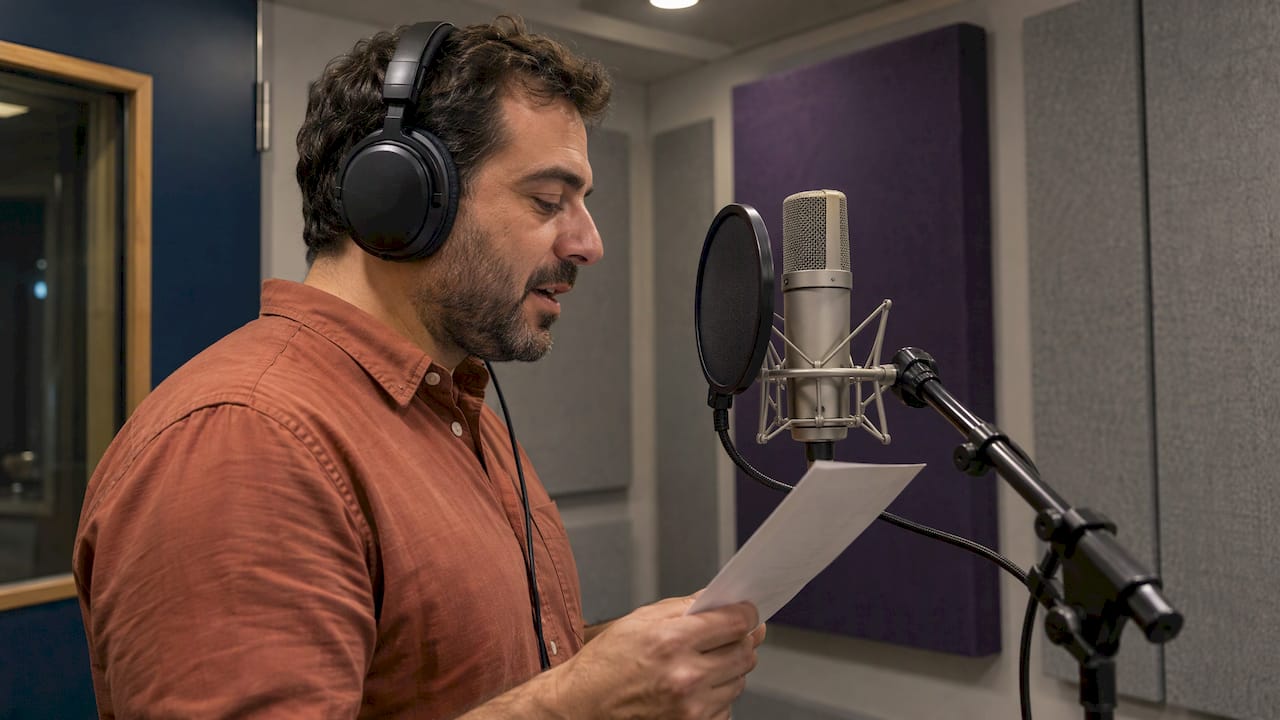
The Author's Voice in Audiobooks: When Authors Read Their Own Stories
An author's voice in an audiobook means that the person who wrote the story also narrates it. As a listener, you hear the text with exactly the pauses, emphasis, and nuances intended during the writing process. As an author, this lets you build a direct connection with your audience that no blurb can replace. On OutaStory, every short story can be played as an audiobook, with a choice of professionally produced voices or the author's own voice. In this article, we show you what makes a good author's voice, how to prepare and record your text for listening, how to publish it and earn a share of the revenue, and where to find the right stories as a listener.
In Brief
- Two meanings: In the craft of writing, “author's voice” means a personal style; in audiobooks, it means the actual voice of the person who wrote the text.
- The impact: Listeners experience a story straight from its creator's mouth. This is precisely what has made author-narrated audiobooks special for decades.
- Preparation is key: Short sentences, one thought per sentence, numbers written out in words, and an easy-to-read script make the difference.
- Both on one platform: On OutaStory, you can listen to every story with a professional voice or in the author's voice.
- For authors: You can publish your short story in just a few minutes, including chapter by chapter, and earn a share of the revenue through revenue sharing.
Table of Contents
- Two Meanings: Narrative Voice and Actual Voice
- Why the Author's Voice Connects So Well with Listeners
- Author's Voice or Professional Narrator: Which Suits Your Story?
- Writing for the Ear: How to Prepare Your Text
- Making Your Own Recording: Step by Step
- Publishing and Earning a Share of the Revenue
- For Listeners: Stories for On the Go and Falling Asleep
- Frequently Asked Questions
- Sources
Two Meanings: Narrative Voice and Actual Voice
Anyone searching for “author's voice” will quickly come across two different things. In writing guides, the author's voice is their personal style: the way someone constructs sentences, chooses imagery, and makes characters speak. This is also called the narrative voice.
In audiobooks, the meaning is literal. The author's voice is the actual voice of the person who wrote the text, captured by a microphone. Things get interesting where the two meet: when you read your own story, you bring together the style on the page and the sound of your voice. The rhythm you had in mind while writing becomes audible.
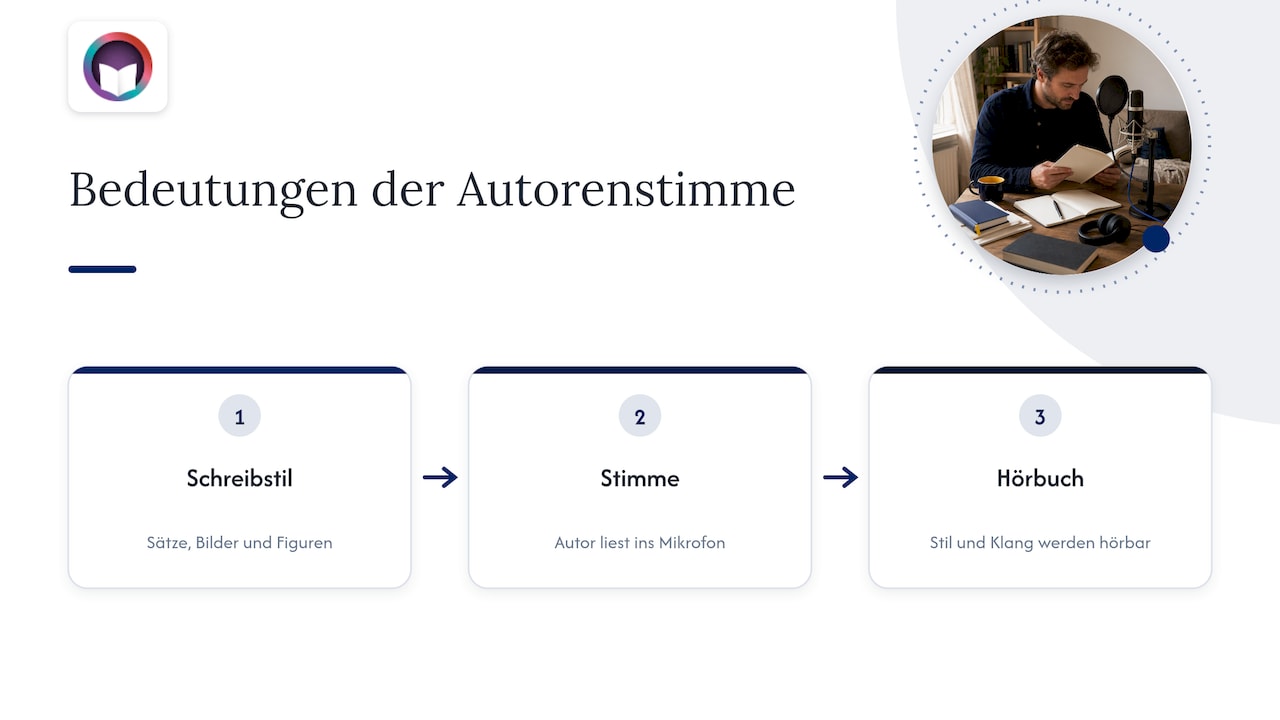
It is precisely this second meaning that we focus on here: the audiobook narrated by the author.
Why the Author's Voice Connects So Well with Listeners
Author-narrated audiobooks have a long tradition. DIE ZEIT describes the special aura of the author's voice: listeners experience what they would otherwise only read directly from the creator's mouth. Thomas Mann, Ingeborg Bachmann, Günter Grass, and Christa Wolf remain part of our collective listening memory through their own readings. The same ZEIT review praises David Wagner's autobiographical audiobook “Leben,” read by the author himself, for its skillfully varied pace and fitting vocal register.
Why is this so powerful? Three reasons are clear:
- Authenticity: No one knows the intention behind a sentence better than the person who wrote it. Irony, hesitation, a subtle undertone: all of it comes across as intended.
- Closeness: An author's voice sounds like a personal conversation. This creates a sense of familiarity, especially in short stories, which often revolve around a single moment or a single character.
- Recognition: Once you have heard an author, you often read their next story with their voice in your head. For authors who want to build a readership, this is a real advantage.
The industry takes this topic seriously, too: the Frankfurt Book Fair dedicated a discussion to the author's voice in audiobooks, covering recording from a first-person perspective, the challenges in the studio, and the value of the author's voice for the listening experience.
Author's Voice or Professional Narrator: Which Suits Your Story?
The question is not which option is “better,” but which suits your text. In audiobook production, the rule is: a reading is good when the voice matches the text in sound, timbre, and pace. That is why choosing the voice comes right at the start of professional productions.
The great advantage of OutaStory: you do not have to commit forever. Every story can be played with professionally produced voices or with the author's voice.
| Criterion | Author's voice | Professionally produced voice |
|---|---|---|
| Strength | Personal, authentic, close to the text | Consistent, clear, designed for comfortable listening |
| Ideal for | Personal narratives, first-person perspectives, literary fiction, coming-of-age stories | Fantasy, science fiction, and thrillers with many characters; longer serialized stories |
| Preparation | Script, quiet room, recording, and editing | Finish the text; the voice handles the narration |
| Effect on the listener | “I hear the person behind the story” | “I immerse myself completely in the story” |
We have summarized how good modern speech synthesis now sounds and where it is used in audiobooks in our article on AI voices in audiobooks.
A practical approach for many authors: publish your first story with a professional voice so it can be heard immediately. Then narrate a personal story that is especially close to your heart yourself.
Writing for the Ear: How to Prepare Your Text
A text that reads well does not automatically sound good. When reading, your eyes can go back; when listening, they cannot. Whatever the listener misses is gone. The guidelines that community broadcaster NRWision recommends for writing for listening work well for short stories, too:
- One thought per sentence. When a sentence contains two thoughts, one of them usually gets lost in listening.
- Short sentences. NRWision suggests a maximum of 13 to 15 words per sentence as a guideline. You can deviate from this in storytelling, but you should break up long, complex sentences for the audiobook.
- Write out numbers. “50,000” becomes “fifty thousand” in the script. This helps you avoid stumbling while reading.
- Spell out abbreviations. Write them out in full the first time they appear so listeners immediately understand what you mean.
- Explain or replace technical terms. This also applies to invented terms in fantasy and science fiction: a name that looks mysterious on paper sometimes needs a brief explanation when heard.
A tried-and-tested approach: read your finished script aloud while standing up and at full volume. After half a minute, you will notice where you run out of breath, where two thoughts are packed into one sentence, and which words you would never use in everyday life. Talk2Camera also recommends putting the important word at the end of the sentence and writing the way you speak, using “I've got it” rather than “I have got it,” for example. Sounding too simple often feels wrong when writing, but sounds better when listening.
The Script Itself
The formatting of your script also helps you when speaking. NRWision recommends:
- at least 1.5 line spacing, preferably double spacing
- around 60 characters per line
- a font size of 14 or larger
- underlined emphasis and marked places to take a breath
Also mark dialogue so you can spot character changes early. Decide on a consistent pronunciation for proper names and invented words, and stick to it throughout the story and across all chapters of serialized stories.
Making Your Own Recording: Step by Step
You do not have to rent a recording studio to narrate your own story. But you should know what matters. A successful self-produced recording comes from suitable equipment, good acoustics, a prepared manuscript, clear pronunciation, careful post-production, and a clean final result.
- Choose the room. A small room with plenty of soft surfaces, such as curtains, a rug, or a full wardrobe, absorbs reverberation. Bare rooms with smooth walls sound hollow. Turn off the refrigerator, fans, and notifications. The most common mistake: a room that sounds good when you speak but echoes on the recording. So make a short test recording first and listen to it with headphones.
- Set up the microphone. A decent USB microphone and a pop filter to soften harsh P and B sounds are enough to get started. Distance is important: in professional productions, the distance from the microphone must remain the same through every character change. Mark your position so the volume does not fluctuate.
- Prepare your voice. Drink water, warm up with a few sentences, and do not try to do too much at once. Even professionals spread a production over several days. One session is often enough for a short story; for longer texts, it is worth working in sections.
- Tell the story, rather than simply reading aloud. Imagine a person you are telling the story to. Speak a little more slowly than in conversation, and allow important moments a pause. You do not have to imitate voices for your characters. A different pace or attitude is often enough. The professionals in the Deutschlandfunk article emphasize how much your own imagination helps you portray characters through your voice.
- Leave mistakes in and start again. If you make a mistake, do not stop the recording; pause briefly and read the entire sentence again. You can separate the takes cleanly during editing.
- Edit and check. Remove mistakes, overly long pauses, and unwanted noise. Balance the volume and listen to the entire result once, ideally the next day with fresh ears.
If you find that recording takes too much effort, that is no reason to give up on an audiobook. On OutaStory, every story is also available with professionally produced voices, so you can focus entirely on the text.
Publishing and Earning a Share of the Revenue
The finest recording is of little use if no one hears it. Many authors know the problem: a short story is too short for a book of its own and too long for a social media post. Traditional audiobook productions rarely make sense for individual short stories because the studio, narrator, and distribution costs are out of proportion to their length.
We built OutaStory precisely to fill this gap. For us, the short story is not a by-product but the centerpiece, and the audiobook is part of it from the start.
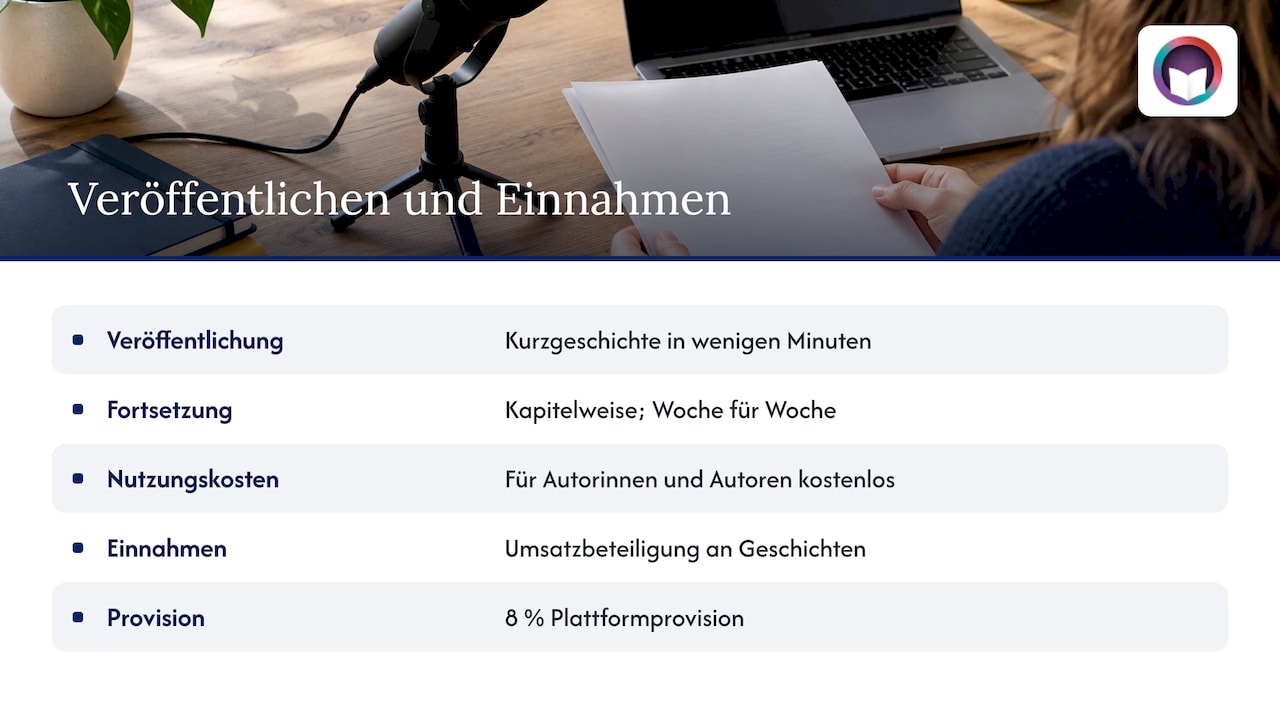
Write, Read, Listen: your story, ready to read and hear.
On OutaStory, you can publish your short story in just a few minutes. Readers can read it for free or listen to it as an audiobook, with a professionally produced voice or your own. You can release longer projects chapter by chapter as serialized stories, bringing your audience back week after week. Through revenue sharing, you earn a share of your stories' revenue, and using the platform costs you nothing as an author. You can find the terms on our page for narrators, which lists a platform commission of 8%.
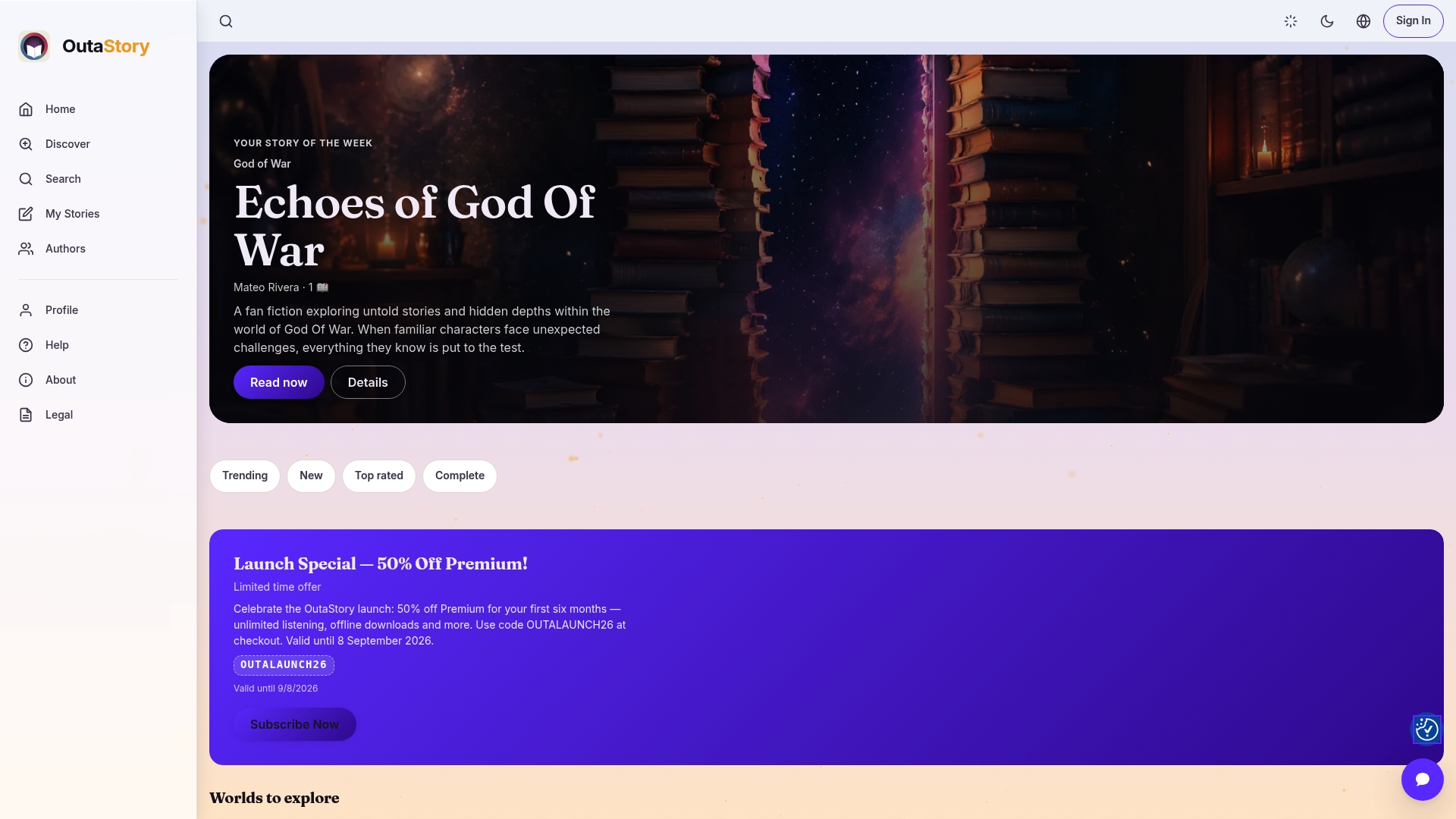
The range of genres is broad: fantasy, romantasy, and science fiction sit alongside crime, thrillers, and horror, plus a dedicated children's section with bedtime stories, animal adventures, and first rhymes. And because OutaStory is available in German and English, your story can reach readers in both languages. Get started on OutaStory now and turn your text into a listening experience.
Tips for Authors Who Want to Win Readers with Their Voice
- Start with a personal story. Texts written in the first person or with an autobiographical core benefit most from your voice.
- Use serialized stories. Anyone who has heard your first chapter in your voice will want to know what happens next.
- Stay consistent. Same room, same microphone, same distance: this makes every chapter sound like part of a cohesive whole.
- Write your next story for the ear from the start. With each text, your feel for sentence length and rhythm improves.
For Listeners: Stories for On the Go and Falling Asleep
Even if you do not write yourself, author's voices are worth exploring. A short story fits perfectly into a train journey, a jog, or the half hour before falling asleep. You hear a complete story arc without having to remember where you left off yesterday.
On OutaStory, you can read or listen to every story for free. Good starting points include the literary story Briefe an mich, the dark fantasy story Häusergeflüster, or, for fantasy fans, Der eiserne Thron. If you want to unwind in the evening, our article on bedtime stories for adults offers guidance on which kinds of stories really help.
Read-Aloud Stories for Children
For parents, the voice is the most important part of reading aloud anyway. Reading to your child yourself is still the loveliest option, and our free bedtime stories always give you fresh reading material. On evenings when your voice is tired, the audiobook takes over. A story such as Die Wolke, die sich zum Mittagsschlaf vermietet can be read aloud or listened to. You can find a selection by age in our overview of the best bedtime stories, and practical tips for reading aloud and listening in our guide to bedtime stories for children.
More Listening Time with Premium
If you listen a lot on the go, you can benefit from OutaStory Premium: unlimited listening, ad-free use, and offline access so your stories keep playing even without reception or on a plane.
Frequently Asked Questions
What Is an Author's Voice in an Audiobook?
It means an audiobook narrated by the author. The text is heard in the voice of the person who wrote it, with their emphasis and rhythm. In the craft of writing, by contrast, “author's voice” refers to a personal writing style.
Do I Have to Narrate My Own Story as an Author?
No. On OutaStory, every story can be played with professionally produced voices or with the author's voice. You decide whether to narrate it yourself or focus entirely on writing.
Which Stories Are Especially Suited to Your Own Voice?
The author's voice has the strongest impact in personal texts, first-person narratives, and stories with few characters. For fantasy, science fiction, or thrillers with many characters, a professionally produced voice plays to its strengths.
What Do I Need to Make My Own Recording at Home?
A quiet room with as little reverberation as possible, a decent microphone with a pop filter, headphones, and a well-prepared script. Keep your distance from the microphone consistent, and allow time for editing and a review with fresh ears.
Can I Earn Money with My Short Stories?
Yes. On OutaStory, you can publish your stories in just a few minutes and earn a share of their revenue through revenue sharing. You can find the details on our page for narrators.
Sources
- DIE ZEIT: Audiobooks, What the Creators Sound Like
- Frankfurt Book Fair: The Author's Voice in Audiobooks
- Deutschlandfunk: Audiobook Production, the Art of Vocal Magic
- NRWision: Writing for Listening
- Talk2Camera: Writing a Script That Sounds Good When Read Aloud
Recommendations
- How an Audiobook Is Made: From Choosing a Narrator to Uploading
- AI Voices in Audiobooks: How Good They Sound and Where You Can Hear Them
- Audiobooks in the Car: How Every Drive Becomes a Good Story
- Turning Your Own Story into Audio: From Text to Listening Experience
Read and write on OutaStory
Thousands of short stories to read for free — or publish your own and find an audience.