
8 Classic Short Stories for Teaching and Reading with Outastory
Classic short stories are compact, dense narratives that address big questions with only a few motifs. They don't need a hundred pages to tell of guilt, loneliness or homecoming. This article shows the typical features, a reading list with authors such as Wolfgang Borchert, Franz Kafka, Peter Bichsel and Heinrich Böll, an analysis framework for interpretation and concrete materials for teaching. Publishing series like Reclam and platforms like Outastory provide the appropriate texts.
In short:
- Classic short stories condense a central situation or decision into a few pages and often remain formally open and concise in style.
- Important authors include Wolfgang Borchert, Franz Kafka, Heinrich Böll, Peter Bichsel and Ilse Aichinger, whose works usually offer short, crisp texts with profound themes.
- A solid analysis focuses on narrative perspective, symbols and the historical context to capture the story's message.
- Teaching tasks range from text comparison to creative continuations and can be expanded with concrete worksheets as well as digital offerings like Outastory.
- The main benefit lies in concentrating on existential questions that can be practically covered in class in a double lesson in a short, easily accessible form.
Table of contents
- What makes a short story classic? Typical features
- Curated reading list: Important authors and their most important stories
- How to properly analyze a short story? A working plan
- Short stories in the classroom: task formats and material
- Outastory: read, listen and self-publish classics
- Sources
- FAQ
What makes a short story classic? Typical features
A classic short story seldom tells more than one situation, one moment, one decision. That is exactly where its power lies: it condenses rather than spreads out. When you read a short story you don't get a full biography, but an excerpt, a snapshot from which the whole can be guessed.
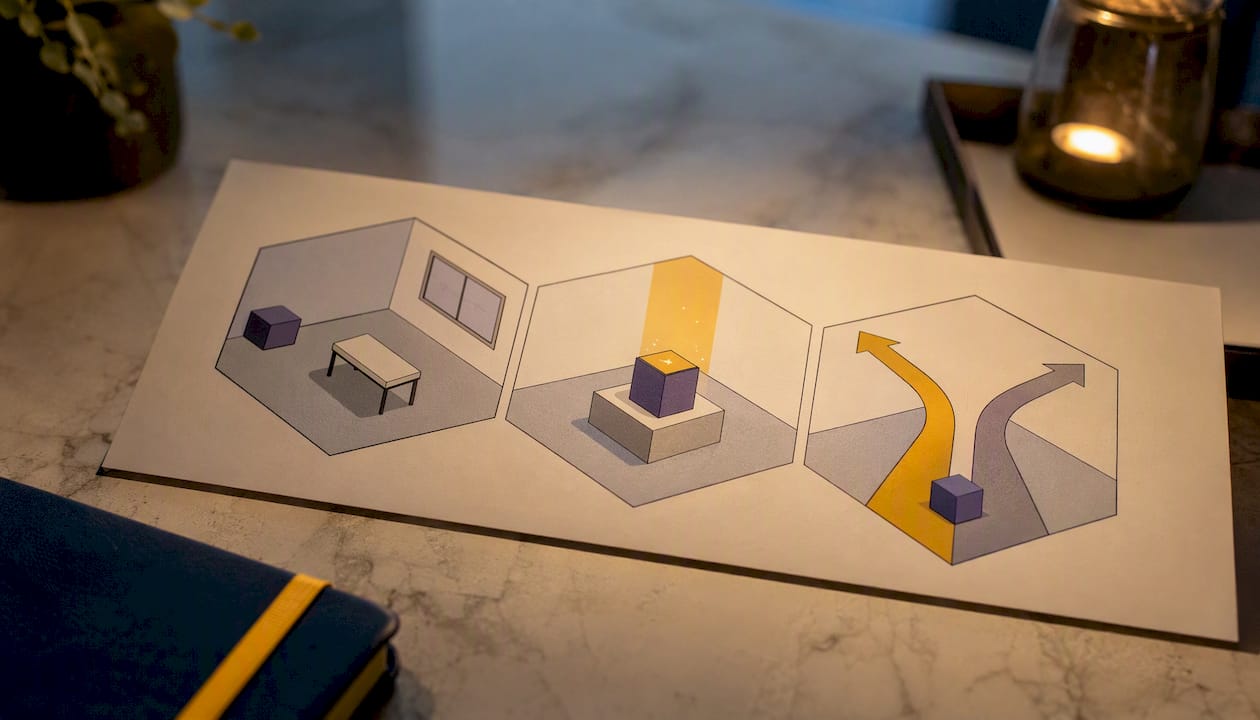
Formally, the genre can be recognised by recurring structural principles. The beginning often starts in the middle of the action without a long introduction. The ending frequently remains open, sometimes uncomfortably open, because the text does not want to offer a solution. Characters are drawn concisely, often only by names, gestures or a single line of dialogue.
Linguistically, the texts work with condensation rather than embellishment:
- Symbolism replaces long explanations, for example an object that stands for an entire life situation.
- Metaphors condense feelings into a few words.
- Dialogues remain terse and leave much between the lines.
- The narrator often steps back and leaves the interpretation to the reader.
Thematically, many classic German short stories revolve around the postwar period, homecoming, alienation and the everyday lives of ordinary people. Borchert's text „Das Brot“, for example, shows in a few paragraphs how hunger and shame render an elderly couple speechless. Reclam has gathered exactly such postwar short prose in a dedicated anthology, edited by Werner Bellmann with 33 selected contributions.
Pro tip: Read a classic short story first without a pen in hand, simply read it through. Only on the second reading do you mark symbols and turning points. This prevents the analysis from crushing the text before you've even had a chance to feel it.
Curated reading list: Important authors and their most important stories
If you want to get into German short prose, the following authors provide a reliable starting point. Popular overviews like Esquire's compiled list of well-known short stories almost always mention the same names, because they shaped the genre.
- Wolfgang Borchert – „Das Brot“ and „Nachts schlafen die Ratten doch“ depict postwar hardship in a few lines. His language is raw, almost breathless.
- Franz Kafka – „Die Verwandlung“ is somewhat longer than a typical short story, but is read almost everywhere as an introduction to Kafka's thematic world. Den vollständigen Text liefert Wikisource frei zugänglich).
- Heinrich Böll – „Die unsterbliche Theodora“ and „An der Brücke“ combine quiet irony with social observation.
- Peter Bichsel – „San Salvador“ tells in a single scene about the desire to break out of everyday life.
- Ilse Aichinger – „Das Fenster-Theater“ plays with perception and misunderstanding between neighbours.
- Siegfried Lenz – his stories link North German landscapes with quiet character studies.
- Franz Kafka (another example) – „Ein Landarzt“ demonstrates his typical dream logic in the smallest space.
- Marie Luise Kaschnitz – her short prose connects everyday scenes with existential ruptures.
For the complete Kafka text, Project Gutenberg is also a suitable free source. Teaching material sites like Mein-lernen additionally summarise the most read texts for school use, which makes the selection easier for beginners.
How to properly analyze a short story? A working plan
An interpretation does not have to begin complicated. With a clear procedure almost any classic short story can be understood in a manageable time, whether in self-study or in class.
- Summary in one sentence. Summarise who does what in which situation, without judgment.
- Determine the narrative perspective. Is it told from the first-person perspective or distantly from the outside? That significantly changes the proximity to the events.
- Examine the language. Look for recurring images, short sentences, striking repetitions.
- Work out motifs and symbols. A loaf of bread, a bridge, a window: such objects often carry the actual message.
- Name the theme. What is the character really suffering from? Loneliness, guilt, missed opportunities?
- Include the historical context. Many texts were created in the postwar period; this decisively shapes tone and choice of motifs.
One example: In Borchert's „Das Brot“ the narrator never directly reveals that the man secretly ate bread. You infer it from the sound of a plate and the evasive answer. It is precisely at this point that the analysis begins: What does the text conceal, and why?
Pro tip: When first reading, ask just one question: What changes between the beginning and the end of the story? This question opens almost any classic text without needing literary science terms right away.
For classroom tasks a short checklist is useful: Was the narrative perspective identified, was at least one symbol named, was the historical reference established? These three points are often enough for a solid basis of assessment.
Short stories in the classroom: task formats and material
Three formats have proven themselves in the classroom: individual work with subsequent text comparison, group work with distributed analysis tasks and station work where each group works on one aspect (language, motifs, context) and compiles the results.
Concrete worksheets can be created quickly:
- Reading assignment with a targeted marking question, for example "Where does the narrator withhold something?"
- Interpretation questions on perspective and symbolism, tiered by difficulty level.
- Creative task: continue the open ending or tell the story from the perspective of a minor character.
Differentiation is achieved through the length of the text passages and the number of suggested interpretations. Weaker groups receive a symbol list, stronger groups work without prompts. Publishers like Westermann offer ready-made teaching models for classical short stories with clear assignment to grade levels, supplemented by free PDF collections with summaries and tasks.
Outastory: read, listen and self-publish classics
Those who want not only to read the texts presented but also to listen to them will find at Outastory an uncomplicated supplement to Reclam editions and free primary texts. The platform offers short stories free to read and listen to, with professionally produced voices or the authors' own voices, which can be used directly in class for listening comprehension and interpretation comparisons.

For teachers this results in a simple application: an audio version complements the printed worksheet, students compare emphasis and interpretation, and the discussion about open endings gains an additional acoustic level. Authors who write themselves can publish their texts in a few minutes, release them chapter by chapter as a serial story and participate in revenue sharing. Those who want to discover modern short prose alongside the classics will find a direct entry in the collection of free short stories, available in German and English. Those who want to preserve their own family history in a similar form will find a suitable approach at FamilyStories. Just drop by and listen to the first story directly on outastory.com.
Sources
The selection Reclam made with its collection of classic German short stories has been considered a reference for postwar short prose for decades. In parallel, free editions like Wikisource and Gutenberg make primary texts such as „Die Verwandlung“ accessible to everyone, without cost and without detours via a library.
Educators and literary critics see the value of the genre primarily in its concentration: big existential questions on a few pages, without narrative ballast.
The appeal of classic short stories lies in the fact that they condense an entire life into a single scene and leave the interpretive work to the reader.
This condensation makes the texts still suitable for teaching today, because they can be read and discussed completely within a double lesson. Those seeking modern approaches will find audio versions of classic and contemporary short stories at Outastory that support this close reading, for example for romantic short stories as a contemporary counterpart to classical short prose.
- Classical German Short Stories | Reclam Verlag
- Well-known short stories (and their authors) that are cooler than you think — Esquire
- The 10 most popular short stories by German authors — Mein‑Lernen.at
FAQ
Which are the best-known classic short stories?
Among the best-known are Wolfgang Borchert's „Das Brot“, Franz Kafka's „Die Verwandlung“, Peter Bichsel's „San Salvador“ and Heinrich Böll's „An der Brücke“. These texts regularly appear on reading lists and school curricula.
What are typical characteristics of short stories?
Typical features are an open beginning in the middle of the action, an open ending without a clear resolution, concise characterisation and a strong concentration on a central motif or symbol.
Which classic short stories are suitable for adults with little reading time?
Short, dense texts like Borchert's „Nachts schlafen die Ratten doch“ or Bichsel's „San Salvador“ can be read in a few minutes and still provide material for a longer discussion. Those who prefer to listen to such texts can find suitable audio versions on Outastory for everyday use between appointments and after work.
Which classic German short stories from earlier decades are still relevant?
Postwar texts such as the stories collected in Reclam's anthology by Borchert, Böll and Aichinger remain relevant because they deal with themes like homecoming, guilt and alienation that are not limited to a single era.
Recommendations
- Read and listen to short stories for free: the best overview
- Short stories for early readers: where to find suitable reading material immediately
Read and write on OutaStory
Thousands of short stories to read for free — or publish your own and find an audience.