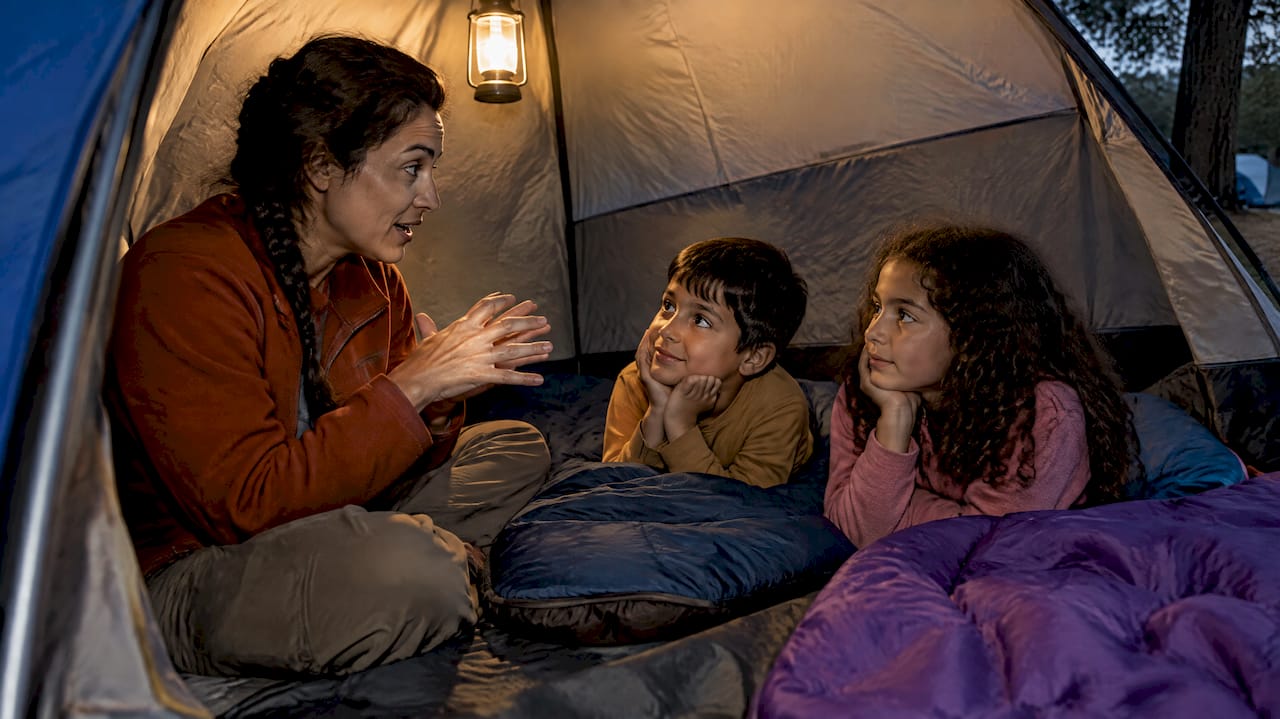
Spooky stories for children aged 8 and up: goosebumps with a happy ending
From around eight years many children want to get properly spooked: creaking attics, mist over the schoolyard, a knock that no one can explain. A good spooky story for this age builds real tension and resolves it at the end, without leaving a child with images that won’t go away. On this page you’ll find three short spooky stories to read aloud, a simple scariness scale to help you judge what fits your child, and our tips for a spooky evening that’s fun and still ends calmly.
In short
- Eight-year-olds like tension, mysteries and a bit of goosebumps, but almost always need an ending that turns out well or can be explained.
- The main character should be about your child’s age and solve the mystery themself. That makes them brave instead of frightened.
- Our scariness scale helps you choose: Levels 1 and 2 suit most children from 8, level 3 is better for children who already have experience with suspenseful stories.
- Read spooky stories earlier in the evening rather than right before lights-out. Afterwards a calm story helps with winding down.
- On OutaStory you can read stories for free or have them read to you as audiobooks, ideal for Halloween, sleepovers or car rides.
Contents
- Why children aged 8 love being spooked
- The scariness scale: how much tension suits your child?
- Three short spooky stories to read aloud
- How to make the spooky evening a success
- When it was too much and what helps then
- Listening to spooky stories instead of reading aloud
- Frequently asked questions
Why children aged 8 love being spooked
A lot changes at eight. Children increasingly read on their own, understand longer plot arcs and can distinguish imagination from reality much better than in kindergarten. That’s exactly what makes spooky stories so appealing now: a child knows the ghost in the book isn’t really standing in the hallway, and can therefore enjoy the tingling feeling.
Spooky stories are for many children a kind of bravery test on the sofa. They try out what fear feels like and at the same time experience that they are safe. If the heroine shines the flashlight into the closet at the end and there’s only the cat, then not only she wins, but also the child who listened.
There’s also the social side. Whoever knows the spooky story from the class trip can join the conversation. At this age spooky stories are often retold at sleepovers, camps, on the schoolyard. A child who can tell a story well suddenly becomes the center of the group.
What eight-year-olds mostly don’t need yet: detailed violence, characters who are permanently lost, or threats that could be transferred to their everyday life and remain unresolved. The art is to suggest the uncanny rather than paint it in full.
The scariness scale: how much tension suits your child?
Children of the same age react very differently. Some eight-year-olds laugh at vampires, others sleep badly after a thunder chapter. That’s why we don’t think of spooky stories only in age labels, but in levels. The following scale is a guide from our editorial work, not a strict standard.
| Level | How it feels | Typical motifs | For whom |
|---|---|---|---|
| 1: Spooky-fun | A light tingle, lots of humor | friendly ghosts, talking pumpkins, mist, moonlight | children from 6, spooky beginners from 8 |
| 2: Suspenseful | Real tension, but a clear resolution | mysterious noises, abandoned houses, puzzles, shadows | most children from 8 |
| 3: Goosebumps | Eerie mood, short jump scares | haunted castle, curse, night walk, unsettling strangers | experienced readers from 9 or 10 |
| 4: Real horror | The threat remains, endings often open | dark creatures, pursuit, unsolved mysteries | more for teenagers and adults |
A simple test: Ask your child after the story what the scariest part was and why it turned out well in the end. If they can explain it easily, the level was right. If they hesitate or later ask again whether something like that really exists, choose a level lower next time.
How to recognize a good spooky story for eight-year-olds
- A hero or heroine around the child’s age who acts themselves instead of only being rescued.
- A clear ending: the mystery is solved, the ghost turns out to be harmless or is kindly sent away.
- Humor as a release: a funny moment after a scare briefly lets the tension go.
- Suggest rather than describe: a shadow, a sound, a cold hand at the window are stronger than bloody details and easier to digest.
- Manageable length: 5 to 15 minutes are ideal for reading aloud. Longer stories should be split into chapters.
Three short spooky stories to read aloud
The following stories were written for this page. They sit at levels 1 to 2 on our scale and each take about three to five minutes to read aloud. Read them slowly, pause at the tense moments and lower your voice when it gets quiet.
The knocking in the wardrobe
It was the first night in the new house and Mila couldn’t sleep. The room smelled of fresh paint, the boxes were still against the wall, and the big old wardrobe the previous owners had left cast a long shadow in the moonlight.
Then she heard it. Knock. Knock. Knock.
Mila held her breath. The sound came from the wardrobe. She pulled the blanket up to her nose. Knock. Knock. Pause. Knock.
“It’s just the house,” she whispered. “Old houses make noises.” That’s what Dad had said. But houses don’t knock in time, do they?
Mila groped for the flashlight under her pillow. Her hand trembled a little as she put her feet on the cold floor. One step. Another. The wardrobe door was only ajar, a narrow black gap.
Knock.
She counted to three, flung the door open and shone her light inside.
Two green eyes shone back.
Mila squeaked, and whatever was in the wardrobe squeaked too, only much higher. Then she looked more closely: a small gray cat sitting there, hitting the wooden wall with its tail. Knock. Knock. Next to it, in an old sweater, lay three tiny kittens.
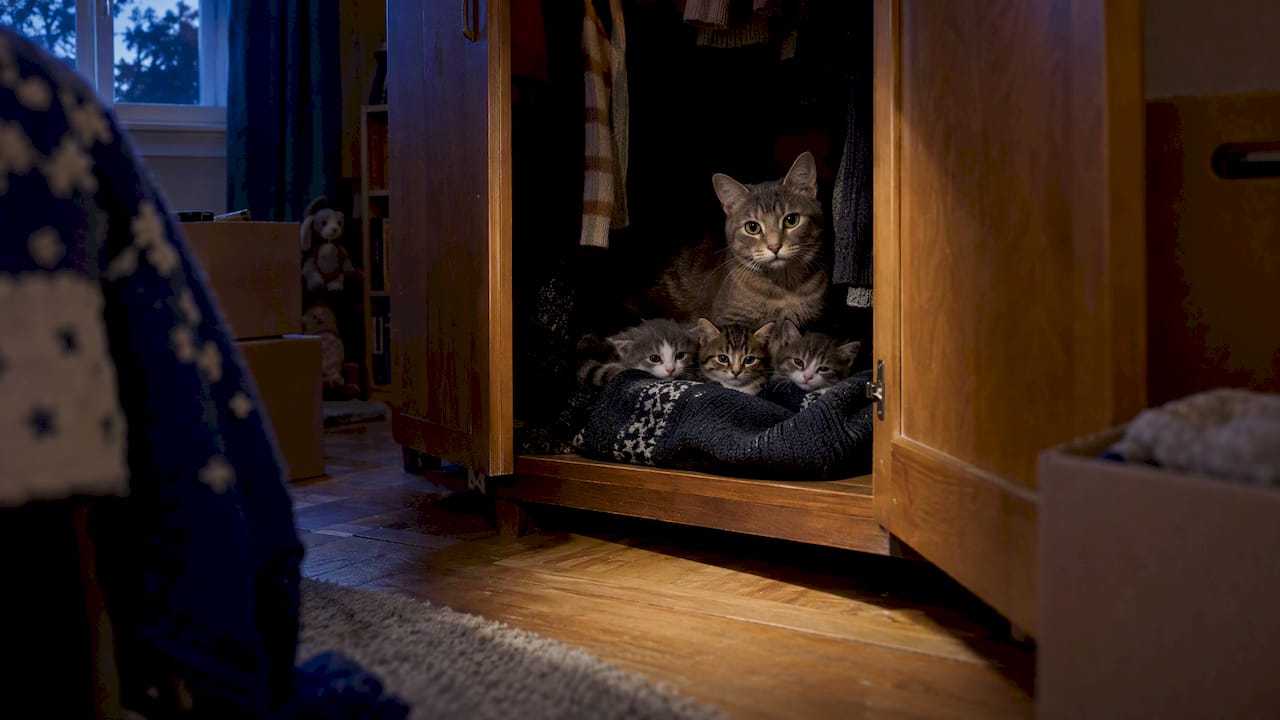
“You already live here,” Mila said softly. The cat blinked as if to say: Much longer than you.
The next morning Mum put a bowl of milk by the wardrobe, and Mila got to name the kittens Fog, Shadow and Knocker. And when the wardrobe knocked at night, she simply turned over and went back to sleep.
The mist woman from the schoolyard
At Matti’s school everyone told the story of the mist woman. They said that whoever leaves the schoolyard last in autumn sees her at the fence: a gray figure without a face that slowly raises an arm.
Matti didn’t believe it. Until the Tuesday he had forgotten his gym bag after drama club.
When he ran back to the schoolyard it was almost dark. The fog lay so thick over the grass that the climbing frames looked like skeletons. And at the fence, right where the chestnut tree stood, there was something. Gray. Big. Faceless.
Matti stopped. The figure did not move. Then it slowly raised its arm.
His heart pounded in his ears. Run away? But his gym bag lay right next to it on the bench. Matti took a deep breath and walked, one step at a time, and with every step the figure became a little less ghostly.
It was Mr. Okafor, the caretaker, in a long gray raincoat with the hood pulled up. The raised arm held a pole with which he knocked chestnuts from the tree.
“Well, Matti,” he said, pulling back his hood. “You’re brave. Most run away when they see me in the fog.”
“Most?” asked Matti.
Mr. Okafor grinned. “Who do you think invented the story of the mist woman? That way my chestnuts stay nice for me.”
The next day Matti told nobody at break what he had seen. But three shiny chestnuts were in his jacket pocket, and he smiled every time someone mentioned the mist woman.
The pumpkin that didn’t want to go out
On Halloween night Ida and her brother Jonas put their pumpkin on the step. It had a crooked grin and a tealight in its belly. “At nine we’ll blow it out,” Mum said.
At nine Jonas blew. The flame flickered, leaned to one side and kept burning.
Ida blew. Nothing. They both blew together as hard as they could. The flame ducked, straightened up again and now even shone a little brighter, almost greenish.
“That’s eerie,” Jonas whispered.
Then the pumpkin spoke. Very quietly, with a voice like rustling leaves: “Not yet. One is missing.”
The two children stared at each other. “Who’s missing?” Ida finally asked.
“The little one next door,” the pumpkin rustled. “He didn’t dare. But he’s been peeking out the whole time.”
Ida turned around. In the neighbor’s house, behind the curtain, she saw a face: Leo, who was only six and had moved in over the summer. He wore a ghost costume, but his mum hadn’t had time to go out with him.
Ida and Jonas grabbed their candy bag, rang next door and asked if Leo could join them for a short round. He could. He said “Trick or treat” three times and beamed so brightly his ghost sheet seemed to glow.
When they came back the tealight in the pumpkin was out. By itself. And the crooked grin looked somehow more satisfied than before.
How to make the spooky evening a success
A good story is half the battle. The other half is the mood in which you tell it. These steps have worked well for us:
- Choose the right time. Spooky stories work best at dusk or after dinner, not in bed just before sleep. That leaves time to wind the tension down.
- Set the stage. Dim the lights, use a flashlight or string lights, blankets on the sofa. Let the child decide how dark it should be.
- Use your voice. Slow down before the tense spot, pause briefly, then continue quietly. A pause before “Two green eyes shone back” is more effective than any effect.
- Let them join in. Ask in between: “What do you think is in the wardrobe?” Whoever guesses becomes a detective, not a helpless listener.
- Offer an escape hatch. Agree on a code word beforehand. Whoever says it gets the ending immediately. Many children never use it, but just knowing it’s there is comforting.
- Talk it over afterwards. What was the scariest part? What was funny? Would you have dared? Two or three questions are enough for the experience to settle.
- Finish with something calm. A short, gentle story after the spooky one is like a glass of warm milk for the head. You’ll find ideas in our overview of the best bedtime stories.
Spooky stories for sleepovers and camps
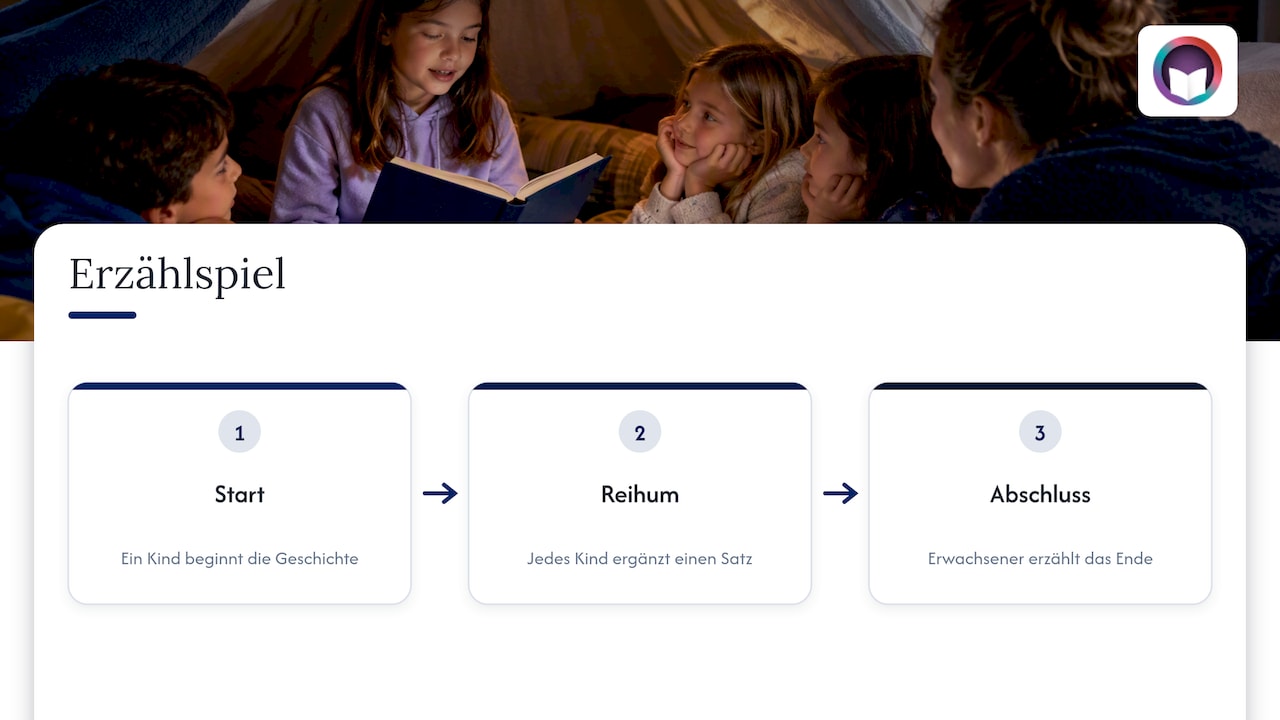
Spooky works differently in a group. Children egg each other on, and what felt small on the sofa can seem bigger in a dark tent. Choose level 1 or 2 here and stories with a surprising, funny resolution like “The Mist Woman from the Schoolyard.” Retelling is especially popular: one person starts, each child adds a sentence, and the adult gets to tell the ending last. That way you keep control of the conclusion.
When it was too much and what helps then
Even with careful selection a story can sometimes be too strong. That’s not dramatic or a mistake, but a sign of where your child’s limit currently is. Possible signs:
- The child doesn’t want to be alone in their room after the story.
- They keep asking whether the creature from the story really exists.
- They fall asleep worse or come into the parents’ bed at night.
- They suddenly avoid places that appeared in the story, like the cellar or the attic.
Then closeness and clarity usually help: talk openly about the story, explain that it was made up, and invent a new, funny ending together. Some children find it helpful to draw the monster and put a silly hat on it. Leave the hallway light on if it’s wanted, and choose a gentler story next time.
If the fear persists for several weeks, significantly restricts your child’s daily life, or affects school and friendships, talk to your pediatrician. They can assess whether there’s more behind it than just a too-exciting story.
Listening to spooky stories instead of reading aloud
Not every evening has room for reading aloud, and some stories feel even stronger when spoken. That’s exactly why we built OutaStory. With us you can read short stories for free or play any story as an audiobook, with professionally produced voices or the author’s own voice. In the children’s section you’ll find bedtime stories, animal adventures and first rhymes, and for the spooky season we’ve compiled our favorite Halloween stories for families, to read aloud and to listen to.
Read, listen, get spooked, and then sleep well.
For long car rides, sleepovers at grandma’s or the cabin without Wi‑Fi, OutaStory Premium is worth it: you can listen without limits and use stories offline.
And if your child starts writing after the third spooky evening? Adult authors also publish their short stories with us in a few minutes, optionally chapter by chapter as serial stories, and share in the revenue. Maybe the next goosebump story is being created right now at your family table.
Frequently asked questions
At what age are spooky stories appropriate for children?
Gentle, funny spooky stories with friendly ghosts often work from around six years. From about eight years many children can handle more tension because they separate imagination and reality well. What matters less is the age than your child: watch how they react and increase the tension step by step.
Are spooky stories a good idea before bedtime?
Not right before lights-out, especially for sensitive children. Earlier in the evening is better, with some time afterwards for talking and calming down. If it gets late, finish with a short, calm story so the ghost isn't the last memory of the day.
What is the difference between spooky and horror for children?
Spooky stories live from mood, suggestion and a resolution that restores security. Horror often leaves the threat in place, shows more and ends open. For children from eight, spooky stories with a good ending are almost always the better choice; real horror belongs more to adolescence.
Can my child listen to spooky stories alone?
Yes, audiobooks are popular with children from eight because they experience the story at their own pace. Listen to the first stories together so you can judge which level fits. After that, your child can listen to gentle spooky stories alone, for example on the way to school or during long trips.
Recommendations
- Die gnädigste Lüge
- Der Junge, der in Farbe trauerte
- Kölner Geister
- Der Löffel, der den Heimweg kennt
Read and write on OutaStory
Thousands of short stories to read for free — or publish your own and find an audience.