
Über diese Geschichte
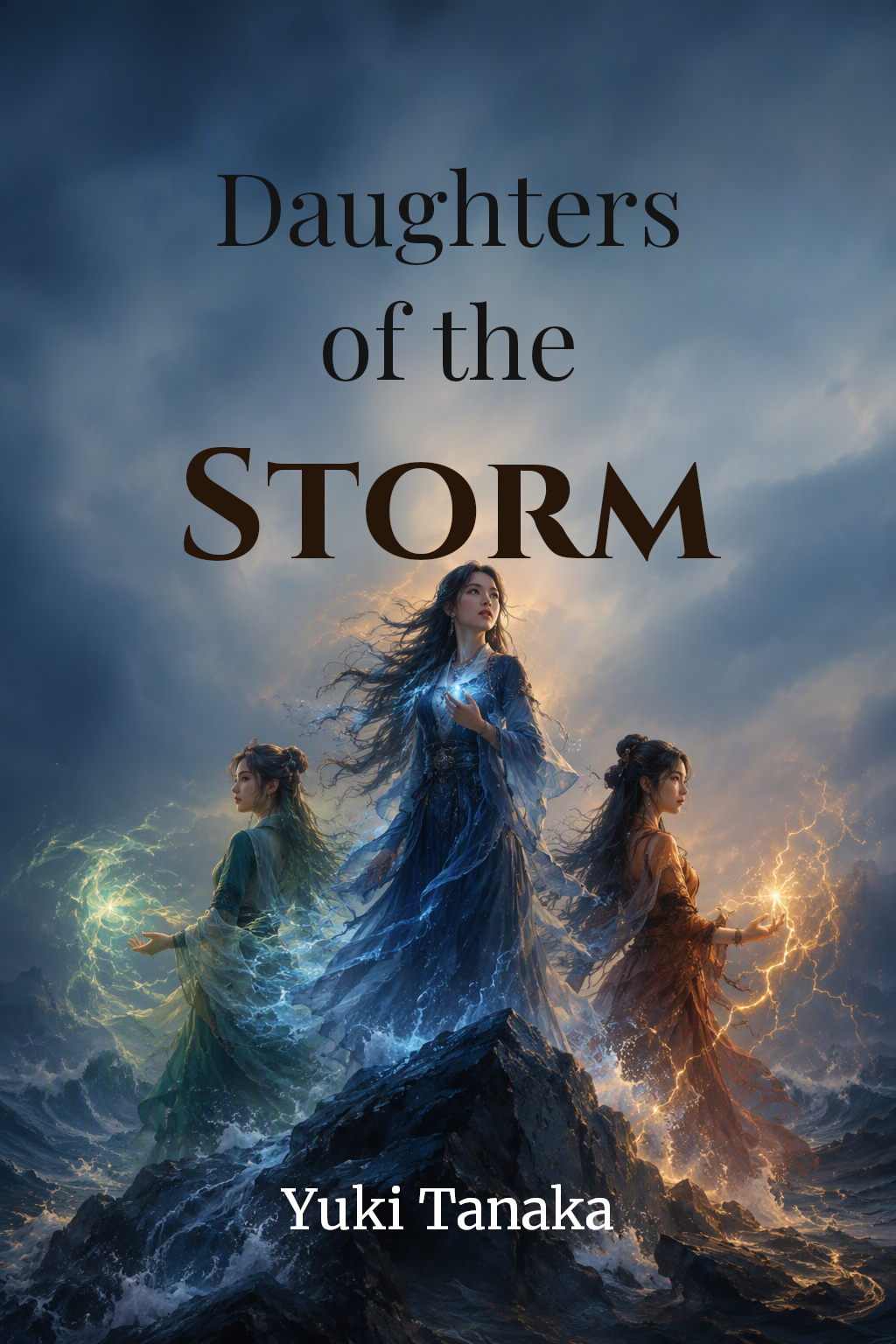
Three sisters born during the same typhoon discover they each carry a piece of the storm god's power — and that the god split himself into them because something is coming that even a god cannot face alone.
The Typhoon Daughters
The typhoon that struck Kagoshima on the night the Mori triplets were born was the strongest in recorded history. The meteorological service would later classify it as a once-in-a-millennium event, though the fishermen who survived it used older language — they called it a god's death throes, and they were, as fishermen often are about the sea and its moods, closer to the truth than science. The storm killed forty-seven people, levelled three villages, and rearranged the coastline in ways that would confuse cartographers for a decade. In the eye of the storm, in a hospital running on emergency generators, Mori Akiko gave birth to three daughters in the space of twenty minutes, and each birth coincided with a lightning strike so close that the windows of the delivery room shattered inward.
Kazue, the eldest by seven minutes, grew up afraid of nothing. This was not bravery — bravery required the existence of fear as raw material. Kazue simply lacked the mechanism. She walked into storms the way other children walked into playgrounds. She climbed the sea cliffs during typhoon season and stood at the edge, laughing, while the spray drenched her. Her mother watched this with the quiet dread of a woman who had carried three impossible children and understood, without being able to articulate it, that the storm had given her daughters something it should have kept.
Natsuki, themiddle child, heard things. Not voices — she was very clear about this distinction when the school counsellor asked — but patterns. She could hear the rhythm in rainfall, the structure in wind, the grammar of thunder. She knew when a storm was coming three days before the weather service did, and she knew what the storm wanted, which was a concept the weather service did not have a category for. She tried to explain this to her sisters once, sitting on the roof of their house during a summer squall: that storms were not random events but expressions, that the atmosphere was trying to say something, and that what it was saying was getting more urgent with each passing year.
Melde dich an, um mitzudiskutieren.
Sei der Erste, der einen Kommentar hinterlässt.