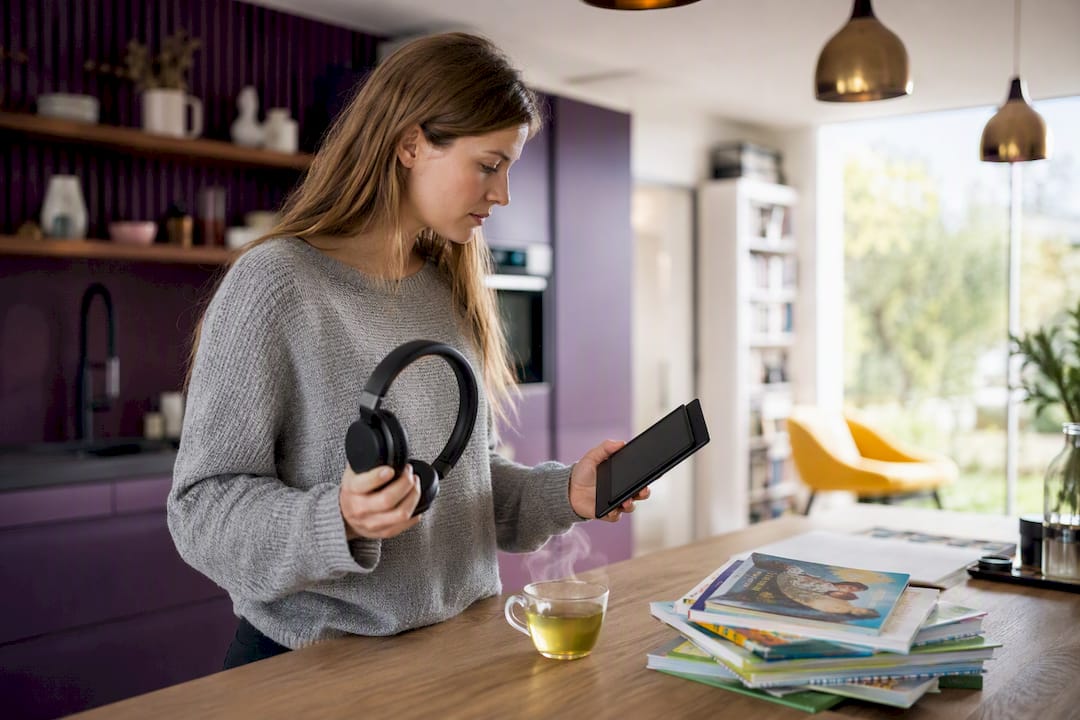
Three questions decide: Audiobook or eBook for your everyday situation
There is no overall winner. Audiobooks beat eBooks for multitasking, mobility and barrier-free access to stories. eBooks beat audiobooks when you want to read carefully, highlight or look things up. Anyone who is often on the move or wants to experience a story in the dark in the evening will find both ways to the same text on platforms like Outastory anyway.
In short:
- An audiobook is ideal if you are on the go or want to listen while doing practical tasks, while an eBook is useful for focused reading, highlighting and looking things up.
- For research or notes, the eBook is usually faster due to the search and highlighting functions, while the audiobook offers more emotional immersion.
- For commuters, drivers and athletes, the audiobook is the better choice, while eBooks are preferable for longer reading sessions or vision problems.
- Digital formats generally cost less than print editions; with subscriptions and lending offers they are usually cheaper or available for free.
- The decision depends on the current usage context; a combination of both formats can combine the advantages of both worlds.
Table of contents
- Audiobook vs. eBook: Advantages and disadvantages in direct comparison
- Which format fits when? Typical situations in everyday life
- Which devices and apps do I need to listen and read?
- What do audiobooks and eBooks cost in comparison?
- Does listening or reading better promote comprehension?
- How popular are audiobooks and eBooks currently?
- How have eBooks and audiobooks developed historically?
- What rights do I have when buying an audiobook or eBook?
- OutaStory: Read or listen, however you like
- Your next steps to choosing the right format
- Sources
- FAQ
Audiobook vs. eBook: Advantages and disadvantages in direct comparison
The decision between the two formats rarely depends on the mere quality of a story, but on the situation in which you consume it. An audiobook accompanies you while cooking, driving or jogging. An eBook requires your eyes, but also your full attention on the text itself.

In terms of mobility, both formats are surprisingly strong: An eBook reader stores hundreds of titles on a device that weighs hardly more than a paperback. An audiobook, on the other hand, requires no hands and no eyes, which makes it the only format that works while driving or washing dishes.
When it comes to comprehension the picture shifts. If you want to penetrate a technical text, find a passage again or take notes, you usually reach your goal faster with an eBook, because search functions and highlights make that possible. An audiobook, on the other hand, pulls you into a story without you having to do anything except listen.
A few more differences are worth considering:
- Sense of ownership: An eBook feels like an object in your own library, an audiobook more like an experience that passes by.
- Sharing and passing on: eBooks can be synchronized between devices depending on the provider, but sharing with other people is usually restricted due to DRM limitations.
- Resources: Both formats save paper and transport compared to the printed book; the difference lies more in the energy consumption during streaming than in production.
- Immersion: A good narrator's voice can rescue a mediocre story; users regularly report this special audiobook magic.
No format wins in every category. That's exactly why it's worth looking at the concrete situation before you commit.
Which format fits when? Typical situations in everyday life
The question is rarely "audiobook or eBook" but "what am I doing while I read or listen?". A few typical cases make this clear:
- Commuters and drivers: Audiobook, clearly. You need your eyes and hands for traffic; your ear remains free.
- Students researching: eBook, because of full-text search and the ability to highlight passages and find them again later.
- Parents at bedtime: Audiobook or storytelling voice, especially for bedtime stories for children who cannot yet read themselves.
- Sports and walks: Audiobook, because no device needs to be held in the hand.
- Avid readers with little time in bed: eBook with night mode, since no one is disturbed by sound.
- People with reading difficulties or vision problems: Audiobook, because it significantly eases access to literature where printed or digital text reaches its limits.
A combined strategy often works better than a strict decision: Listen to the story on the go, reread the most exciting passage in the evening. This keeps the plot present, and details stick more firmly in memory because you have taken them in twice, by two different routes.
Which devices and apps do I need to listen and read?
For an eBook, basically any smartphone, tablet or a dedicated eReader is sufficient. An eReader with an e-ink display is easier on the eyes during long sessions; a tablet scores points with color graphics and children's books. For an audiobook any device with a speaker or headphone jack is enough, usually the smartphone.
It's worth taking a brief look at the file format terms: ePub is the open standard for eBooks and runs on almost all readers except the classic Kindle format. MP3 is the common standard for audiobooks, while AAX is a protected format that can only be played with certain apps. DRM protection (Digital Rights Management) means that a file is tied to an account or a specific device.
When choosing an app, three things matter above all:
- Offline download, so you can listen or read on the go without a data connection.
- A clear chapter control to quickly jump to a specific spot.
- A sleep-timer function, particularly handy when an audiobook is playing at bedtime.
Pro tip: Check the playback speed in audiobook apps. Many listeners increase it to 1.2 to 1.5 times speed once they are used to a voice, and thus save a noticeable amount of time while commuting.
What do audiobooks and eBooks cost in comparison?
In individual purchases eBooks are usually priced slightly below the print edition, while audiobooks often cost as much or more than the printed book because of production costs for narrators and studios. Flat-rate models have changed this equation meanwhile.
- Single purchase: You pay once and own the usage license permanently, but it is tied to the respective app or platform.
- Flat-rate subscriptions: A monthly fee allows unlimited or quota-based listening and reading, ideal for heavy users, less worthwhile for occasional readers.
- Public lending: Through many city libraries you can borrow eBooks and audiobooks for free, usually for a limited time and with a waiting list for popular titles.
- Freemium models: Free access to a basic offering; premium features like offline use or unlimited listening come at an extra cost.
Important to understand: With digital formats you almost never buy the work itself but a usage license. That explains why a book can suddenly disappear from your own library if a provider loses the rights.
Does listening or reading better promote comprehension?
Active reading trains certain cognitive skills more than pure listening, because the brain must perform visual processing and text navigation simultaneously when reading. Psychologists point out that this active processing makes a real difference for deep learning. For a technical article or textbook, an eBook is therefore often the better choice.
This does not apply in the same way to narrative literature. An audiobook often creates more access than the text itself, especially for people with dyslexia, visual impairment or for anyone who simply has no time to sit and read. A good narrator's voice carries a story over stretches that might seem tiring in silent reading.
The combination of both is often most effective: listen to a story and read along; plot and phrasing imprint more strongly than with only one channel. For non-fiction texts the eBook remains the first choice; for narrative short stories and novels, audiobooks are a worthwhile, often more accessible alternative.
How popular are audiobooks and eBooks currently?
The frequency of audiobook usage has noticeably increased in recent years, driven primarily by smartphones and streaming apps that have made listening a side activity. eBooks have simultaneously established themselves as a firm complement to the printed book without displacing it.
Both formats benefit from the same development: digital content can be downloaded immediately, without a bookstore, without waiting for delivery. This has especially reached younger target groups who consume stories where their smartphone already lies, whether on the train, in bed or during sports.
The trend toward serialization is interesting: short stories that appear chapter by chapter work well in both formats because they can be consumed in small time windows. One chapter as an audiobook on the commute, one chapter as an eBook before falling asleep—the format changes, the story remains. This very pattern explains why many providers today offer both ways in parallel instead of limiting themselves to one.
This development is also being observed in cultural policy: government bodies are increasingly addressing the significance of digital reading and listening formats for the cultural landscape, because they change access to literature beyond classical distribution channels.
How have eBooks and audiobooks developed historically?
The audiobook is older than many think. As early as the 1930s the first recordings for blind people appeared on record, long before the term "audiobook" became common. The cassette in the 1970s and the CD in the 1990s made the format mass-market; MP3 and streaming eventually brought it into the pocket.
The eBook took a different path. The first digital texts already existed in the 1970s in academic circles, but only dedicated eReaders with e-ink displays made reading on a screen truly easier on the eyes from the mid-2000s and thus suitable for everyday use. Since then both formats have run in parallel, without one displacing the other.
What both developments have in common is the gradual detachment from the physical medium. Where once a cassette or a bound book was necessary, today an account and an app are enough. This shift has also changed production: short stories that once hardly had a chance with publishers can now be published digitally and made available immediately as text or audiobook, without a print run or a studio budget of the traditional scale.
What rights do I have when buying an audiobook or eBook?
When you buy an eBook or audiobook, you almost always acquire a personal usage license, not ownership of the work itself. That fundamentally distinguishes digital formats from the printed book, which you can give away, lend or resell.
For eBooks this means: resale is generally legally excluded; lending to family or friends depends on the respective provider and its DRM rules. Some platforms allow limited family sharing, others lock the file to a single account.
The same applies to audiobooks, with one peculiarity: the narrator's performance is additionally protected by copyright, independently of the text itself. That explains why an audiobook sometimes has different licensing conditions than the corresponding eBook, even if both come from the same publisher.
For authors who self-publish, an advantage opens up here: on platforms with revenue sharing, control over text and audio rights often remains directly with the person who wrote the story, instead of assigning them to a publisher long-term. This significantly changes how short stories are distributed and remunerated today compared to the classic publishing model.
OutaStory: Read or listen, however you like
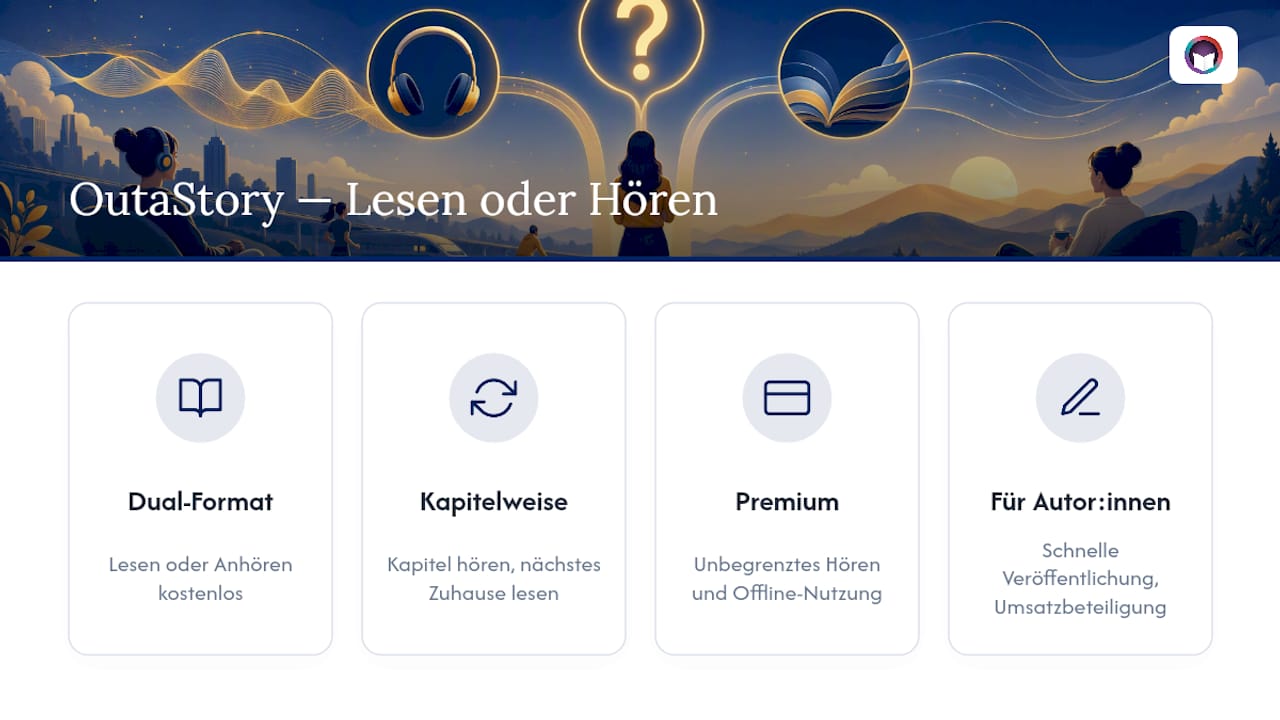
At Outastory, the debate audiobook vs eBook does not even present itself as either-or. Every short story on the platform can be read or listened to for free, with professionally produced voices or with the author's own voice. You decide depending on the situation without having to switch between two providers.
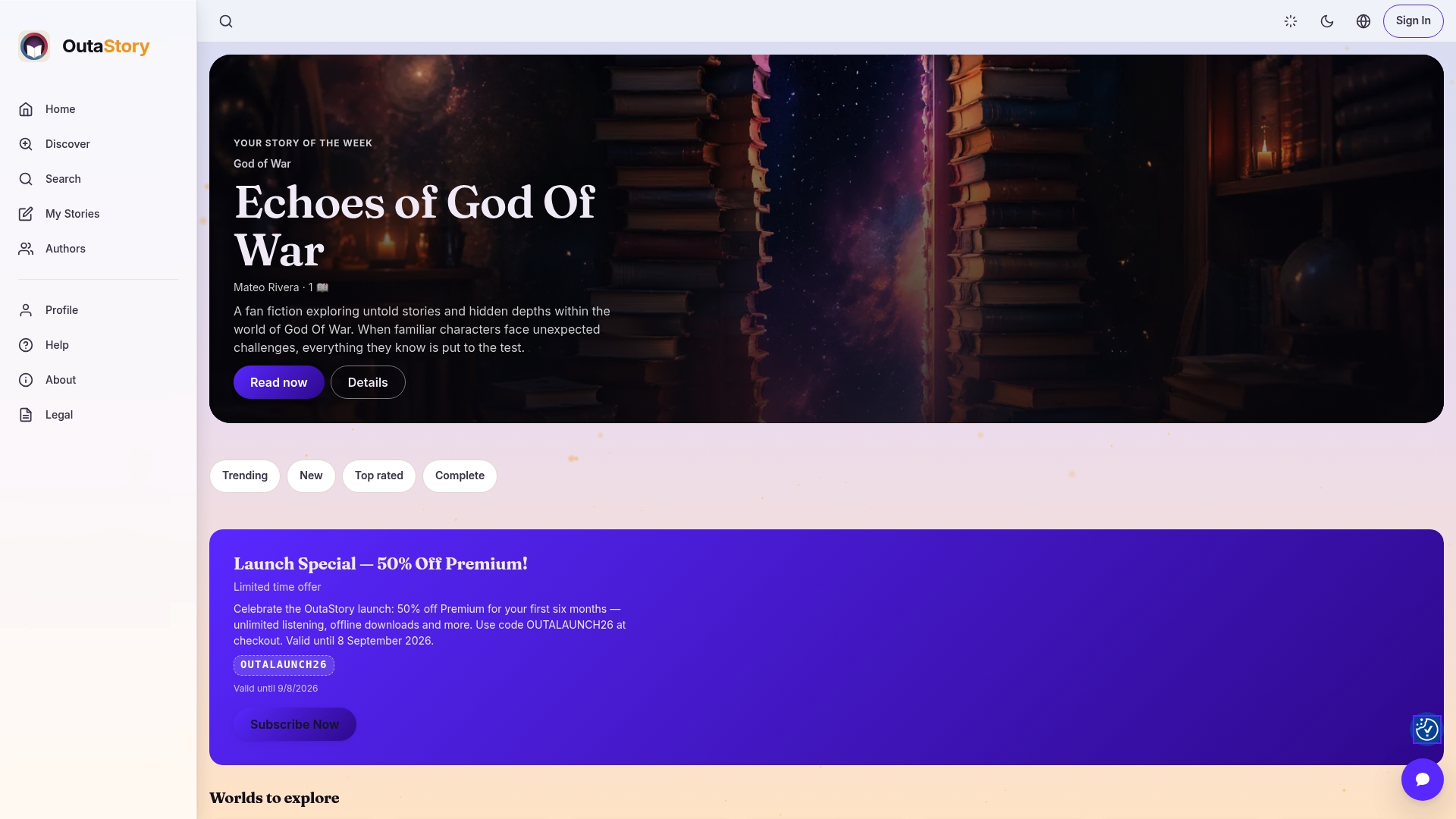
The genre spectrum ranges from fantasy, romantasy and science fiction to crime, thrillers and horror, up to a dedicated children's section with bedtime stories, animal adventures and first rhymes—ideal also for the use-case from the list above: parents who want to play a story in the evening. Many stories appear chapter by chapter as serials, so you can listen to one chapter on the go and read the next one at home, exactly the combination strategy that has proven best for memorability and immersion. Those who want more than the free basic offering get unlimited listening and offline use via a premium subscription.
For authors it's also worth a look: short stories can be published in minutes with revenue sharing of your own income, without the lengthy path through a traditional publisher. Try an audio sample directly on Outastory and find out in a few minutes which format fits your next story.
Your next steps to choosing the right format
Three questions are usually enough to decide: How much time do you have right now, do you want to remember details or simply be entertained, and are your hands free or occupied while consuming? The answers almost always reveal themselves as to whether an audiobook or an eBook fits better.
Specifically: listen to an audio sample on a platform like Outastory, simultaneously download the eBook demo of a title that interests you, and check whether your local library offers the title via the Onleihe for free. None of these decisions is final. The format choice remains situational; tomorrow you might choose the exact opposite of today, and that is perfectly fine.
Sources
- From the printed book to eBook and audiobook
- Audiobooks vs. printed books: What challenges the brain more?
FAQ
Can I listen to audiobooks with the tolino as well?
The tolino is primarily designed as an eReader for eBooks in the ePub format and does not offer native audiobook playback. For audiobooks, you need a smartphone, tablet or another device with a separate audiobook app.
Can I read and listen simultaneously on my Kindle?
Certain Kindle models support synchronized listening and reading of the same title via a paired app, but only for books that explicitly offer this feature. For most standard eBooks, however, the Kindle remains a reading device only.
What do I need to listen to an audiobook?
You only need a smartphone, tablet or computer with a speaker or headphone jack and a suitable app or platform like Outastory that plays the file in the respective format. A special additional device is not necessary.
What is the difference between Audible and Kindle?
Audible specializes in audiobooks and typically operates with a flat-rate subscription, while Kindle mainly offers eBooks in its proprietary format. Both systems can be linked for some titles via an additional feature, but fundamentally they function as separate ecosystems with their own licensing structures.
Read and write on OutaStory
Thousands of short stories to read for free — or publish your own and find an audience.