Stories to Read Aloud: Free & Age-Appropriate for Children
You can find the best free stories to read aloud on open collections like Onkel Guido's bedtime archive, in the educational project „einfach vorlesen!“ by Stiftung Lesen, on YouTube reading channels with German-language children's content and on Outastory with its own children's section. Choose based on three criteria: the child's age, the desired reading duration and the occasion.
Short shortlist for immediate start:
- Open collections (e.g. Onkel Guido, Zitronenbande): hundreds of texts, free, sorted by theme
- Educational projects (Stiftung Lesen „einfach vorlesen!“): pedagogically reviewed, regularly new texts
- YouTube reading channels: German-language videos, ideal as a supplement or for on the go
- Outastory: freemium platform with children's section, audio versions and author voices
- Author blogs with PDF download: print-ready short stories, often with age indication
How to find the right story immediately: Enter the child's age, choose the duration (3, 7 or 12 minutes) and filter by theme. Platforms with age filters and duration information save the most time.
Key Insights
Short daily reading rituals with age-appropriate stories promote language development and a sense of security more sustainably than occasional long sessions.
| Topic | Details |
|---|---|
| Age-appropriate selection | 3 minutes for toddlers, 5–7 minutes for preschoolers, 12 minutes for primary school children |
| Free sources | Onkel Guido, Stiftung Lesen „einfach vorlesen!“, Zitronenbande and Outastory offer free entry |
| Theme by occasion | Evening: calm animal stories with a positive ending; daytime: adventures and interactive texts |
| Reading technique | Varying voices, targeted pauses and open questions increase concentration and language support |
| Outastory | Free children's area with text and audio versions, chapter stories and author voices |
Table of Contents
- Which free sources are really reliable?
- How to choose age-appropriate stories?
- Which themes suit which occasion?
- How to read aloud effectively?
- When are audio versions and apps useful?
- Three reading routines by age
- Outastory: Read and listen to free stories
- Sources
- FAQ
Which free sources are really reliable?
Not every site with children's stories delivers what it promises. The following sources have proven reliable in Germany because they provide age indications, duration information and clear cost labelling.
Onkel Guido runs one of the largest free bedtime collections in the German-speaking area. A large number of bedtime stories are available there for free, sorted by theme and with the note that regular reading aloud promotes language development and a sense of security. All texts are free, without registration.
Stiftung Lesen stands for pedagogical reliability. The project „einfach vorlesen!“ regularly provides new, free read-aloud stories for families, complemented by materials for parents and an app. This is not a hobby portal, but an institutionally funded offering.
Zitronenbande and similar author blogs offer short children's stories with age and length indications, often as PDFs for printing. Many authors provide their texts free of charge, sometimes with categories such as animal stories, adventures or fairy tales.
YouTube reading channels (German-language) are suitable as a supplement, especially if children want to hear a professional voice. Quality and data protection vary widely, so it's worth taking a quick look at the channel owners and the comments section.
Outastory combines text and audio on one platform. The children's section contains bedtime stories, animal adventures and first rhymes, each as a reading text or an audio version with a professional voice or the author's voice. Basic access is free; a premium subscription unlocks unlimited listening and offline use.
How to choose age-appropriate stories?
Age and attention span go hand in hand. A story that is just engaging enough for a seven-year-old will overstrain a three-year-old after two minutes.
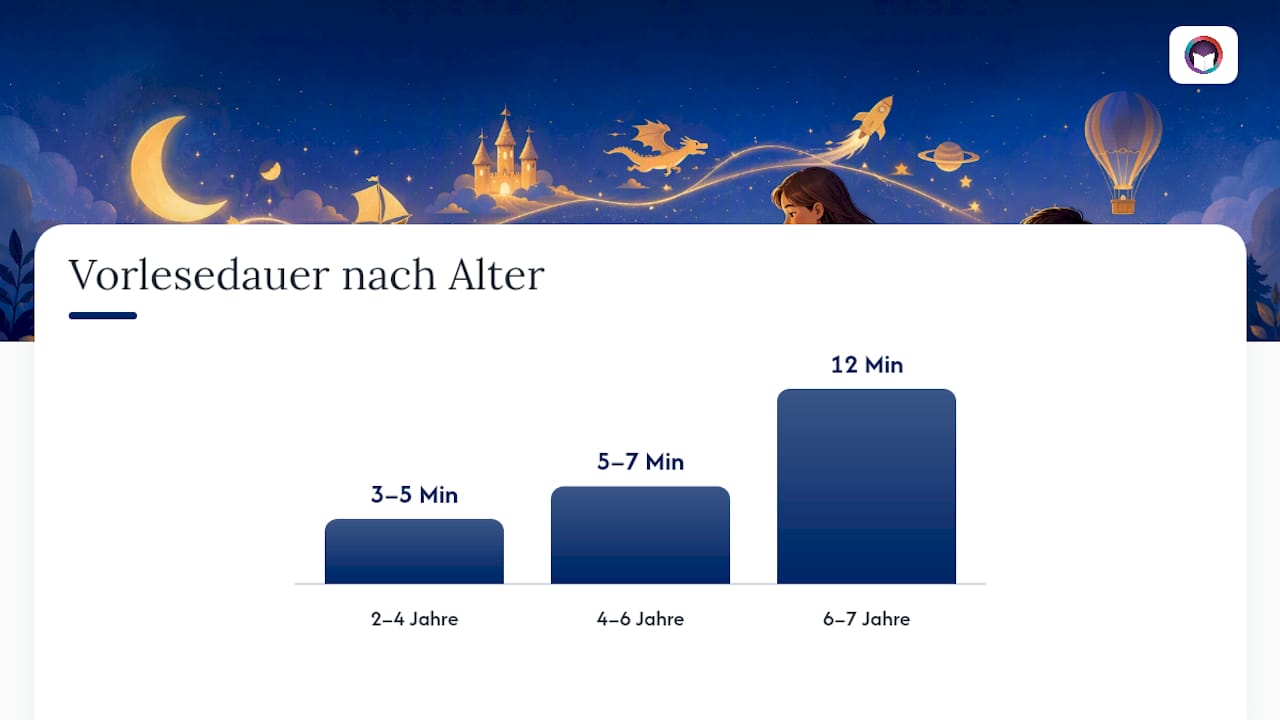
| Age | Recommended reading duration | Word choice & complexity | Typical format |
|---|---|---|---|
| 2–4 years | 3–5 minutes | Simple sentences, lots of repetition, animal sounds | Picture book text, rhyming story |
| 4–6 years | 5–7 minutes | Short paragraphs, a clear plot line | Short story with a hero |
| 6–7 years | 12 minutes | Dialogues, secondary characters, small twists | Chapter story, adventure |
Pedagogical recommendations emphasize that age-appropriate word choice and length are decisive for effectiveness and sleep quality. This is especially true in the evening: too much action shortly before sleep keeps children awake.
Three practical rules for selection:
- Check duration before content: First choose a story whose length matches the child's current attention span, not the desired length of the evening.
- Test language aloud: Read the first paragraph silently. Does it sound too complex? Then the story is a bit too old for the child.
- Avoid open endings (in the evening): Stories without resolution create suspense instead of calm. For the bedtime ritual always choose a positive, conclusive ending.
Many open collections label content by length or age group, which is considered an important trust signal. If this information is missing, it is an indication of a lack of editorial care.
Which themes suit which occasion?
The right theme makes the difference between a story that captivates a child and one that sends them away after three minutes. Here is a short overview by occasion:
- Bedtime ritual: Calm animal stories, moon journeys, gentle adventures with a positive ending. No suspense, no open questions. Goodnight stories should end harmoniously and not contain upsetting topics.
- Afternoon reading: Adventures, detective stories, friendship stories. The action can be livelier here.
- Seasons and festivals: Spring and autumn stories are suitable for morning circle; Christmas and St. Nicholas stories should be kept short and festive (5–7 minutes). Halloween texts for children should be spooky but not frightening.
- Learning occasions: Stories about friendship, fairness or the first day of school combine entertainment with social topics.
- Interactive moments: Participation stories with animal sounds, movement tasks or puzzle inserts keep toddlers actively involved.
Pro tip: Combine two short stories with the same animal as the main character. Children love recognition value, and you save yourself the search for a new entry.
Seasonal themes can be well combined with interactive elements: while reading an autumn story, children can count leaves or imitate animal sounds. This deepens understanding and turns reading time into a shared experience rather than a one-way street.
How to read aloud effectively?
Reading aloud is a skill, not a matter of course. Knowing a few techniques turns a good story into a real experience.
- Vary your voice: Give each character their own pitch. The bear speaks low, the mouse high. Children notice immediately if you keep this up and listen more attentively.
- Adjust the pace: Read exciting passages more slowly, not faster. A pause before the decisive sentence creates more impact than any emphasis.
- Use targeted pauses: After a surprising twist, pause briefly and ask the child: “What do you think will happen now?” This is not an interruption but real-time language promotion.
- Emphasize key words: Slightly highlight new or unfamiliar words and briefly explain them without interrupting the flow of reading.
- Use body language: Facial expressions and small gestures enhance the story, especially with toddlers who do not yet understand every word.
Reading aloud creates more than entertainment. Stiftung Lesen and funding projects such as those of the Deutschen Bahn Stiftung demonstrate that regular reading aloud in early years promotes language development, vocabulary and emotional security. Short daily rituals show more sustainable effects than occasional long sessions.
Pro tip: Read the story silently once before you present it. Two minutes of preparation make the difference between halting reading and a smooth, lively narration.
When are audio versions and apps useful?
Audio is not a substitute for shared reading, but a useful complement in certain situations.
When audio works well:
- On long car rides or at bedtime when a parent cannot be present
- As a transition: the child listens to a story that you want to discuss together afterwards
- For children who find a professional reading performance more motivating than their parent's voice
When audio should not replace reading aloud:
- During the bedtime ritual that is built on closeness and physical contact
- For children under three years old who need interaction and eye contact
- If the goal is language development through dialogue
The app for „einfach vorlesen!“ by Stiftung Lesen is available on Apple and Android and offers audio versions in addition to texts. Before using any app, it's worth checking privacy settings and parental controls, especially for ad-funded offerings.
Outastory offers audio versions with professional voices and author voices directly on the platform. The difference to pure YouTube videos: Outastory is not an open platform with unfiltered content, but curated by genre and target group.
Three reading routines by age
Routines work better than spontaneous choices because they set expectations and help children switch to calm mode faster.
Routine for 3-year-olds: The bedtime ritual
- Duration: a short time span that children of the corresponding age can pay attention to
- Story: calm animal story with repetitions and a positive ending
- Procedure: wrap the child up, dim the lights, read the story in a calm voice, at the end ask a simple question (“Which animal did you like best?”)
- Suitable sources: Onkel Guido's bedtime collection, Outastory children's section
Routine for 5-year-olds: The afternoon reading
- Duration: a moderate time span suitable for preschool children
- Story: a small adventure with a hero and a challenge
- Procedure: read the story, pause at two points and let the child guess, at the end name the hero's favorite experience together
- Suitable sources: Zitronenbande, author blogs with category filters
Routine for 7-year-olds: The chapter evening
- Duration: a longer period suitable for primary school children
- Story: a serial story that continues by one chapter each day
- Procedure: child gives a short summary of the last chapter, then read the new chapter, speak the dialogues together
- Suitable sources: Outastory (chapter stories), Stiftung Lesen recommendation lists
Outastory: Read and listen to free stories
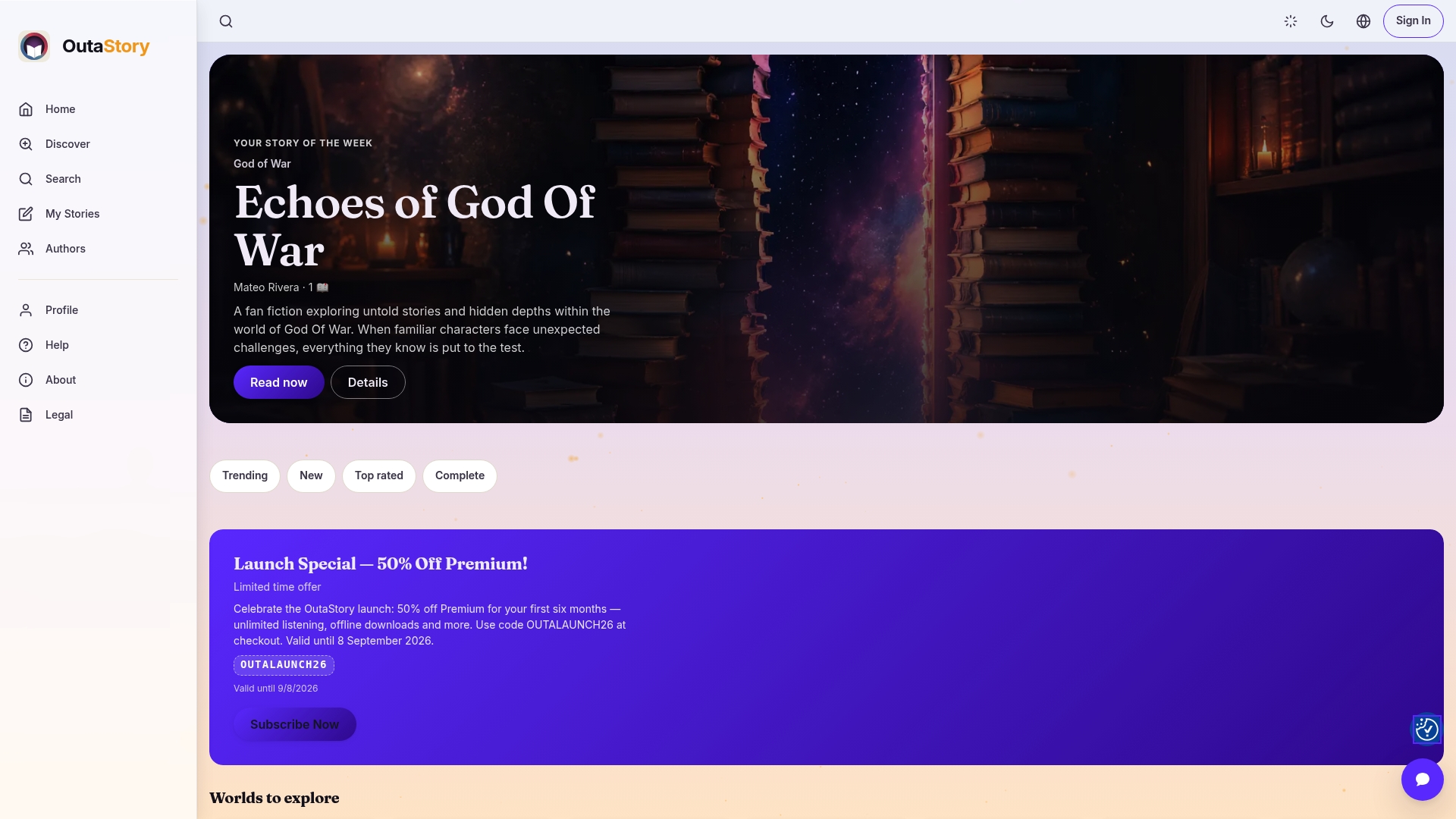
If you are looking for a platform that combines text and audio under one roof, Outastory offers a fair solution. The children's section contains bedtime stories, animal adventures and first rhymes, all readable for free. Audio versions with professionally produced voices or the author's voice make the difference to pure text collections.
What Outastory specifically offers reading parents:
- Free basic access to short stories and audio versions in the children's section
- Author voices and professional narrators for a lively listening experience
- Chapter stories that are ideal for the daily evening routine
- Premium option for unlimited listening and offline use, clearly marked as paid
- German and English available, practical for bilingual families
Start now for free on Outastory and search the children's section for tonight's first story.
Sources
Here you will find the most reliable places to go for free read-aloud stories at a glance:
- einfach vorlesen!
- Children's stories to read aloud: collection of free stories
- Deutschebahn Stiftung
FAQ
Where can I find free stories to read aloud for children?
Free read-aloud stories are available on Onkel Guido's bedtime collection, at Stiftung Lesen's „einfach vorlesen!“, on Zitronenbande and on Outastory, all without registration in the basic access.
How long should a read-aloud story be for a 4-year-old child?
For children between 4 and 6 years old, stories with an age-appropriate reading duration, a clear plot and simple sentences are recommended.
Which stories are best for falling asleep?
Calm animal stories or moon journeys with a positive, conclusive ending are ideal. Open endings or tension-filled plots make falling asleep more difficult.

Is Outastory really free for children?
The children's area on Outastory is free in the basic access, including texts and audio versions. A premium subscription is optional and unlocks unlimited listening and offline use.
When should I use audio versions instead of reading myself?
Audio versions are useful for car rides or when a parent cannot be present. For the bedtime ritual and language development through dialogue, joint reading with interaction remains the more effective choice.
Recommendation
Read and write on OutaStory
Thousands of short stories to read for free — or publish your own and find an audience.