Englisch lernen mit Hörbüchern: So gelingt der Einstieg
Ja, Englisch lernen mit Hörbüchern funktioniert, und zwar besser als die meisten anderen Methoden, die man nebenbei betreiben kann. Die Begründung ist simpel: Menschen verbringen 40 bis 50 % ihrer täglichen Kommunikationszeit mit Zuhören, Hörverständnis ist also kein Nebenschauplatz, sondern das Fundament jeder Sprachkompetenz. Das gilt über alle CEFR-Stufen hinweg, von A1 bis C2. Wer sofort starten will, braucht keine Ausrüstung, sondern nur zehn Minuten: Level einschätzen, eine kurze Passage aktiv hören, drei neue Wörter notieren. Plattformen wie OutaStory bieten dafür kurze, in sich abgeschlossene Geschichten, die genau in diese Zeitspanne passen.
- Sofortcheck: Verstehst du grob 70 % ohne Untertitel? Dann ist das Level richtig gewählt.
- Erste Aktion: Fünf Minuten aktiv hören, danach zwei Sätze aus dem Gedächtnis nachsprechen.
- Werkzeug: Ein Notizzettel für neue Wörter reicht völlig, keine App nötig.
Wichtige Erkenntnisse
Wer Englisch mit Hörbüchern lernen will, braucht aktives Zuhören, passendes Level und feste Wiederholung, nicht bloß mehr Hörzeit.
| Thema | Details |
|---|---|
| Hörverständnis als Basis | Rund 40 bis 50 % der täglichen Kommunikation besteht aus Zuhören, das macht Hörbücher zu einem zentralen Lernwerkzeug. |
| Level bestimmt Format | Anfänger brauchen Paralleltext und langsames Tempo, Fortgeschrittene profitieren von Originalaufnahmen ohne Begleittext. |
| Aktiv statt passiv hören | Shadowing, Notizen und Wiederholung steigern den Lerneffekt deutlich stärker als reines Zuhören. |
| Fester Rhythmus schlägt Intensität | 15 bis 30 Minuten täglich über vier Wochen bringen messbaren Fortschritt in Verständnis und Wortschatz. |
| OutaStory für kurze Hördosen | Die Plattform bietet kurze, serielle Geschichten mit professionellen oder Autorenstimmen, ideal für regelmäßige Kurzsessions. |
Inhaltsverzeichnis
- Warum Hörbücher beim Englischlernen helfen
- Welche Hörbücher passen zu welchem Englischlevel?
- Wie kann ich Englisch mit Hörbüchern lernen? Konkrete Techniken
- Ein 4-Wochen-Übungsplan mit Hörbüchern
- Wo findest du passende Hörbücher zum Englischlernen?
- Wie wählst du das richtige Hörbuch für dein Level?
- OutaStory als praktischer Einstieg ins Hörlernen
- Quellen
- FAQ
Warum Hörbücher beim Englischlernen helfen
Der Hebel ist nicht das Hörbuch selbst, sondern das, was es trainiert: Hörverständnis, die Fähigkeit, die den größten Anteil unserer sprachlichen Kommunikation ausmacht. Forschungsergebnisse zeigen, dass fast die Hälfte unserer Kommunikationszeit aus Zuhören besteht, nicht aus Sprechen oder Schreiben. Wer diesen Kanal ignoriert, lernt Englisch also am größten Hebel vorbei.
Hörbücher liefern dabei etwas, das klassische Lehrbücher kaum bieten: Aussprache und Betonung direkt von Muttersprachlern, eingebettet in echten Kontext statt in isolierte Vokabellisten. Das macht mehrere Dinge gleichzeitig möglich.
- Flexibles Lernen unterwegs, beim Kochen oder auf dem Arbeitsweg.
- Natürliche Intonation und Rhythmus, die kein Vokabeltrainer vermittelt.
- Vokabelaufnahme im Satzzusammenhang statt als isoliertes Wort.
Profi-Tipp: Höre dieselbe kurze Passage dreimal hintereinander. Beim ersten Mal nur zuhören, beim zweiten Mal mitlesen, beim dritten Mal ohne Text. Der Unterschied im Verständnis ist erstaunlich groß.
Welche Hörbücher passen zu welchem Englischlevel?
Nicht jedes Hörbuch für Englisch Anfänger eignet sich auch für Fortgeschrittene, und umgekehrt frustriert ein Roman in Originalsprache jeden, der gerade erst mit A2 startet. Die Wahl des Formats entscheidet oft mehr über den Lernerfolg als die investierte Zeit.
Anfänger (A1 bis A2)
Wer auf diesem Level steht, versteht einfache Sätze im Präsens, kennt Grundvokabular, aber kämpft mit natürlichem Sprechtempo. Hier zählt Wiederholung und Einfachheit.
- Kinderbücher und Gute-Nacht-Geschichten mit klarer Aussprache und langsamem Tempo.
- Gekürzte Fassungen bekannter Klassiker (graded readers), oft mit begrenztem Wortschatz von 500 bis 1.000 Wörtern.
- Bilinguale Hörbücher, bei denen Satz für Satz zwischen Deutsch und Englisch gewechselt wird.
- Kurzgeschichten mit Transkript zum Mitlesen, etwa auf OutaStory.
Auf diesem Level ist ein Paralleltext praktisch Pflicht. Ohne Text verliert man schnell den Anschluss, mit Text lässt sich jedes unbekannte Wort sofort nachschlagen.
Mittelstufe (B1 bis B2)
Hier kann man zusammenhängenden Geschichten folgen, auch wenn nicht jedes Wort sitzt. Das Ziel wechselt von reinem Verstehen zu Vokabelerweiterung und Gefühl für Umgangssprache.
- Originalromane mit moderatem Wortschatz, etwa zeitgenössische Unterhaltungsliteratur.
- Serielle Kurzgeschichten in Fortsetzungen, die regelmäßiges Hören in kleinen Dosen fördern.
- Hörkurse mit didaktischem Aufbau und Übungsfragen zwischen den Kapiteln.
- Dramatisierte Hörspiele mit mehreren Sprechern, die unterschiedliche Akzente und Sprechtempi abbilden.
Ab B1 lohnt sich der Wechsel weg vom durchgehenden Paralleltext hin zu gelegentlichem Nachschlagen. Das Ohr soll lernen, ohne visuelle Krücke zu verstehen.
Fortgeschrittene (C1 bis C2)
Wer hier ankommt, braucht keine Vereinfachung mehr, sondern Vielfalt: Dialekte, Fachjargon, schnelles Sprechtempo, ironische Untertöne. Journalistische Empfehlungen nennen hier oft ungekürzte Originalromane und Sachbücher als geeignete Formate.
- Ungekürzte Romane in Originalsprache, idealerweise von Autoren mit unterschiedlichem Stil.
- Sachbücher und Podcasts zu Themen, die einen ohnehin interessieren.
- Hörbücher mit britischem, amerikanischem und australischem Akzent im Wechsel.
- Anspruchsvolle Kurzgeschichten ohne Begleittext, um reines Hörverständnis zu testen.
Auf diesem Level zählt vor allem die Sprechergeschwindigkeit. Ein monotoner Erzähler bringt selbst C2-Lernenden wenig, ein Sprecher mit natürlicher Dynamik dagegen viel.
Wie kann ich Englisch mit Hörbüchern lernen? Konkrete Techniken
Reines Zuhören bringt einen Lerneffekt, aber einen deutlich kleineren als aktives Zuhören. Der Unterschied liegt in der Beteiligung: Wer nur konsumiert, vergisst schnell wieder. Wer nachspricht, notiert und wiederholt, verankert das Gelernte.
- Vorbereiten. Kurze Zusammenfassung oder Titel lesen, damit der Kontext klar ist, bevor der erste Ton fällt.
- Fokussiert hören. Eine Passage von zwei bis vier Minuten ohne Ablenkung anhören, Handy weglegen.
- Nachsprechen (Shadowing). Direkt nach dem Sprecher mitsprechen, auch wenn es holprig klingt. Das trainiert Aussprache und Sprechrhythmus gleichzeitig.
- Notizen machen. Drei bis fünf neue Wörter oder Wendungen aufschreiben, inklusive Kontextsatz.
- Wiederholen. Dieselbe Passage am nächsten Tag noch einmal hören, diesmal ohne Pausen.
Für den Alltag reichen unterschiedlich lange Sessions. Eine 5-Minuten-Session eignet sich für eine einzelne Szene mit Fokus auf Aussprache. Eine 15-Minuten-Session erlaubt ein vollständiges Kapitel plus Vokabelnotiz. Eine 30-Minuten-Session kombiniert Hören, Nachsprechen und eine kurze schriftliche Zusammenfassung des Gehörten.
Die Kombination von Hören und gleichzeitigem Lesen fördert nachweislich das Verständnis komplexerer Satzstrukturen und verbessert nebenbei die Rechtschreibung. Wer also Zugriff auf ein Transkript hat, sollte es zumindest gelegentlich nutzen, auch auf höheren Levels.

Profi-Tipp: Stell die Abspielgeschwindigkeit bewusst variabel ein. Bei 0,8-facher Geschwindigkeit trainierst du Verständnis für schwierige Passagen, bei normaler Geschwindigkeit trainierst du dein Ohr für echtes Sprechtempo.
Zur Selbstkontrolle helfen drei einfache Kennzahlen: die Wiederholungsrate (wie oft musst du eine Passage erneut hören, bis du sie verstehst), die geschätzte Verstehensquote in Prozent, und die Anzahl aktiv genutzter neuer Wörter pro Woche. Wer diese drei Werte grob im Blick hält, sieht Fortschritt, ohne aufwendige Tests zu brauchen.
Ein 4-Wochen-Übungsplan mit Hörbüchern
Ein fester Rhythmus schlägt sporadisches Hören deutlich. Der folgende Plan geht von 15 bis 30 Minuten täglich aus und lässt sich auf jedes Level anpassen.
- Woche 1: Levelcheck und Formatwahl. 15 Minuten täglich, Fokus auf reines Verstehen, kurze Geschichten mit Transkript.
- Woche 2: Aktives Hören einführen. 20 Minuten täglich, Shadowing bei mindestens einer Passage pro Session.
- Woche 3: Wortschatz vertiefen. 25 Minuten täglich, fünf neue Wendungen pro Tag notieren und am Wochenende wiederholen.
- Woche 4: Geschwindigkeit steigern. 30 Minuten täglich, ein längeres Format oder ein neues Genre testen.
Am Ende jeder Woche lohnt sich ein kurzer Selbsttest: eine unbekannte Passage anhören und versuchen, den Inhalt in zwei Sätzen zusammenzufassen. Klappt das flüssig, ist der nächste Schwierigkeitsgrad fällig.
- Milestone Woche 1: 80 % Verständnis bei einfachen Kurzgeschichten.
- Milestone Woche 2: Nachsprechen ganzer Sätze ohne große Verzögerung.
- Milestone Woche 4: Verständnis eines unbekannten Kapitels ohne Transkript.
Wo findest du passende Hörbücher zum Englischlernen?
Kostenlose Quellen wie LibriVox oder öffentliche Bibliotheken bieten klassische Literatur, allerdings oft ohne Begleitmaterial und mit Sprechern, deren Tempo für Lernende ungewohnt ist. Streaming- und Podcast-Plattformen haben das Angebot an hörbarem Lernmaterial in den letzten Jahren deutlich erweitert, was die Auswahl größer, aber auch unübersichtlicher macht.
Bezahlte Angebote punkten meist mit Zusatzfunktionen: Transkripte, einstellbare Abspielgeschwindigkeit, Offline-Download und didaktisches Begleitmaterial. Genau diese Features entscheiden oft über Lernerfolg und Nutzerzufriedenheit, wie Sprachlernportale betonen.
Wer eine Feature-Checkliste vor der Wahl durchgeht, spart sich Frustkäufe:
- Gibt es ein Transkript oder zumindest eine Zusammenfassung?
- Lässt sich die Geschwindigkeit anpassen?
- Ist Offline-Hören möglich?
- Gibt es kurze, in sich abgeschlossene Formate für den Alltag?
OutaStory erfüllt genau diese Kriterien für Kurzgeschichten und serielle Formate. Kurze Episoden lassen sich in eine einzige Pendelzeit packen, das senkt die Einstiegshürde erheblich gegenüber einem 300-seitigen Roman.
Wie wählst du das richtige Hörbuch für dein Level?
Vor dem Kauf oder dem Download lohnt sich ein kurzer Realitätscheck. Fünf Fragen reichen meist aus, um Fehlkäufe zu vermeiden.
- Steht das Level (A1 bis C2) klar auf der Beschreibung oder im Klappentext?
- Passt der Sprecherstil zu deinem Ziel, eher britisches oder amerikanisches Englisch?
- Ist die Länge realistisch für deine verfügbare Zeit pro Woche?
- Gibt es ein Transkript oder zumindest Kapitelzusammenfassungen?
- Interessiert dich das Genre wirklich, oder wählst du es nur, weil es “leicht” wirkt?
Wenn ja, passt das Level. Willst du gezielt Vokabeln aufbauen oder eher dein Hörverständnis insgesamt trainieren? Die Antwort entscheidet, ob ein Transkript sinnvoll ist oder eher stört.
Warnsignale gibt es auch: Wenn mehr als jedes fünfte Wort unbekannt ist, ist das Format zu schwer. Eine monotone Sprecherstimme ohne Betonungswechsel macht selbst einfache Inhalte zäh. Und fehlen jegliche Begleittexte bei einem Anfängerformat, wird das Hören schnell zur reinen Ratearbeit statt zum Lernen.
OutaStory als praktischer Einstieg ins Hörlernen
Eine ganze Romanreihe durchzuhören ist ambitioniert, wenn du gerade erst dabei bist, dein Ohr an Englisch zu gewöhnen. Genau hier setzt OutaStory an: kurze, in sich abgeschlossene Geschichten statt 300-seitiger Wälzer, wodurch sich eine vollständige Hörsession in eine einzige Kaffeepause packen lässt.
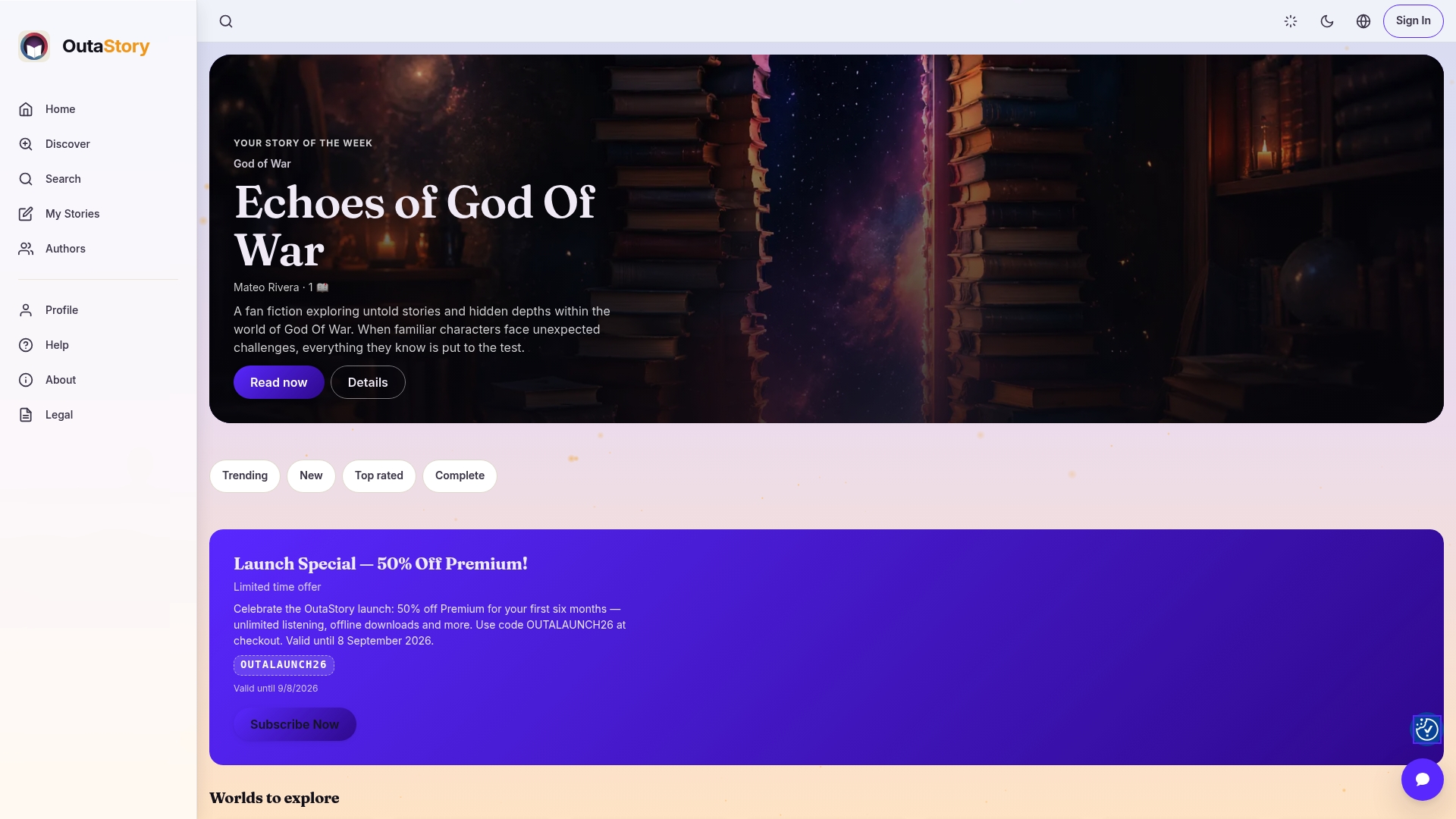
Die Plattform bietet Kurzgeschichten in mehreren Genres, von Fantasy und Krimi bis zu Kinderbereich mit Gute-Nacht-Geschichten, jeweils als Text zum Lesen oder als Hörbuch mit professionell produzierten Stimmen oder der Stimme der Autorin oder des Autors selbst. Beides ist auf Deutsch und Englisch verfügbar, was den direkten Vergleich beider Sprachen erleichtert. Der Grundzugang ist kostenlos, ein Premium-Abo schaltet unbegrenztes Hören und Offline-Nutzung frei, praktisch für die tägliche 15-Minuten-Session unterwegs ohne Datenverbindung.
Wer nach dem 4-Wochen-Plan aus diesem Artikel starten will, findet auf OutaStory genügend kurze Formate, um direkt mit Woche 1 zu beginnen: eine Geschichte auswählen, die zum eigenen Level passt, und die erste Micro-Session noch heute hören.
Quellen
- Englisch lernen mit Hörbüchern: So verbessern Sie entspannt Ihr Hörverständnis - Hoerbuecher
- Hörbücher zum Englisch lernen richtig nutzen
- Englisch hören und lesen und dabei lernen
- Die drei besten Hörbücher zum Englisch lernen
FAQ
Kann man mit Hörbüchern Englisch lernen?
Ja. Hörbücher trainieren gezielt das Hörverständnis, das laut Forschung 40 bis 50 % der täglichen Kommunikation ausmacht, und liefern gleichzeitig natürliche Aussprache und Vokabular im Kontext.
Welche Hörbücher eignen sich zum Englisch lernen?
Für Anfänger passen Kinderbücher, gekürzte Fassungen und bilinguale Formate mit Transkript. Fortgeschrittene profitieren mehr von ungekürzten Originalromanen und Sachbüchern ohne Begleittext.
Wo kann ich kostenlos Englisch mit Hörbüchern lernen?
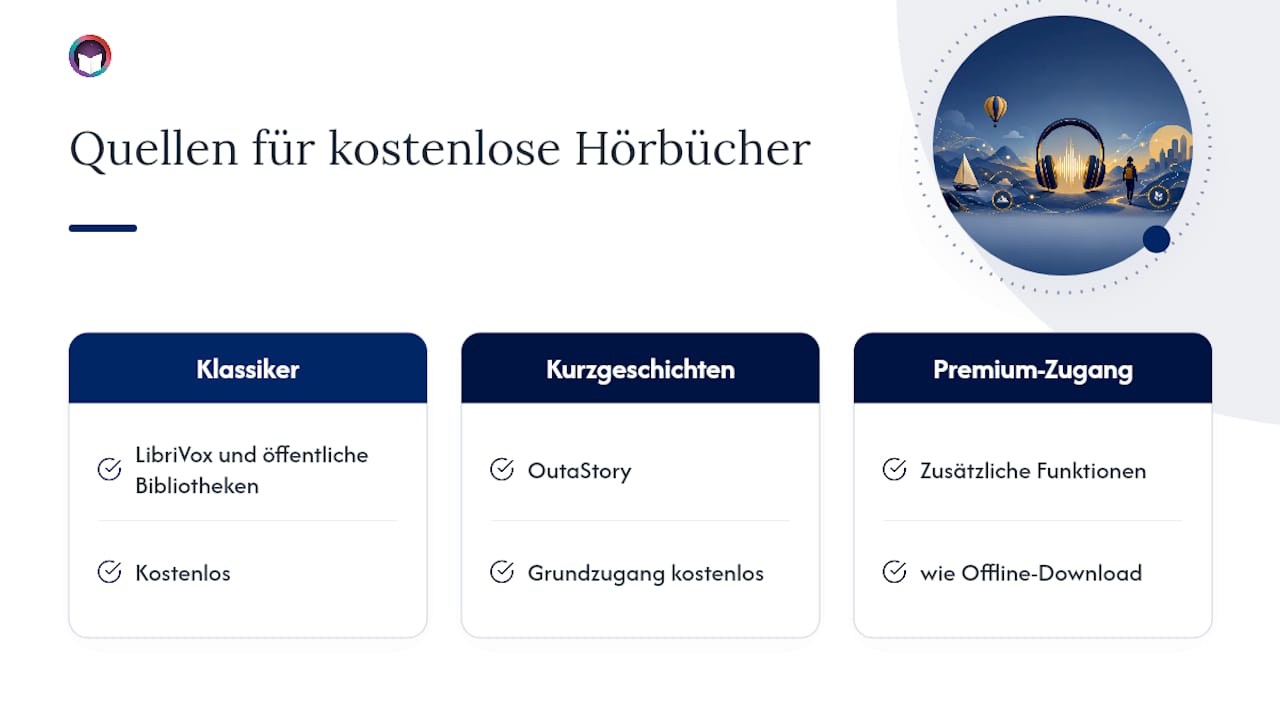
Kostenlose Klassiker gibt es über LibriVox und öffentliche Bibliotheken, kurze moderne Geschichten mit Grundzugang kostenlos etwa bei OutaStory. Für zusätzliche Funktionen wie Offline-Download lohnt sich oft ein Premium-Zugang.
Kann man durch Hören Englisch lernen?
Reines Hören hilft, aber der größte Effekt entsteht durch aktive Techniken wie Nachsprechen, Notizen und gezielte Wiederholung schwieriger Passagen, nicht durch passives Konsumieren allein.
Lesen und schreiben auf OutaStory
Kurzgeschichten kostenlos lesen – oder eigene Geschichten veröffentlichen und Leser finden.