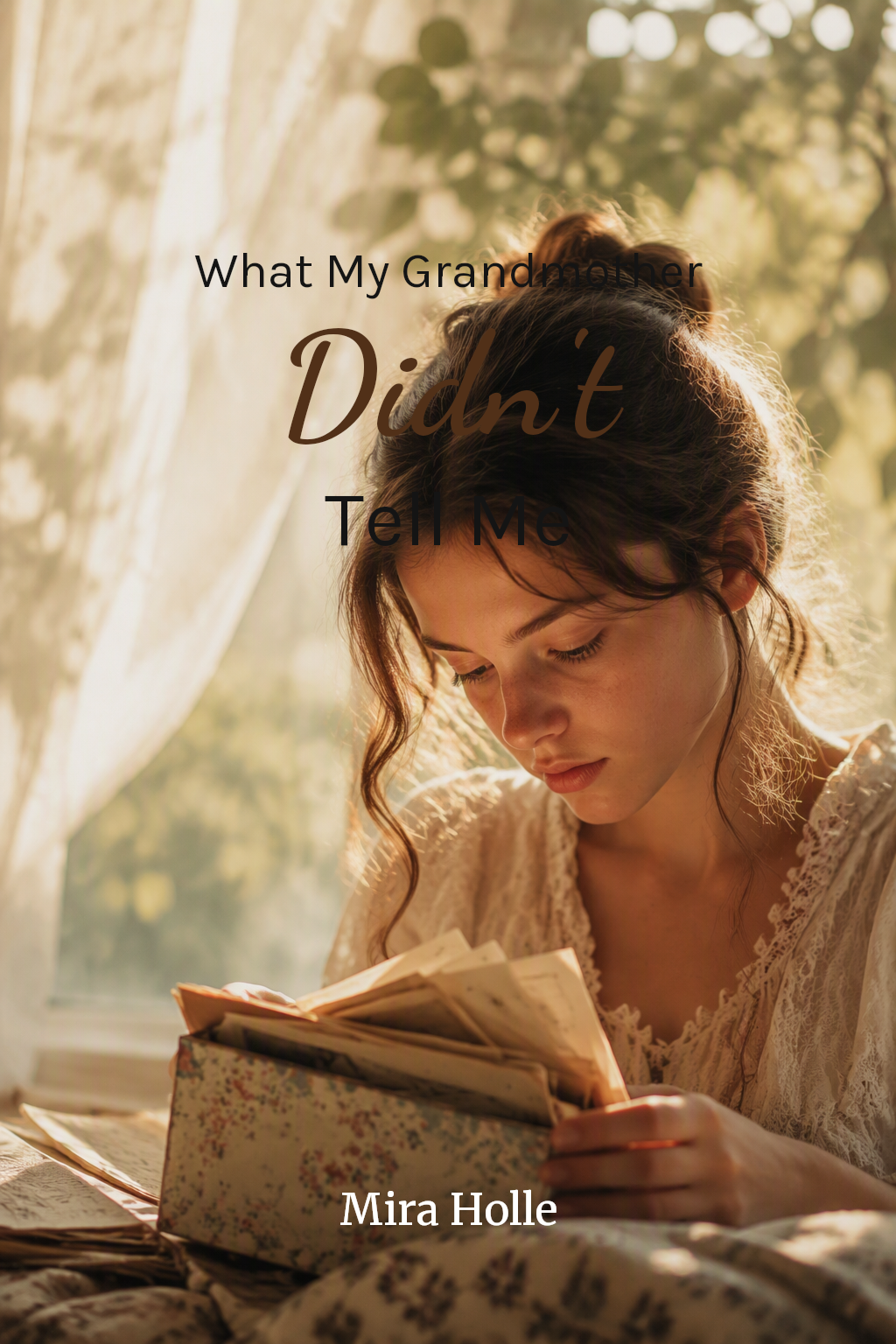

About this Story
When Esme is sorting through her grandmother's flat after the funeral, she finds a small box of papers with a name on the lid she has never heard. Over the summer, Esme uncovers a year of her grandmother's life that nobody in the family ever talked about — and learns what some silences are protecting.
A Box With A Strange Name
Esme was fourteen the summer her grandmother died.
She had loved her grandmother with the particular ferocity that only granddaughters give. Her grandmother — Helga, eighty-seven, sharp-eyed and quiet-voiced — had been the family's central column. The funeral was the first proper funeral Esme had been to. She had not cried in public. She had cried for most of the night before, alone in her room, in a way that her mother had not interrupted.
Two weeks after the funeral, Esme's mother and her aunt began clearing Helga's small flat. The flat was in a tall apartment building, with a tidy living room, a kitchen that smelled of cardamom and bay, a bedroom whose books had been arranged for sixty years in the same careful order, and a small storage cupboard at the end of the hall.
Esme came along to help. She was glad to. She had not, until that summer, understood what clearing somebody's flat meant emotionally. By midday she did. It meant going through somebody's life backwards, holding objects that the person had loved, and deciding what to keep, what to give away, what to throw out. It meant making, very fast, a thousand small decisions on behalf of a person who could not weigh in.
Esme was given the storage cupboard. Her mother said: "Just sort everything into piles. Keep, donate, recycle. Ask me about anything you're not sure about."
The cupboard was full of boxes.
Most ofthe boxes were what you would expect. Old tax returns. Christmas decorations. Photo albums. A box of Helga's piano sheet music. A box of postcards from cousins in Hamburg.
Near the back, on the bottom shelf, there was a smaller box — a brown cardboard one, about the size of a shoebox, very old, with the corners taped over. The top of the box was labelled, in Helga's neat fountain-pen handwriting, with a single word.
The word was not a word Esme recognised.
It said: Theresienstadt.
Esme stared at the box.
She did not, in that exact second, know what Theresienstadt was. She had never heard the word. It was not in her grandmother's vocabulary that Esme remembered.
She lifted the box, carefully. It was lighter than she had expected.
She brought it into the kitchen, where her mother was sorting through Helga's spice rack.
"Mum. There's a box. It says — Theresienstadt. I don't know what that is."
Esme's mother, who was holding a jar of paprika, became very still.
She did not look at Esme straight away. She put the paprika down on the counter. She wiped her hands on the apron she was wearing. She came over and looked at the box.
She did not, at first, say anything. Then she said: "Sit down, Esme. We need to talk about this. I should have — I should have told you a long time ago. I'm sorry."
Esme sat down at her grandmother's small kitchen table.
Her mother sat across from her. Her mother held the box but did not open it.
"Theresienstadt is a place," her mother said, "near Prague. Your grandmother was there from 1944 to 1945. She was thirteen. So was her sister. They were sent there because they were Jewish."
Esme stared.
"Grandma was —"
"Yes."
"I never knew."
"No. She did not — speak of it. Not to me. Not really. There was a year when I was nine, when I
Sign in to join the conversation.
Be the first to leave a comment.