
Über diese Geschichte
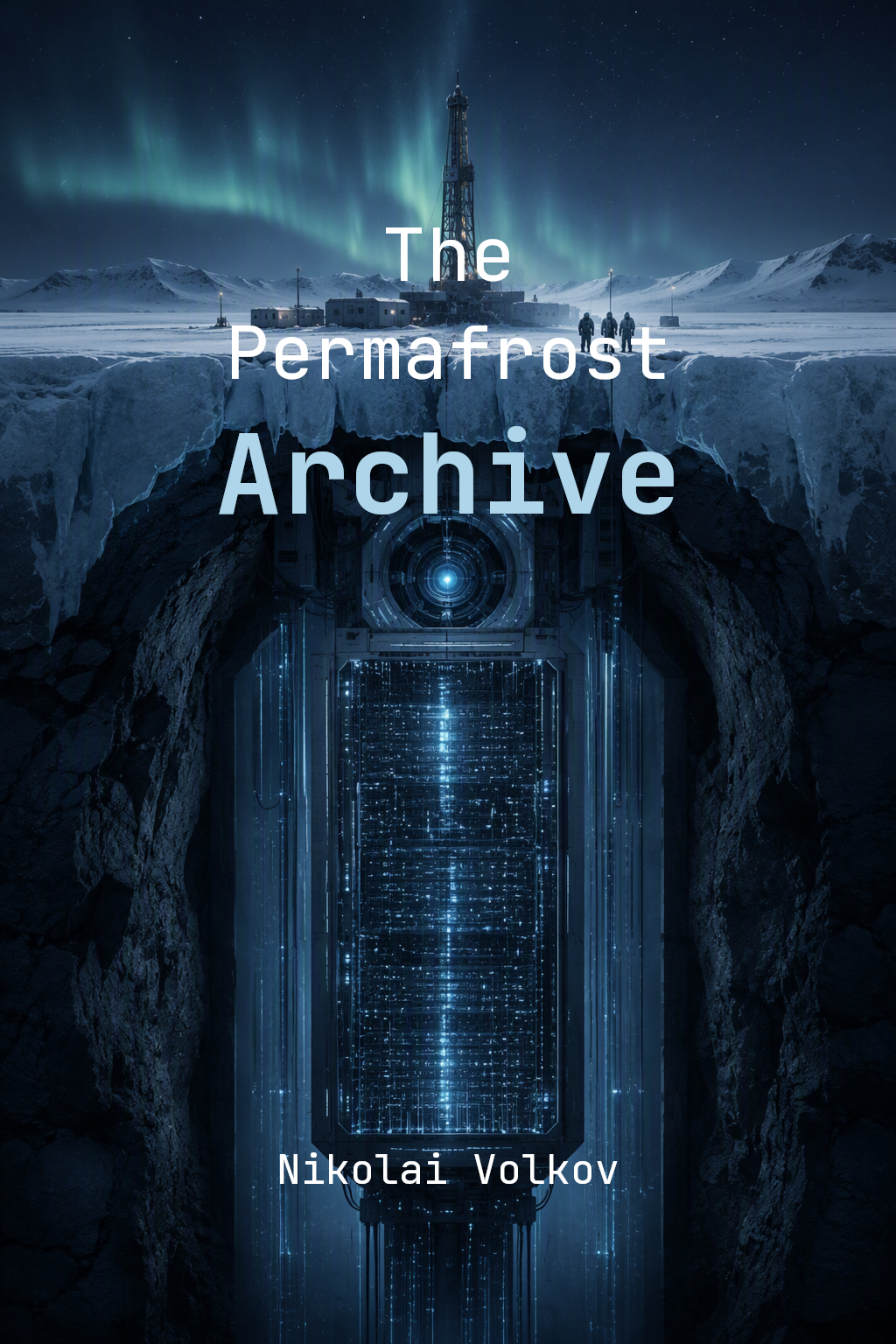
Beneath the melting Siberian permafrost, a research team discovers a data archive older than human civilization — and the data is still being updated by something that never stopped recording.
The Thaw
The permafrost had been retreating for decades, but it was Dr. Anya Kuznetsova who noticed the signal. Not a radio signal — the frequency was too low for conventional equipment — but a thermal signature, a pattern of heat beneath the frozen ground that pulsed with a regularity too precise to be geological. Her research station, a cluster of prefabricated modules on the Yamal Peninsula, had been monitoring permafrost degradation for three years, cataloguing the methane releases and carbon deposits that the thaw exposed like wounds in the earth. The thermal anomaly appeared in her data on a Monday in October, when the first hard frost should have been deepening the freeze instead of revealing something warm beneath it.
She brought the data to her colleague, Dr. Pavel Orlov, who was a geophysicist and a pessimist and who looked at the thermal signature with the expression of a man who has been expecting bad news and is almost relieved when it arrives. The heat source was deep — two hundred metres below the surface, well within the permafrost layer that had been frozen continuously for forty thousand years. Nothing should have been generating heat at that depth. The permafrost was a tomb, a frozen record of everything that had been buried when the ice advanced — pollen, bones, bacteria, the preserved remains of ecosystems that had not existed since the Pleistocene. It was notsupposed to contain anything active.
They drilled. The bore took four days to reach the anomaly, and with each metre of depth, the temperature readings climbed in a gradient that defied the thermal models. At one hundred and eighty metres, the drill struck something that was not rock and not ice and not sediment. The bore camera showed a surface — smooth, dark, geometric — that reflected the camera's light with an iridescence that reminded Anya of a beetle's shell. The surface was warm to the touch. It was also, when Pavel ran the acoustic analysis, vibrating. Not randomly, but in patterns. Patterns that, when he fed them through a spectral analyser, resolved into something that looked very much like data transmission.
Melde dich an, um mitzudiskutieren.
Sei der Erste, der einen Kommentar hinterlässt.