
Über diese Geschichte
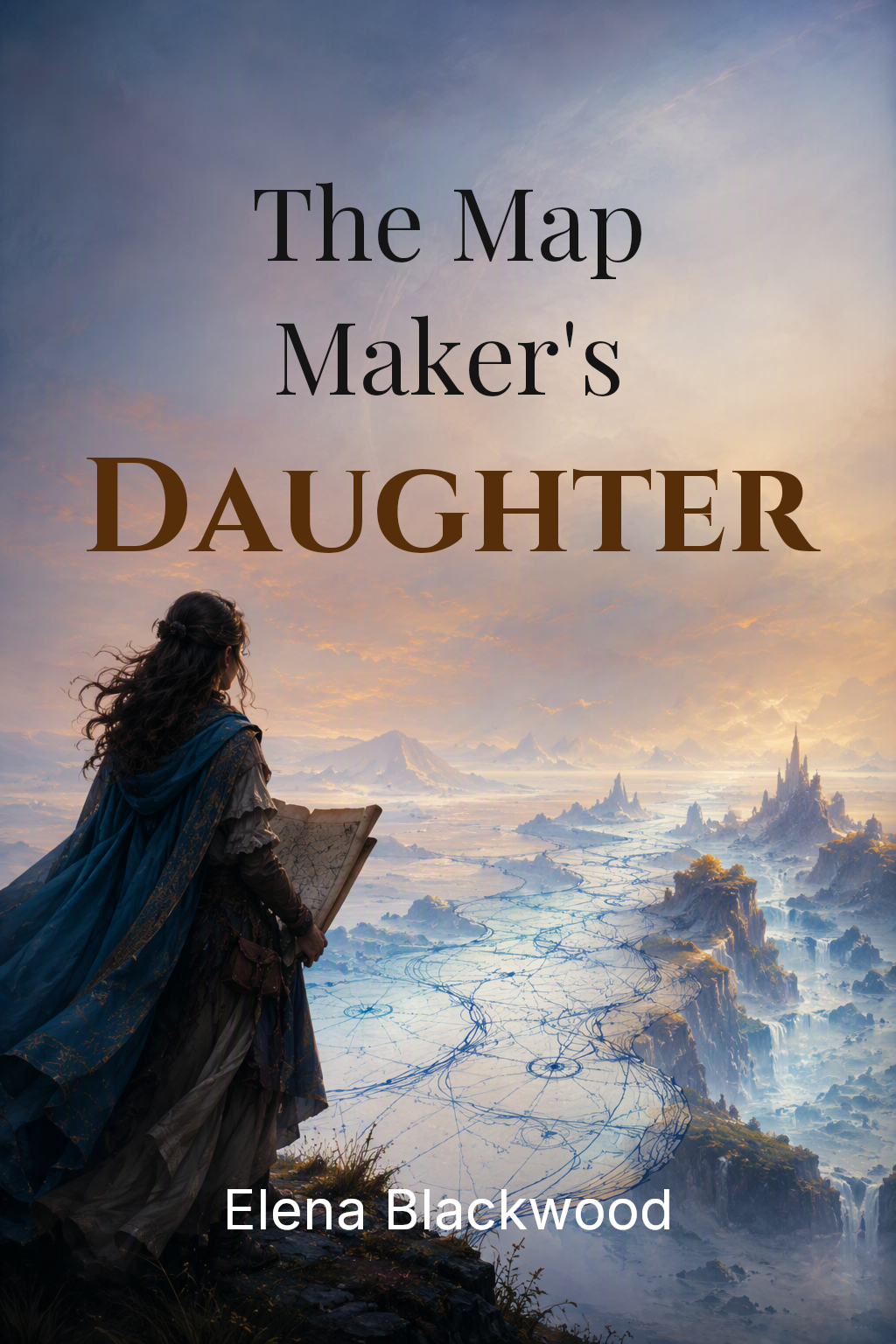
Lira's father mapped impossible places — lands that existed only in dreams, seas that appeared at twilight and vanished by dawn. When he disappears into one of his own maps, Lira must follow the ink trails into territories where cartography itself is a kind of magic.
The Vanishing Atlas
Lira found the workshop empty on a Tuesday, which was impossible, because her father had not left his workshop on a Tuesday in the twenty-three years she had been alive. The door was unlocked, the lamps still burning, and the great table at the centre of the room was covered in his work — half-finished maps on sheets of vellum weighed down with river stones, ink pots uncapped and slowly thickening, brushes laid across the pages as though he had set them down only to stretch his hands and had simply not returned. The air smelled of walnut ink and the particular sharp scent of the pigments he mixed himself from minerals he would never name.
What caught her attention was the atlas. Her father kept it chained to the desk — not metaphorically, but with an actual iron chain bolted to the table's leg and padlocked around the book's spine. The chain was intact. The padlock was locked. But the atlas was open, which should have been impossible given the chain's length, and the page it was open to was blank. Not empty — blank. A pure, luminous white that seemed to generate its own light, and when Lira leaned over it, she felt a draft rising from the page, warm and scented with salt air, as though the blankness were not an absence but a window.
She touched the page. Her fingertip met not parchment but space — a depth that her finger sank into like water, and when she pulled back, the tipwas wet with something that looked like ink but tasted, when she touched it to her tongue without thinking, like the sea. On the facing page, in her father's cramped, familiar hand, were three words: I've gone through.
Melde dich an, um mitzudiskutieren.
Sei der Erste, der einen Kommentar hinterlässt.