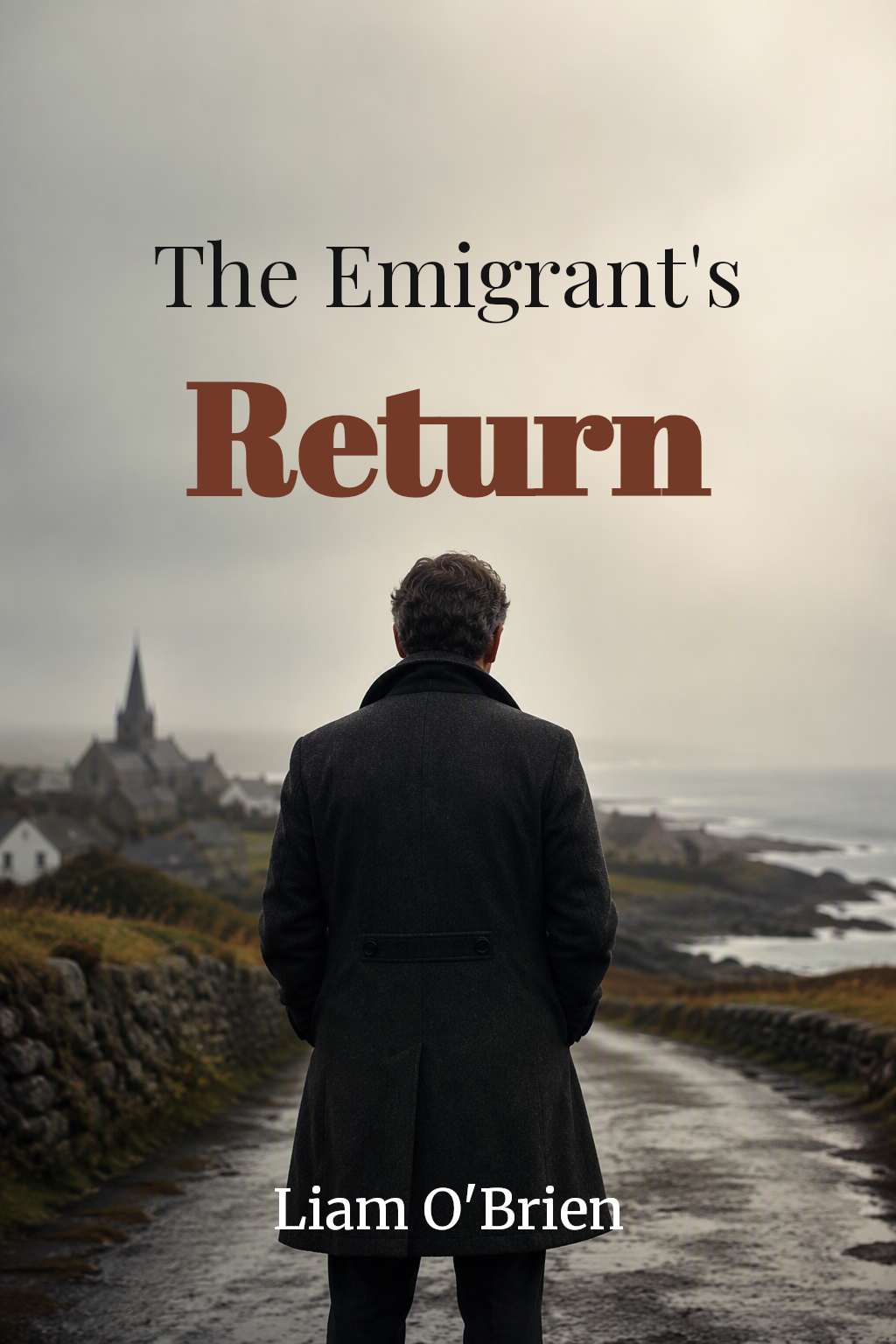

About this Story
After thirty years in Boston, Cormac Brennan returns to the village he left as a young man. He comes back wealthy, successful, and carrying a secret that will unravel every assumption his family holds about why he left and what he became.
The Road To Ballinagh
The rental car was too large for the roads of West Cork, and Cormac Brennan navigated the boreens with the exaggerated care of a man who had spent three decades driving on the right side of wide American highways and had forgotten the particular anxiety of Irish hedgerows pressing in from both sides like the walls of a green corridor. The landscape was the same. That was the thing that struck him first and hardest — not that it had changed, but that it hadn't. The fields were the same impossible green, the stone walls ran along the same slopes, the sky held the same heavy grey that was not quite rain but was always thinking about it. Thirty years of absence, and the land had not bothered to notice.
Ballinagh appeared around a bend in the road the way it always had: a cluster of houses around a crossroads, the church on the hill, Brennan's pub — his father's pub, his grandfather's before that — anchoring the corner with the solidity of a building that had been holding that position for a hundred and forty years. The sign had been repainted. The window boxes had petunias instead of geraniums. These were the only visible changes, and they hit Cormac with a force disproportionate to their significance, because they were evidence that life had continued in his absence, that the village had not frozen at the moment of his departure like a photograph but had gone on, making smalldecisions — petunias instead of geraniums — without consulting him.
He parked outside the pub and sat in the car for ten minutes, watching the street through the windshield. A woman he did not recognize walked past with a dog. A tractor rumbled through the crossroads. The church bell struck three, the same bell that had marked every hour of his childhood, and the sound hit a place in his chest that he had spent thirty years insulating with distance and work and the aggressive forward momentum of a man who does not look back. He had left Ballinagh at twenty-two, telling his family he was going to Boston for a year, for work, and the year had become five and then ten and then a lifetime, and the reasons he gave for not returning — busy, successful, building something — were true enough to pass as explanations but not true enough to pass as the truth.
Sign in to join the conversation.
Be the first to leave a comment.