
About this Story
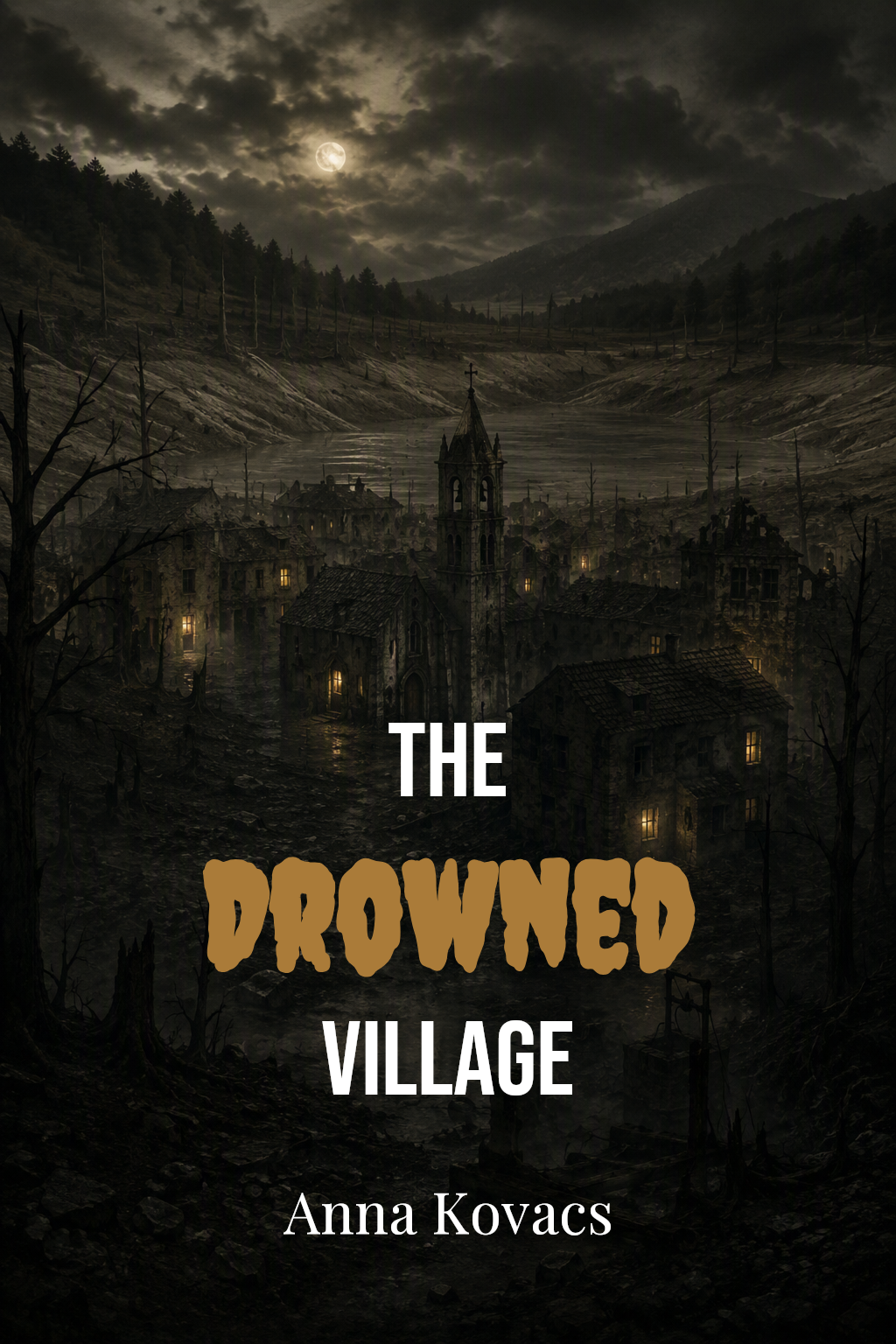
When the reservoir level drops during a historic drought, the village that was flooded fifty years ago resurfaces — intact, preserved, and occupied. The church bell rings at midnight. The lights are on in the houses. And the residents remember why they were drowned.
The Water Recedes
The drought of 2025 was the worst in recorded history, and the Blackmere Reservoir dropped seventeen metres in three months, revealing first the mud flats that locals had never seen, then the old road that had once connected the villages of the valley, and finally, on a breathless August morning when the heat pressed down on the landscape like a hand, the rooftops. They emerged from the brown water like teeth from a receding gum line — first the church spire, then the peaked roofs of the houses along the high street, then the lower structures: the pub, the post office, the school. Aldmere had been flooded in 1975, its residents relocated, its buildings supposedly demolished before the dam was sealed. The buildings had not been demolished. They had been drowned whole, and the water had preserved them with the cold, airless perfection of a specimen jar.
Nora Cassidy was the first person to walk the streets of Aldmere in fifty years. She was a journalist, drawn by the story, equipped with waterproof boots and a phone camera and the particular professional detachment that journalists cultivate as armour against the things they see. The detachment lasted approximately four minutes. The village was intact — not ruined, not decayed, but intact. The windows were unbroken. The doors were closed. The paint on the shop fronts was faded but present, and the signs above them were legible:BUTCHER, GREENGROCER, THE ALDMERE ARMS. The mud of the reservoir floor squelched beneath her boots, but the buildings themselves were dry above the current waterline, and as Nora walked the main street, she became aware of a smell that was wrong — not the expected stench of rotting algae and exposed silt, but something domestic. Something warm. Bread. Someone was baking bread.
She followed the smell to a cottage at the end of the high street, its door painted blue, its windows dark. The smell was coming from inside, rich and yeasty and unmistakable, and when Nora pressed her face to the window and cupped her hands against the glass, she saw, in the dim interior, a kitchen table set for four, with plates and cups and cutlery arranged with the careful symmetry of a meal about to be served. On the table, in the centre, was a loaf of bread, golden-brown and steaming. It had not been there fifty years. It had not been preserved by the water. It was fresh. And as Nora stared, unable to process what she was seeing, a chair at the table moved — pulled out, as though by an invisible hand — and from somewhere inside the cottage, muffled by walls and water-stained plaster, a voice called out: "Sit down, love. It's getting cold."
Sign in to join the conversation.
Be the first to leave a comment.