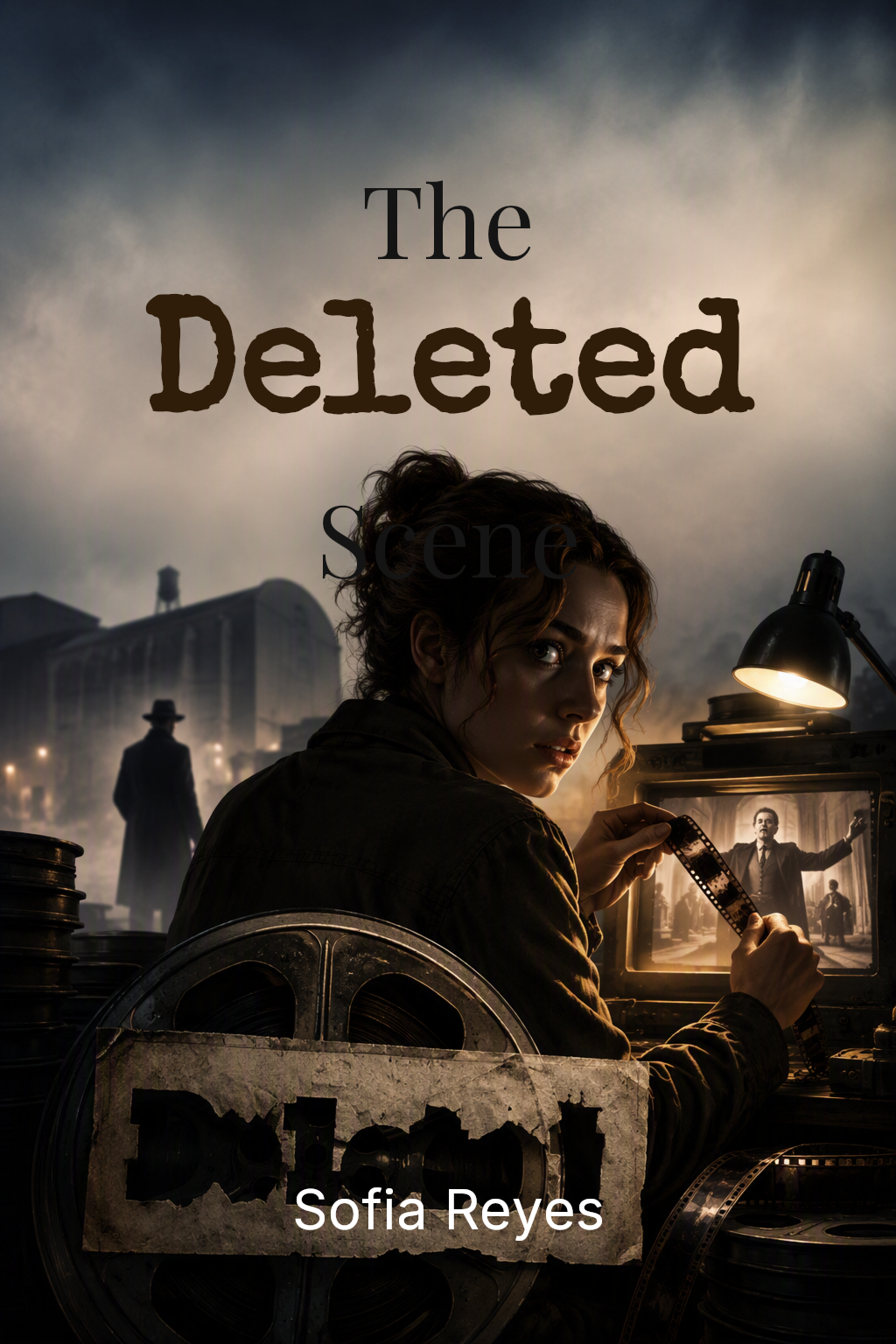

About this Story
A film archivist discovers a deleted scene from a classic movie that reveals the villain was right all along. When she tries to release it, the studio will do anything to keep it buried.
Chapter One
The film canister was labeled with a grease pencil in handwriting that Elena Castillo recognized as belonging to a dead man. Martin Hale had been the chief editor on Meridian Studios's most celebrated film — the 1974 epic The Cardinal's Gambit — and he had died in 1991 under circumstances that the studio's official biography described as "a private matter" and the tabloids had called suspicious. Elena found the canister in a sub-basement vault that was not on any floor plan she had been given, behind a fire door that had been welded shut and then, at some point, unwelded.
She was six months into a digital preservation project for Meridian's archive, a job that involved cataloging thousands of hours of footage in climate-controlled rooms that smelled of acetate and history. Most of it was mundane — alternate takes, lighting tests, behind-the-scenes footage of actors complaining about catering. The canister from the sub-basement was different. It was stored separately, in a lead-lined box with a combination lock, alongside a handwritten note in cramped script: "The truth. Do not let them destroy this."
She threaded the film into a Steenbeck editor with hands that were not quite steady. The scene ran for eleven minutes and forty-three seconds. When it ended, Elena sat in the dark screening room and understood three things with absolute clarity: why the scene had been cut, whyMartin Hale had hidden it, and why Meridian Studios had spent fifty years making sure nobody ever found it. The villain of The Cardinal's Gambit was not the villain at all. The hero was. And the real story the film had been made to tell — and then unmade to conceal — was still dangerously, explosively relevant.
Sign in to join the conversation.
Be the first to leave a comment.