
Über diese Geschichte
The last oracle of a forgotten god must speak a prophecy she knows is false — because the true one would unmake the world that still kneels to pray to her.
The-Last-Voice-Of-Tessaris
The god Tessaris had been dead for four hundred years, and Saphira was the only one who still heard him.
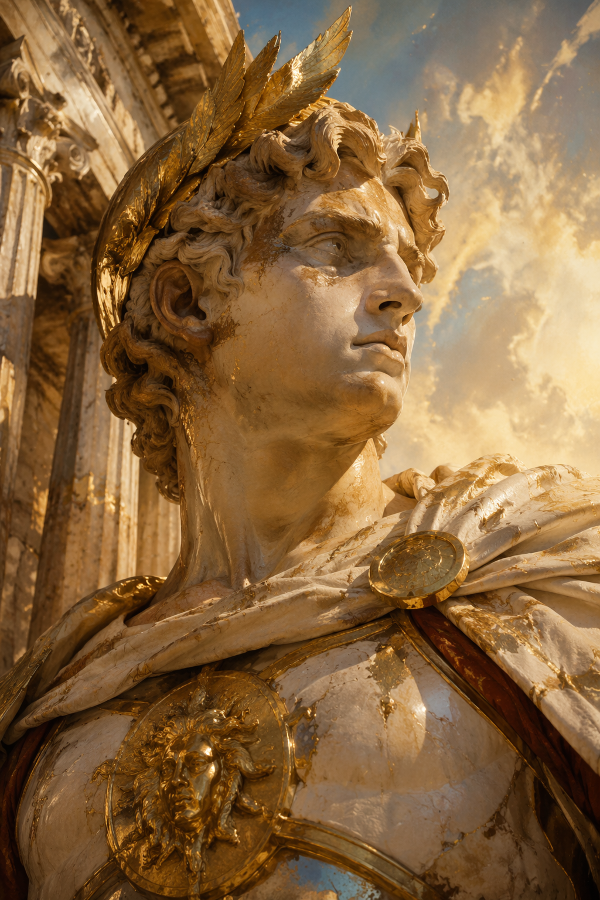
She was the last oracle, though the word had grown too grand for what she was. There had been a college once, a hundred women in white standing on the marble tongue of the great temple, breathing the smoke of the burning leaves and speaking the future in one voice. The temple was a ruin now, its roof open to the desert sky, its colonnade half-buried in the slow gold tide of the dunes. The hundred women were dust. Only Saphira remained, an old woman tending a god whose name the new empires no longer taught their children.
And yet they still came.
That was the strange mercy and the strange cruelty of it. The world had forgotten Tessaris the way you forget a language, all at once and without grief — but it had not forgotten the temple, where prophecy could be bought. Caravans crossed three deserts to kneel on the cracked marble. Kings sent envoys. Mothers came on foot. They no longer believed in the god; they believed in the answers, the way people who scorn the river still drink from it. And Saphira, who alone still felt Tessaris move in her like a tide moving in a sealed cave, gave them what they came for.
She had never once lied to them. In sixty years of speaking, she had said only and exactly what the dead god showed her, and the showing had never failed. The droughtthat broke the eastern kingdoms; the child-king who would grow gentle; the comet; the plague that turned aside at the river Mel. All true. All spoken in the plain flat voice of someone reading aloud what is already written. The world half-mocked her and wholly relied on her, and she had made her peace with being both a relic and a lifeline.
Then King Aldun's envoys came, and asked the question that broke her.
They asked it the way the powerful always ask — as a formality, expecting the comfortable yes. The king's armies stood at the border of the Sun Coast. He wished to know whether the gods favored his conquest. Would he take the coast and reign in glory? It was the kind of question Tessaris answered in a heartbeat, and Saphira lowered herself onto the cold marble tongue, breathed the bitter smoke, and opened herself to the tide.
And the tide showed her the truth, and the truth was a horror.
She saw the answer the god wished spoken, and it was not yes. It was the end of everything. She saw that Aldun's war was the first stone of an avalanche; that the true prophecy — the one Tessaris pressed into her like a brand — was that the world had run its full course, that this was the appointed hour for it to be unmade and remade clean, and that her god, who had been dead four hundred years, was glad. Tessaris did not love this world. He had been forgotten by it, and he wished, with the cold patience of the divine, to let it fall so that something truer could grow from its ashes. The honest prophecy, the one she had sworn sixty years never to soften, was: Yes. Begin the war. Let it all burn. It is meant to.
Saphira knelt in the smoke with the true words rising in her throat like floodwater, and below her, in the desert beyond the broken columns, she could see the small
Melde dich an, um mitzudiskutieren.
Sei der Erste, der einen Kommentar hinterlässt.