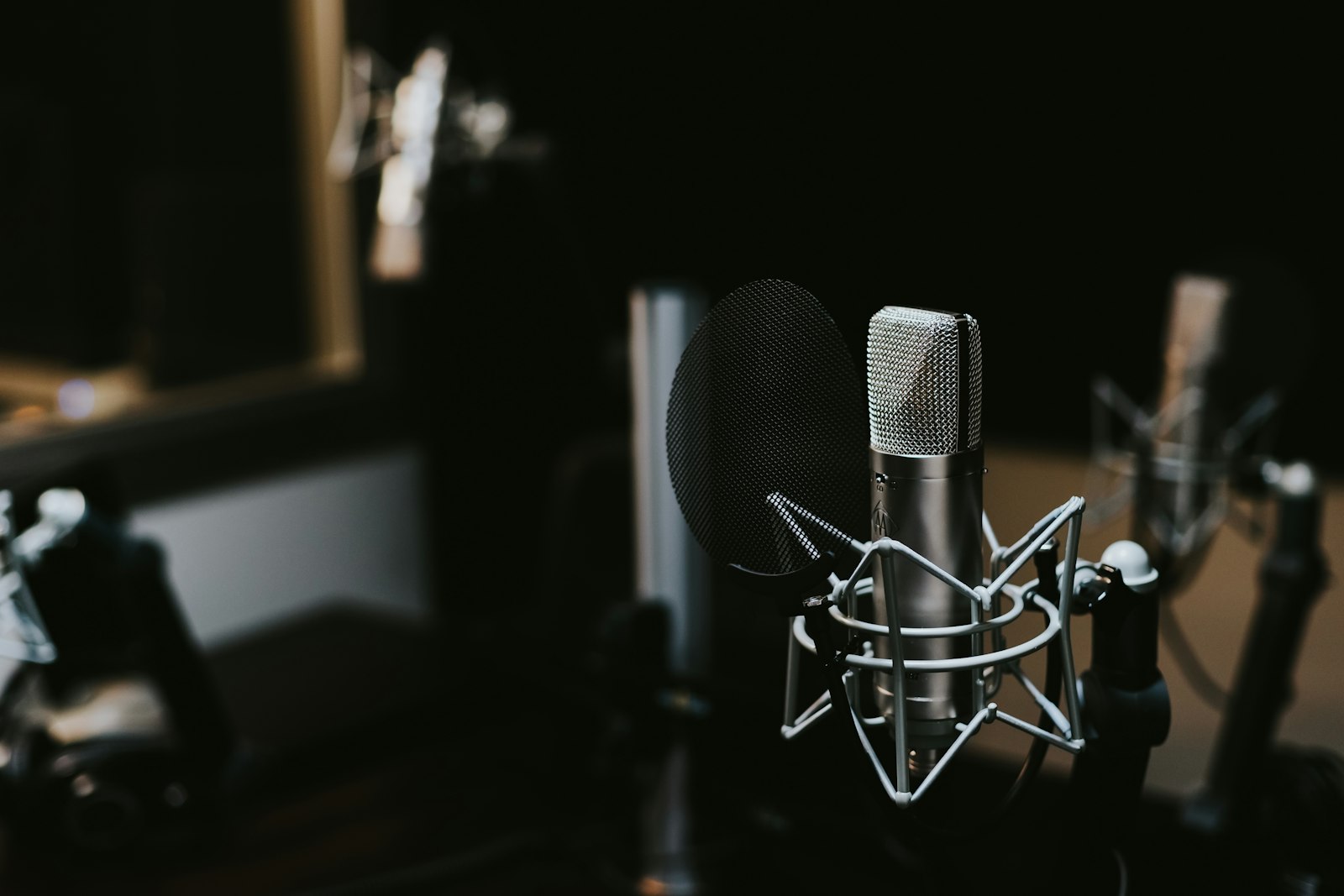
Die Stimme wird persönlich — deine eigene Vorlese-Stimme, ein Marktplatz dafür und ein Guthaben, das alles trägt
 Foto: Unsplash
Die Wochen davor drehten sich darum, wie es sich anfühlt, einer Geschichte zuzuhören: lückenlose Wiedergabe über alle Plattformen, ein synchrones Mitlesen, bei dem der Text genau dort aufleuchtet, wo die Stimme gerade ist, eine Suche, die auch dann findet, wenn man sich vertippt. Das war die Frage nach dem Erlebnis. Diese Phase stellt eine andere, viel persönlichere Frage: wessen Stimme erzählt da eigentlich?
Bis jetzt war die Antwort: eine von uns kuratierte, hochwertige KI-Stimme. Schön, aber fremd. Ab dieser Phase kann die Antwort lauten: deine eigene. OutaStory kann eine Geschichte jetzt in der geklonten Stimme der Autorin vorlesen — man nimmt einmal eine kurze Probe auf, und dieselbe Stimme erzählt anschließend jedes Kapitel jeder eigenen Geschichte. Das ist der größte Strang dieser Wochen, und um ihn herum ist gleich eine ganze kleine Wirtschaft entstanden: ein Guthaben-System mit echter Geldbörse, das diese Funktionen trägt; ein Marktplatz, auf dem man seine Stimme verleihen und mit fremden Stimmen erzählen kann; die Möglichkeit, für eine Geschichte mehrere Hörfassungen nebeneinander zu pflegen; und, noch im Verborgenen, ein professioneller Klon-Tarif für Studioqualität. Dazu ist das Profil runder geworden und der Katalog ein gutes Stück gewachsen.
Es ist die Phase, in der OutaStory aufhört, eine Plattform zu sein, auf der man Geschichten liest und hört, und anfängt, eine zu werden, auf der man mit der eigenen Stimme etwas beiträgt — und in der erstmals echtes Geld und echtes Guthaben fließen. Genau deshalb steckt unter den schönen Funktionen außerordentlich viel Sorgfalt; davon erzählt dieser Beitrag bewusst auch ein Stück.
Deine eigene Stimme erzählt
Der Kern ist schnell beschrieben und fühlt sich trotzdem wie Zauberei an: Man hinterlegt einmal eine kurze Sprachprobe — entweder direkt im Browser über den eingebauten Rekorder oder als hochgeladene Datei —, und OutaStory erzeugt daraus einen Stimm-Klon. Von da an kann jede eigene Geschichte in dieser Stimme vertont werden, Kapitel für Kapitel, mit demselben Erzählfluss, den die übrige Audio-Pipeline schon liefert.
Damit das nicht nach Technik-Demo, sondern nach einer runden Funktion aussieht, gibt es eine eigene Seite „Meine Stimme" im Profil. Sie führt durch den ganzen Lebensweg einer geklonten Stimme:
- Aufnehmen oder hochladen. Ein Aufnahmegerät direkt auf der Seite, mit Pegelanzeige und einem vorgegebenen Vorlese-Text, damit die Probe inhaltlich und in der Länge passt. Wer lieber eine vorhandene Datei nimmt, lädt sie hoch — beide Wege landen in derselben Prüfung.
- Qualität wird vorab geprüft. Bevor überhaupt etwas geklont wird, schaut die Plattform sich die Aufnahme an: lang genug, sauber genug, keine groben Ausreißer. So scheitert ein Klon nicht erst nach der teuren Erzeugung, sondern man bekommt sofort eine ehrliche Rückmeldung, wenn die Probe nicht taugt.
- Ein Status, der ehrlich ist. Während die Stimme entsteht, zeigt die Seite genau das an — und sobald sie fertig ist, springt sie in einen klaren „bereit"-Zustand mit einer kurzen Hörprobe, die zwischengespeichert ist und sofort abspielt. Man hört also unmittelbar, wie die eigene Stimme als Erzähler:in klingt, ohne erst eine ganze Geschichte vertonen zu müssen.
- Neu aufnehmen, wenn es nicht passt. Gefällt der Klon nicht, lässt er sich noch einmal aufnehmen. Im Hintergrund passiert dabei mehr, als man sieht — dazu weiter unten mehr —, aber für die Autorin ist es schlicht ein Knopf: „nochmal".
Die erste geklonte Stimme ist kostenlos. Das ist Absicht: Jede:r soll einmal ohne Hürde erleben, wie es ist, die eigene Geschichte mit der eigenen Stimme zu hören. Erst wer weitere Stimmen anlegt — eine ruhigere fürs Vorlesen am Abend, eine andere für ein anderes Genre —, zahlt dafür. Womit wir beim nächsten Strang sind, ohne den dieser ganze Bereich nicht funktionieren würde.
Guthaben — die gemeinsame Währung
 Foto: Unsplash
Eine geklonte Stimme und eine in dieser Stimme erzählte Hörfassung kosten echtes Geld — Rechenzeit beim Anbieter, Geld pro Zeichen bei der Vertonung. Damit das fair, transparent und über alle Funktionen hinweg einheitlich abgerechnet werden kann, hat OutaStory jetzt ein durchgängiges Guthaben-System mit einer richtigen Geldbörse pro Konto.
Die Idee ist bewusst einfach: Statt jede Premium-Funktion einzeln zu bepreisen, gibt es eine gemeinsame Währung — Guthaben —, das man einmal auflädt und dann dort einsetzt, wo man möchte. Eine zusätzliche Stimme, eine weitere Hörfassung, künftig weitere Premium-Funktionen: alles zieht aus demselben Topf.
Unter der Haube ist diese Geldbörse als fortschreibendes Kassenbuch gebaut — jede Aufladung, jede Ausgabe, jede Rückerstattung ist eine eigene, unveränderliche Buchung. Nichts wird im Nachhinein überschrieben; der Kontostand ergibt sich aus der Summe aller Buchungen. Das klingt nach Buchhaltung, ist aber genau das, was man bei echtem Geld haben will: eine lückenlose, nachvollziehbare Spur, bei der eine Ausgabe und ihre Rückerstattung sauber zusammengehören und bei der eine doppelt zugestellte Anfrage niemals doppelt abbucht.
Aufladen kann man auf zwei Wegen, und beide sind diese Wochen scharf geschaltet worden:
- Im Web über Stripe — der bewährte Bezahl-Weg, sicher und vertraut.
- Direkt in den Apps über die Stores — auf Android über Google Play Billing, auf iOS über Apples In-App-Kauf. Das ist der unscheinbarste und zugleich aufwendigste Teil: Ein In-App-Kauf muss serverseitig echt geprüft werden, bevor Guthaben gutgeschrieben wird — sonst ließe er sich fälschen. Genau diese serverseitige Prüfung der Kauf-Belege gegen Google und Apple steckt jetzt sauber dahinter, samt der nötigen Zertifikats-Prüfungen, damit nur echte, vom Store bestätigte Käufe Guthaben erzeugen.
Für die Nutzer:innen bleibt davon angenehm wenig sichtbar: Man sieht seinen Kontostand, eine Verlaufsliste der Buchungen, und beim Anlegen einer kostenpflichtigen Funktion sauber, was sie kostet und was danach übrig ist — kein verstecktes Abbuchen, sondern eine klare Ansage im richtigen Moment. Reicht das Guthaben nicht, gibt es keinen halben Vorgang, sondern einen freundlichen Hinweis und den Weg zum Aufladen.
Stimmen teilen — ein kleiner Marktplatz
 Foto: Unsplash
Sobald Menschen ihre eigene Stimme klonen können, entsteht fast von selbst eine schöne Frage: Könnte ich meine Geschichte nicht in der Stimme von jemandem erzählen lassen, die mir gefällt? Genau das gibt es jetzt — als kleinen, freiwilligen Marktplatz für Stimmen.
Wer mag, kann seine geklonte Stimme zur Verfügung stellen. Andere können diese Stimme dann auswählen und ihre eigene Geschichte damit vertonen lassen — gegen Guthaben. Das Geld fließt dabei nicht ins Leere: Die Stimmbesitzerin verdient einen Anteil an jeder Nutzung, die Plattform behält einen kleinen Teil für Erzeugung und Betrieb. Aus einer rein technischen Funktion wird so ein kleines Ökosystem, in dem eine markante Erzählstimme tatsächlich etwas wert ist.
Damit niemand die Katze im Sack kauft, gibt es vor dem Ausgeben eine Hörprobe der fremden Stimme: erst hören, dann entscheiden. Und auch hier gilt dieselbe Sorgfalt wie bei der eigenen Geldbörse — die Abrechnung zwischen Nutzerin, Stimmbesitzerin und Plattform ist so gebaut, dass jede Nutzung genau einmal verbucht wird und dass eine fehlgeschlagene Vertonung die Bezahlung sauber zurückerstattet, statt jemanden für etwas zahlen zu lassen, das nie entstanden ist.
Es ist bewusst ein kleiner, leiser Marktplatz — kein lauter Basar, sondern ein Angebot für jene, die ihre Stimme gern teilen, und für jene, die ihrer Geschichte einen bestimmten Klang geben wollen. Aber es ist der erste Ort auf OutaStory, an dem Menschen einander direkt etwas geben — und das fühlt sich nach mehr an als nach einer weiteren Funktion.
Mehrere Hörfassungen, eine Geschichte
Eine Geschichte hat selten nur einen richtigen Klang. Dieselbe Erzählung kann ruhig und getragen klingen oder wach und schnell, in der eigenen Stimme oder in einer geliehenen. Deshalb kann eine Geschichte jetzt mehrere Hörfassungen nebeneinander tragen.
Die erste Hörfassung ist wie gehabt im normalen Vertonungs-Weg enthalten. Wer weitere Fassungen anlegt — eine andere Stimme, ein anderer Tonfall —, zahlt dafür aus dem Guthaben-Topf. Alle Fassungen bleiben erhalten; nichts überschreibt etwas. Die Autorin bestimmt, welche Fassung die aktive ist — also jene, die Hörer:innen standardmäßig bekommen —, und kann nicht mehr gebrauchte Fassungen wieder entfernen.
Für die Hörer:innen zeigt sich das genau dort, wo es Sinn ergibt: Hat eine Geschichte mehr als eine fertige Hörfassung, erscheint im Player ein dezenter Umschalter. Man wählt eine Fassung, und die Wiedergabe wechselt nahtlos zu genau dieser Stimme — Kapitelsprung, Spulen und das synchrone Mitlesen inklusive, denn jede Fassung bringt ihre eigene, vollständige Abschnitts-Struktur mit. Hat eine Geschichte nur eine Fassung, ist der Umschalter unsichtbar, und alles bleibt so schlicht wie zuvor.
Es ist eine dieser Funktionen, die unscheinbar aussieht und im Maschinenraum überraschend viel verlangt: Jede Fassung muss ihre eigenen Tondateien sauber getrennt ablegen, damit eine zweite Stimme niemals die erste überschreibt und das Löschen einer Fassung niemals die Dateien einer anderen mitnimmt. Genau diese saubere Trennung — jede Fassung in ihrem eigenen, klar benannten Ablagepfad — ist die unsichtbare Voraussetzung dafür, dass „mehrere Stimmen für eine Geschichte" verlässlich funktioniert. Und weil hier Guthaben fließt, gilt auch hier der eiserne Grundsatz: erst abbuchen, dann erzeugen; geht bei der Erzeugung etwas schief, wird der Betrag zurückerstattet — niemand zahlt für eine Fassung, die nie entstanden ist.
Verlässlichkeit hinter den Kulissen
Eine geklonte Stimme ist nicht einfach eine Datei — beim Anbieter belegt sie einen Platz, und davon gibt es nur eine begrenzte Zahl. Wenn jede:r mehrere Stimmen anlegt, neu aufnimmt und wieder verwirft, muss jemand dafür sorgen, dass diese Plätze sauber verwaltet werden, dass eine neu aufgenommene Stimme die alte verlässlich ersetzt und dass nichts verwaist zurückbleibt. Genau diese Lebenszyklus-Härtung ist diese Wochen eingezogen.
Drei Dinge stecken darin, alle unsichtbar und alle wichtig:
- Platz-Verwaltung. Die begrenzten Stimm-Plätze beim Anbieter werden jetzt als gemeinsamer Vorrat geführt, sauber vergeben und wieder freigegeben — statt dass irgendwann „kein Platz mehr" als kryptischer Fehler durchschlägt.
- Transparentes Neu-Klonen. Nimmt jemand seine Stimme neu auf, wird der alte Klon im Hintergrund geordnet abgelöst und durch den neuen ersetzt — für die Autorin ist es ein Knopf, dahinter eine saubere Übergabe.
- Serverseitige Tonanalyse. Die Qualitätsprüfung der Sprachprobe läuft jetzt verlässlich auf dem Server, mit einer echten Tonanalyse statt grober Schätzungen — damit „zu kurz" oder „zu leise" vor dem Klonen auffällt, nicht danach.
Das ist die Art Arbeit, die niemand bemerkt, solange sie funktioniert — und die genau deshalb der Unterschied zwischen einer hübschen Demo und einer Funktion ist, der man sein eigenes Gesicht, beziehungsweise seine eigene Stimme, anvertraut.
Ein professioneller Stimm-Klon steht in den Startlöchern
Für alle, denen der schnelle Klon aus einer kurzen Probe nicht genug ist, ist bereits die nächste Stufe vorbereitet: ein professioneller Stimm-Klon in Studioqualität. Er nutzt einen größeren Probensatz und einen zusätzlichen Verifikations-Schritt, der sicherstellt, dass wirklich die eigene Stimme geklont wird — und liefert dafür eine deutlich höhere Wiedergabetreue.
Diese Stufe ist bereits vollständig gebaut, aber bewusst noch nicht freigeschaltet — sie läuft „dunkel" mit, hinter einem Schalter, der erst umgelegt wird, wenn alle rechtlichen und datenschutzrechtlichen Fragen abschließend geklärt sind. Wir erwähnen sie hier trotzdem, weil sie zeigt, wohin die Reise geht: von „klingt schon erstaunlich nach mir" zu „klingt wie eine professionelle Aufnahme von mir".
Der Katalog wächst weiter
 Foto: Unsplash
Neben dem großen Stimm-Strang ist der Katalog weiter gewachsen — und zwar gezielt um einen Bereich, der bisher unterrepräsentiert war: 23 gemeinfreie deutsche Kinderklassiker sind dazugekommen. Geschichten, die man vorliest, bevor jemand selbst lesen kann — und damit genau die Art Text, die vom Vorlesen und vom synchronen Mitlesen am meisten profitiert.
Dazu kommen die schon angelegten vorgefertigten Hörfassungen und Cover für die kuratierten Flaggschiff-Geschichten: Wo wir eine Hörfassung einmal erzeugt haben, wird sie beim nächsten Aufbau der Plattform einfach als fertiges Hörbuch übernommen — sofort abspielbar, ohne erneute Erzeugung. So wächst die Bibliothek nicht nur in der Breite, sondern auch im Anteil der Geschichten, die man direkt hören kann.
Das Profil wird runder
Während die Stimme die Schlagzeile war, ist das Profil im Stillen erwachsener geworden — an genau den Stellen, an denen es vorher kantig war:
- Vor-, Zweit- und Nachname getrennt. Der Name lässt sich jetzt sauber in seine Teile zerlegen und bearbeiten; die Anzeige setzt sich daraus zusammen, statt — wie es bei einigen Konten der Fall war — im Zweifel die E-Mail-Adresse zu zeigen.
- Geburtstags-Gruß zur richtigen Zeit. Wer mag, bekommt zum Geburtstag eine kleine Mail — und zwar um 9 Uhr morgens in der eigenen Zeitzone, nicht irgendwann nach Serverzeit. Dafür gibt es jetzt eine Zeitzonen-Auswahl im Profil.
- Newsletter nach der Uhr, die zählt. Auch der tägliche und der wöchentliche Newsletter richten sich nach der Zeitzone der Empfängerin — der tägliche kommt morgens, der wöchentliche am Nachmittag, jeweils zur lokalen Uhrzeit statt mitten in der Nacht.
Das sind keine großen Funktionen, aber es sind die kleinen Höflichkeiten, die den Unterschied machen, ob sich eine Plattform fremd oder vertraut anfühlt.
Offene Karten: eine Über-uns-Seite, die zeigt, was läuft
Zu einer Plattform, die mit echtem Guthaben und geklonten Stimmen hantiert, gehört Transparenz. Deshalb gibt es jetzt eine Über-uns-/Versions-Seite, die offen zeigt, welche Bausteine in welcher Version gerade laufen — und die die vielen quelloffenen Projekte würdigt, auf denen OutaStory aufbaut. Wer wissen will, was unter der Haube steckt, findet es dort, statt es erraten zu müssen.
Im selben Geist steht eine kleine, aber praktische Werkzeug-Seite für die Suche: Der Suchindex lässt sich bei Bedarf gezielt neu aufbauen, damit neue Geschichten und Korrekturen verlässlich auffindbar werden — die direkte Fortsetzung der neuen Suche aus den Vorwochen.
Zahlen zum Stand
- Pull-Requests: deutlich über vier Dutzend seit dem letzten regulären Blog-Post — Schwerpunkt klar auf dem Stimm-Strang (eigene Stimme, Guthaben, Marktplatz, Lebenszyklus, professioneller Klon, In-App-Kauf) und den mehreren Hörfassungen pro Geschichte.
- Hauptthemen: Autoren-Selbstvertonung mit geklonter Stimme; ein durchgängiges Guthaben-System mit fortschreibendem Kassenbuch; Aufladen über Stripe und native In-App-Käufe auf Android und iOS; ein Marktplatz zum Verleihen von Stimmen mit fairer Beteiligung; mehrere Hörfassungen pro Geschichte mit Umschalter; eine Lebenszyklus-Härtung der Stimm-Plätze; ein vorbereiteter, noch verborgener professioneller Klon-Tarif; 23 neue deutsche Kinderklassiker; ein runderes Profil mit Namen, Zeitzone und zeitzonen-bewussten Mails.
- Katalog: weiter im Tausender-Bereich, jetzt um deutsche Kinderklassiker ergänzt und mit wachsendem Anteil sofort abspielbarer Hörfassungen.
- Tests: weiterhin im hohen Zehntausender-Bereich grün und gezielt rund um die neuen, geld-führenden Pfade ausgebaut — Geldbörse, Ausgabe und Rückerstattung, In-App-Kauf-Prüfung, Stimm-Lebenszyklus und die mehreren Hörfassungen —, über Unit-Tests, Browser-Tests und das End-to-End-Netz gegen die laufende Plattform.
Was als nächstes
- Den professionellen Klon freischalten — sobald die rechtliche und datenschutzrechtliche Klärung abgeschlossen ist, kann der vorbereitete Studio-Tarif aus dem Verborgenen treten.
- Den Marktplatz behutsam beleben — mehr Komfort beim Entdecken und Anbieten geteilter Stimmen, ohne ihn laut zu machen.
- Mehrere Hörfassungen breiter ausprobieren — den Umschalter über lange Geschichten, verschiedene Stimmen und Geräte weiter feinschleifen.
- Jugendschutz scharf stellen — die Alters-Engine wartet weiter auf die Freigabe der Verifikations-Methode durch unsere Datenschutzbeauftragte.
- App.Shared-Razor-Pages-Tests — der letzte rote Eintrag in der Test-Abdeckung, weiter in Wochen-Wellen.
Diese Phase hat etwas verschoben: Bisher war OutaStory ein Ort, an dem man Geschichten empfängt — liest, hört, mitliest. Jetzt ist es ein Ort, an dem man mit der eigenen Stimme etwas hineingibt — und an dem zum ersten Mal echtes Guthaben fließt. Beides zusammen verlangt eine andere Art Sorgfalt, und genau die steckt unter jeder dieser Funktionen: Jede Mark, die abgebucht wird, lässt sich zurückverfolgen; jede Ausgabe, die scheitert, wird erstattet; jede Stimme liegt sauber getrennt von jeder anderen. Wenn dir beim Klonen deiner Stimme, beim Aufladen, beim Umschalten zwischen Fassungen oder beim Verleihen irgendetwas auffällt, das sich nicht richtig anfühlt — eine Probe, die nicht klingt wie du, ein Betrag, der nicht stimmt, ein Umschalter, der die falsche Stimme spielt —, sag mir Bescheid. Genau dort, wo Stimme und Geld zusammenkommen, will ich besonders genau hinschauen.